
18 Wedding Photography Tips That Will Make a Huge Difference in Your Photos
If you’re the kind of couple who really values photography and wants to know how to get the best wedding photos possible, this guide is for you.
There are plenty of wedding-planning tips that get shared openly, but there are also a lot of things photographers mostly talk about with each other: how mixed lighting affects skin tones, how vendor choices can change what we’re able to create, why certain timeline decisions matter more than they seem, and what gives us enough freedom to make something creative instead of defaulting to the safest photographs we know we can get quickly.
I want to share those things with you.
Think of this as a collection of wedding photography tips for couples who care deeply about their photos and want to get the most out of the investment they’re making.
One of the biggest misconceptions I see is that getting better wedding photos means spending more of your wedding day posing for them.
It’s actually the opposite.
The more breathing room we have, the less your wedding day has to feel like a photo shoot.
With enough time, you can finish getting ready without panicking. You can actually have a moment together during your first look. We can walk around during portraits instead of racing through a checklist. You can enjoy cocktail hour. I can experiment creatively instead of falling back on the safest set of photographs I know I can make in three minutes.
Time creates options.
After photographing weddings for many years, I’ve seen how dramatically small decisions can affect both the way your wedding day feels and the photographs you end up with.
Hair and makeup finishing 45 minutes late doesn’t just mean we’re 45 minutes late for photos.
It can mean losing private time together before the ceremony, rushing through family photographs, shortening cocktail hour, missing reception details, moving speeches, skipping cake cutting, or restructuring parts of the day entirely.
The same is true for lighting, transportation, vendor coordination, family-photo lists, ceremony setup, and even things as unexpected as whether your DJ turns on a green spotlight during your first dance.
Getting the best wedding photos is not about designing your entire day around photography or following a rigid set of rules.
It is about making a handful of informed decisions ahead of time so your photographer has the light, time, access, and flexibility to do their best work—and so you can stop thinking about logistics once the day actually arrives.
These are the wedding photography tips I wish every couple who really cares about their photographs knew before the wedding.
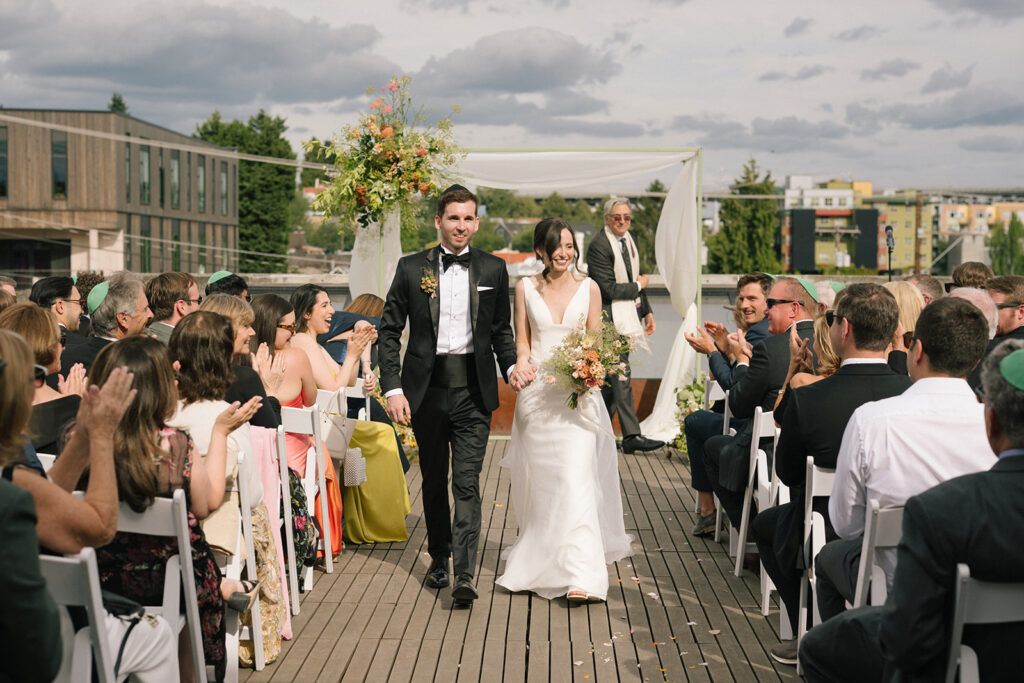


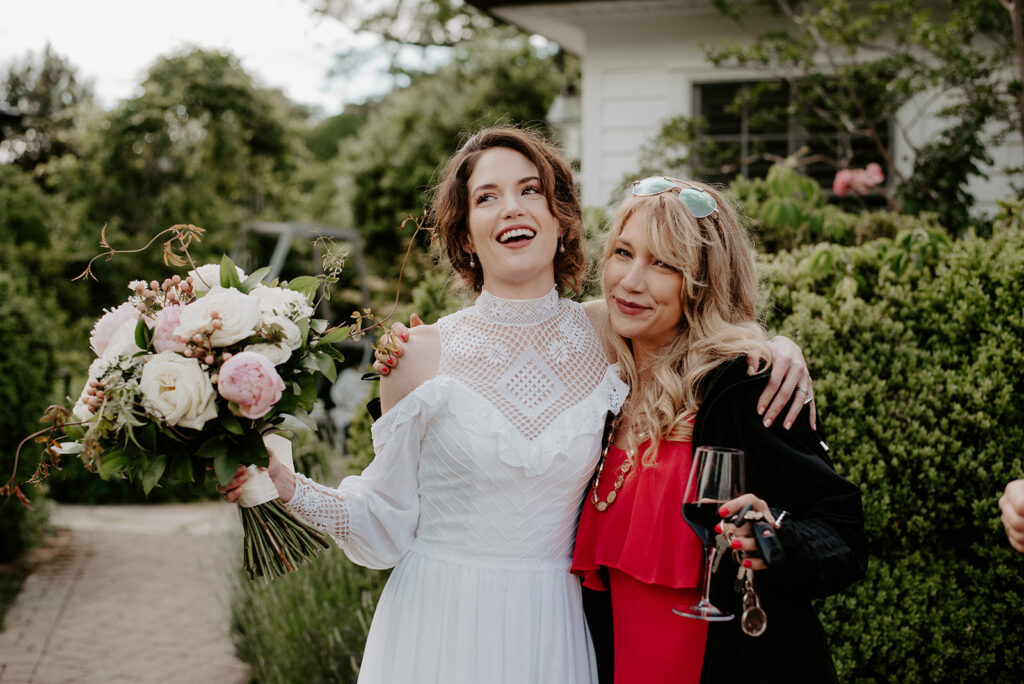
Start With the Wedding You Are Actually Planning
Before deciding how many hours of photography you need, consider what you are actually asking to fit into those hours.
An eight-hour wedding photography package sounds enormous. Eight hours is an entire workday.
You might want photographs of:
- your invitation suite and details
- getting ready
- hair and makeup finishing
- getting dressed
- individual bridal portraits
- individual groom portraits
- a first look
- private vows
- couple portraits
- wedding-party portraits
- family portraits
- the ceremony
- cocktail hour
- the completed reception space
- grand entrance
- first dance
- parent dances
- dinner
- speeches
- cake cutting
- sunset portraits
- open dancing
- a formal exit
Suddenly, eight hours is not quite as long as it seemed.
That does not mean every wedding needs 10 or 12 hours of photography.
It means your coverage should reflect the complexity of your wedding, rather than choosing a number of hours first and trying to squeeze everything you want into it afterward.
If you have a large wedding party, an extensive family list, several locations, elaborate details, private vows, a packed reception timeline, and a formal exit, something will probably have to give in an eight-hour timeline.
Sometimes that’s completely fine. Maybe you don’t care about getting-ready photographs or an exit.
The important thing is deciding intentionally rather than finding out on the wedding day that there isn’t enough time for everything you expected.
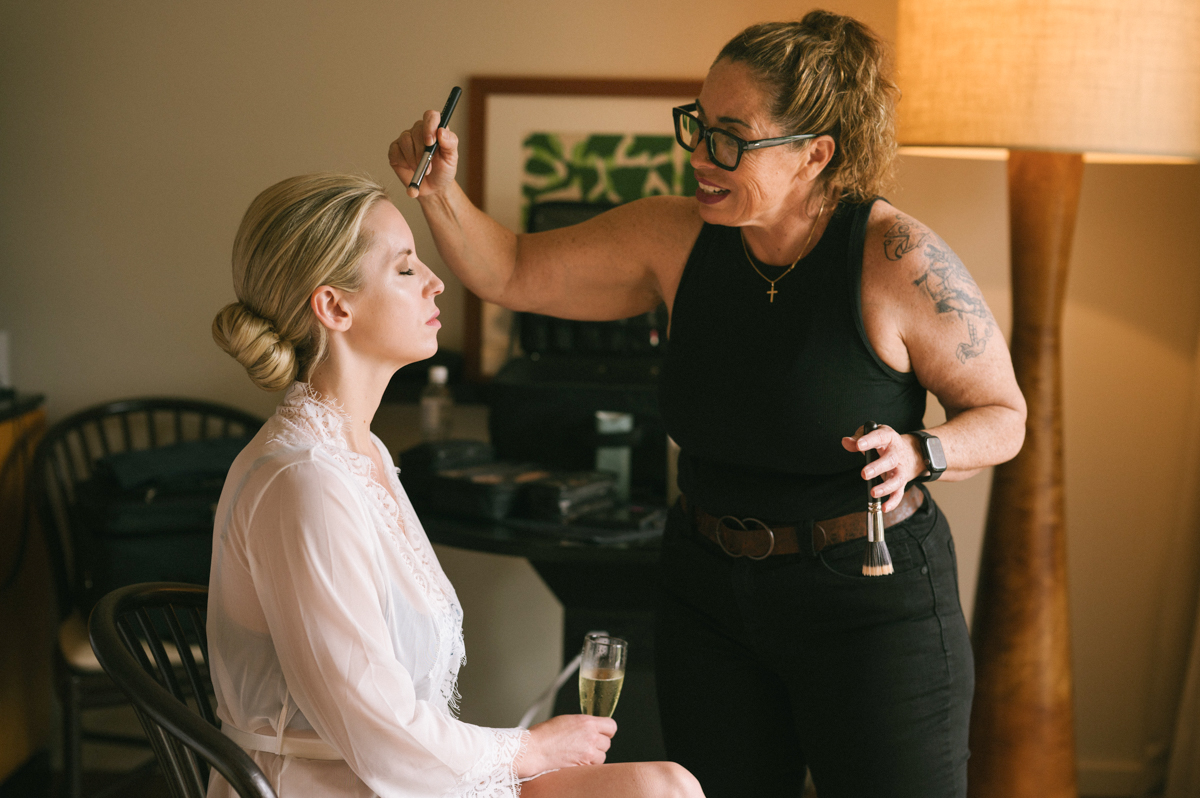
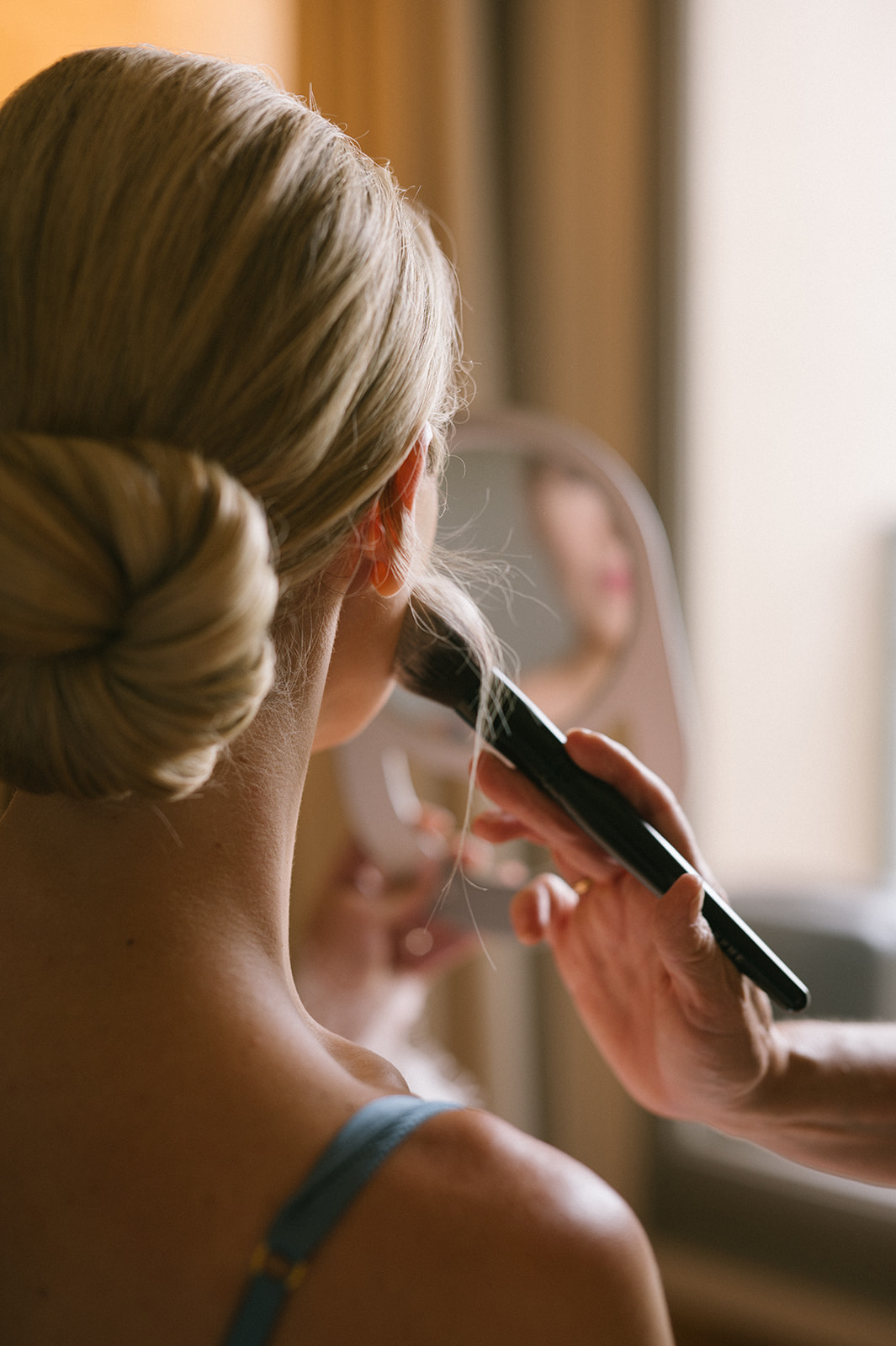
Hair and Makeup Is Often Where the Timeline Starts to Slip
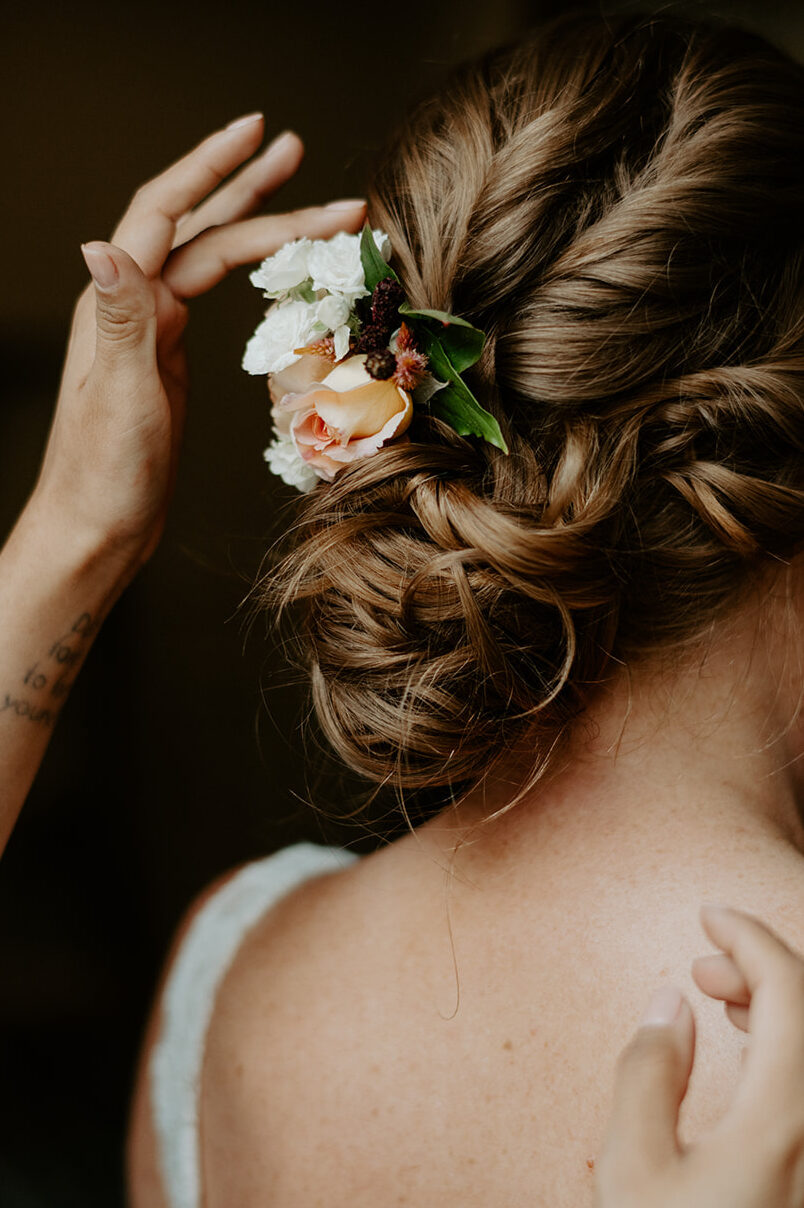
One of the most common wedding-day delays I encounter happens before photography has really begun: hair and makeup runs late.
The problem is often not that anyone planned poorly. It’s that everyone is working toward the wrong deadline.
If your first look is at 2:00, your hair and makeup should not be scheduled to finish at 1:45.
Several steps happen between hair and makeup being done and you being ready to leave for your first look.
You still need to:
- get dressed
- put on jewelry
- put on shoes
- use the bathroom
- attach your veil
- make final hair adjustments
- touch up makeup
- find anything that has disappeared
- take a breath
This is why I use a photography-ready time rather than simply asking when hair and makeup will finish.
A More Realistic First-Look Timeline
If your first look is at 1:45, your schedule might look something like:
12:45 — Hair and makeup completely finished
12:45–1:15 — Get dressed, jewelry, shoes, veil, and finishing touches
1:15 — Fully photography ready
1:15–1:30 — Built-in buffer
1:30 — Transition to first-look location
1:45 — First look
I generally like couples to have about a 15-minute buffer between being completely ready and when we actually need to begin moving toward the first look.
And here’s the good thing about a buffer:
If we don’t need it, we don’t have to sit around waiting.
If everything is ready early, we can start the first look early.
That might give you extra time together, additional portraits, more breathing room before family photographs, or simply 10 minutes during which nobody is asking you to do anything.
There is almost no downside to being ahead on a wedding day.
If You Know You Take Your Time Getting Ready, Plan for It
Some people are perfectly comfortable walking out the door the second their lipstick is finished.
Some people want to look at their hair from six angles, adjust the veil three times, fix one curl, change their earrings, steam the corner of their dress, and make sure everything feels exactly right.
Neither person is wrong.
But they need different timelines.
If you know you are particular about your hair, makeup, veil, dress, or finishing touches, give yourself more time.
The answer shouldn’t be hoping you’ll magically become someone who gets ready quickly because it’s your wedding day.
I would much rather build extra time into your schedule and have you feel completely comfortable when you leave the room.
That is one of the easiest ways to make the rest of your wedding feel more relaxed.
What Happens When a Wedding Runs Late?
A 10-minute delay is usually not a big deal.
I intentionally build breathing room into wedding timelines because things happen.
An hour-long delay is different.
At some point, we can’t simply “make up the time.”
Your ceremony may have a fixed start time. Sunset isn’t moving. Catering may have dinner scheduled. Transportation may be waiting. Your DJ may have events timed around dinner service. Your venue may have restrictions.
So the missing hour has to come from somewhere.
When a wedding begins significantly running behind, we may have to shorten or eliminate:
- private first-look time
- couple portraits
- individual bride or groom portraits
- wedding-party portraits
- family photographs
- creative portraits
- reception-detail photographs
- sunset portraits
But eventually it can affect much more than photography.
You may have to:
- shorten cocktail hour
- move reception events
- delay dinner
- restructure speeches
- skip cake cutting
- shorten open dancing
- rearrange the reception timeline
- eliminate something you originally planned altogether
My goal in that situation is always to help protect the pieces of the wedding that matter most to you.
But if we lose an hour, there is no secret photography trick that creates an additional hour later.
That hour has to come from somewhere.
A realistic timeline gives us the best chance of never having to make those decisions.
Detail Photos and Flat Lays Take More Time Than You Think
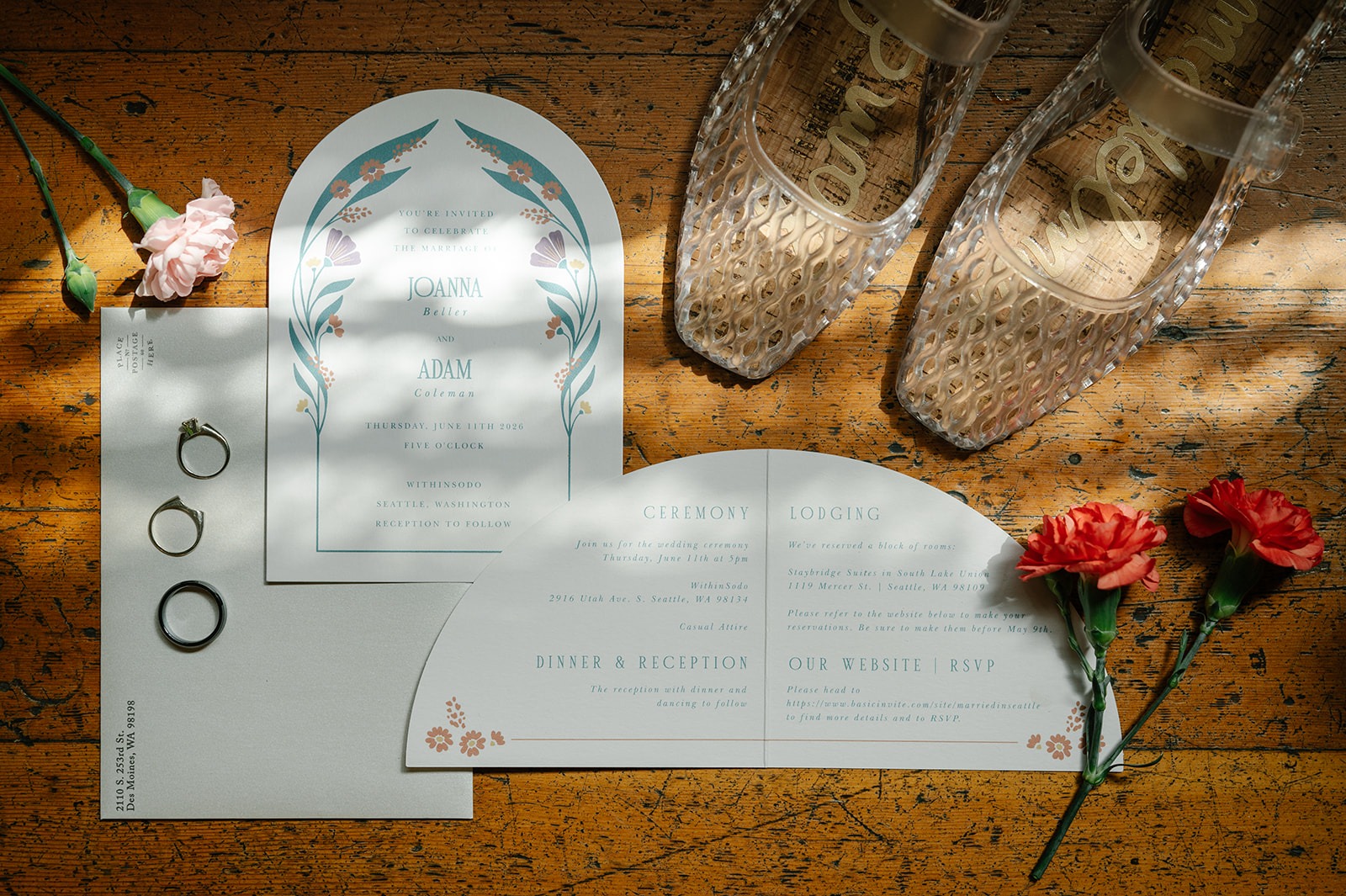
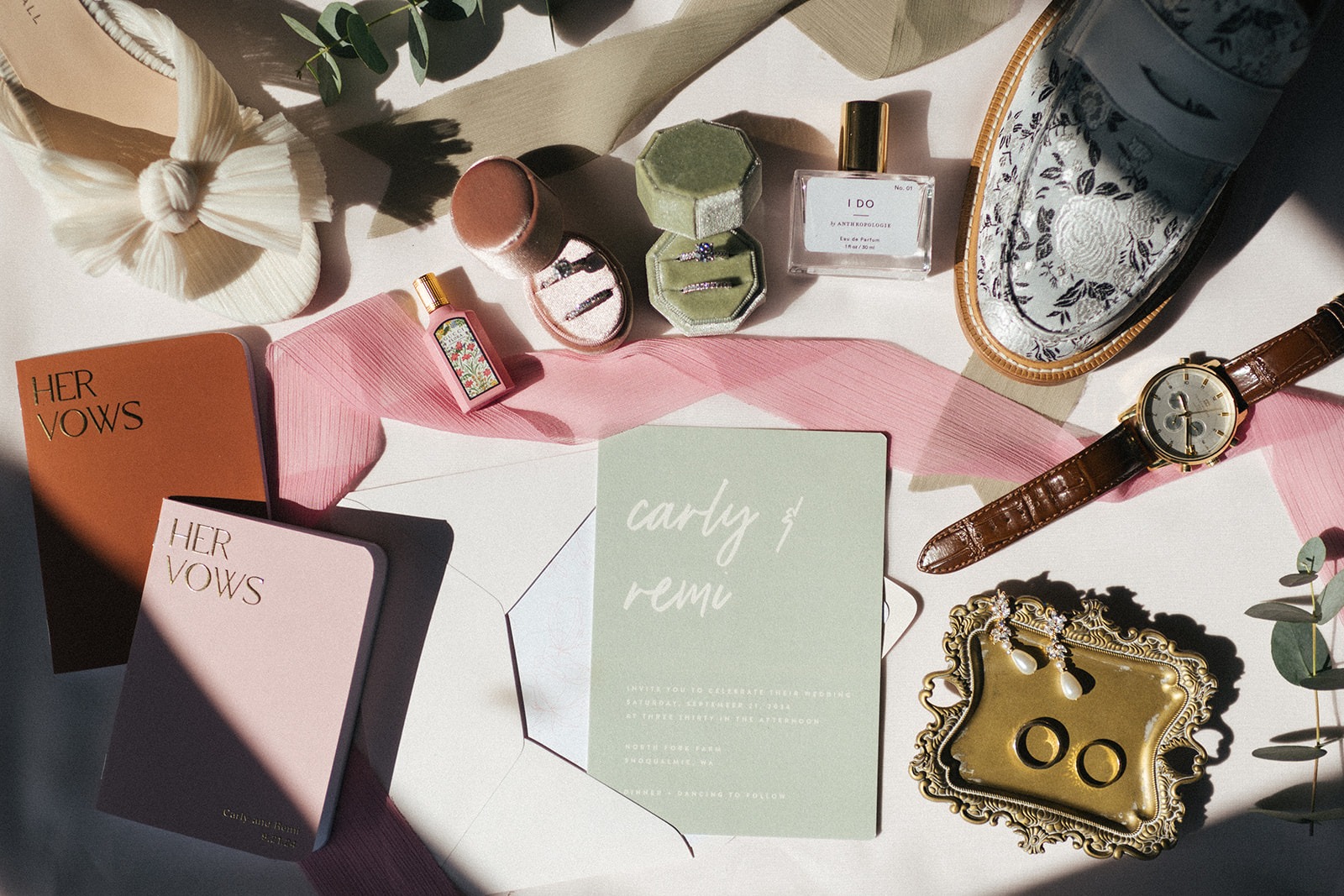
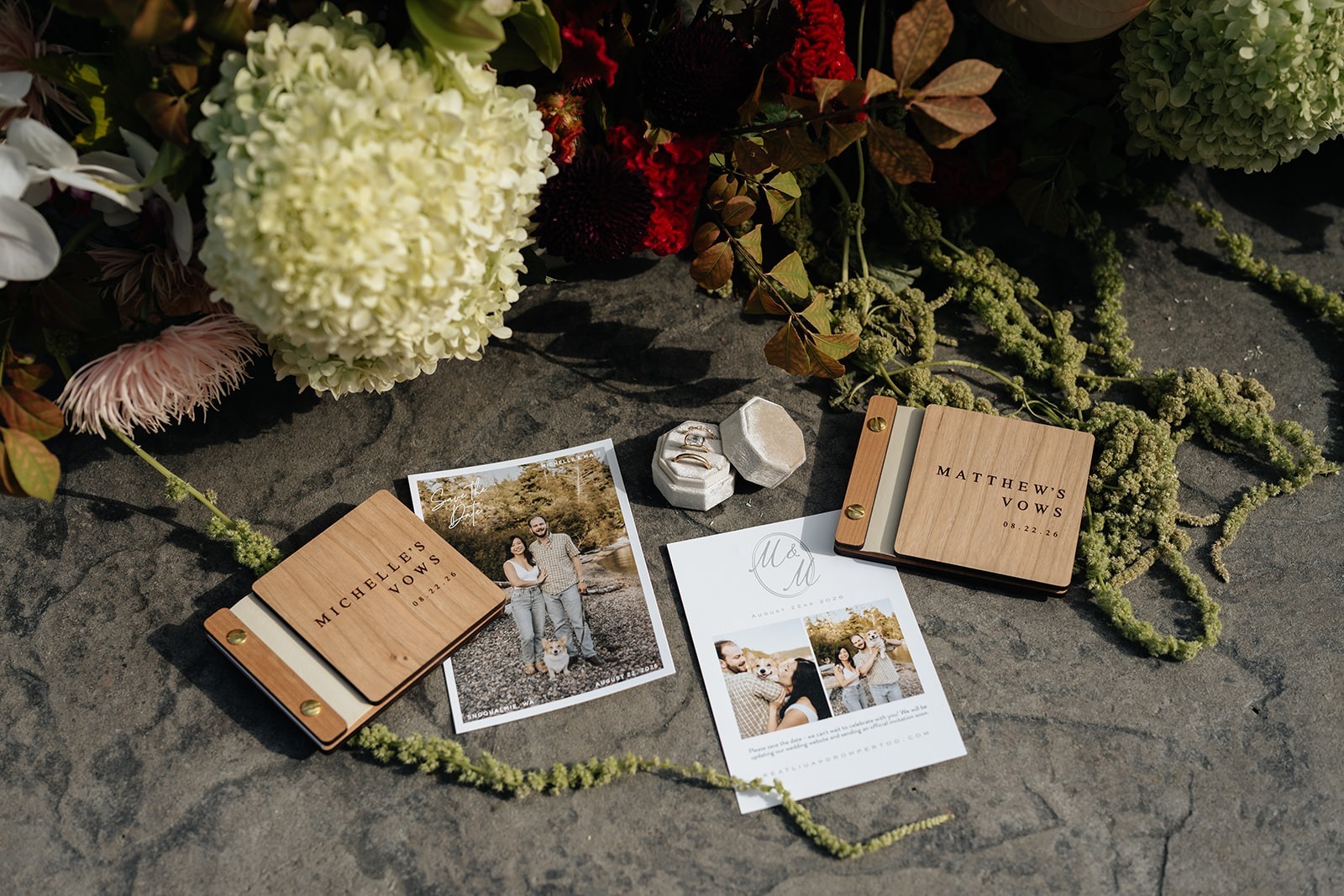
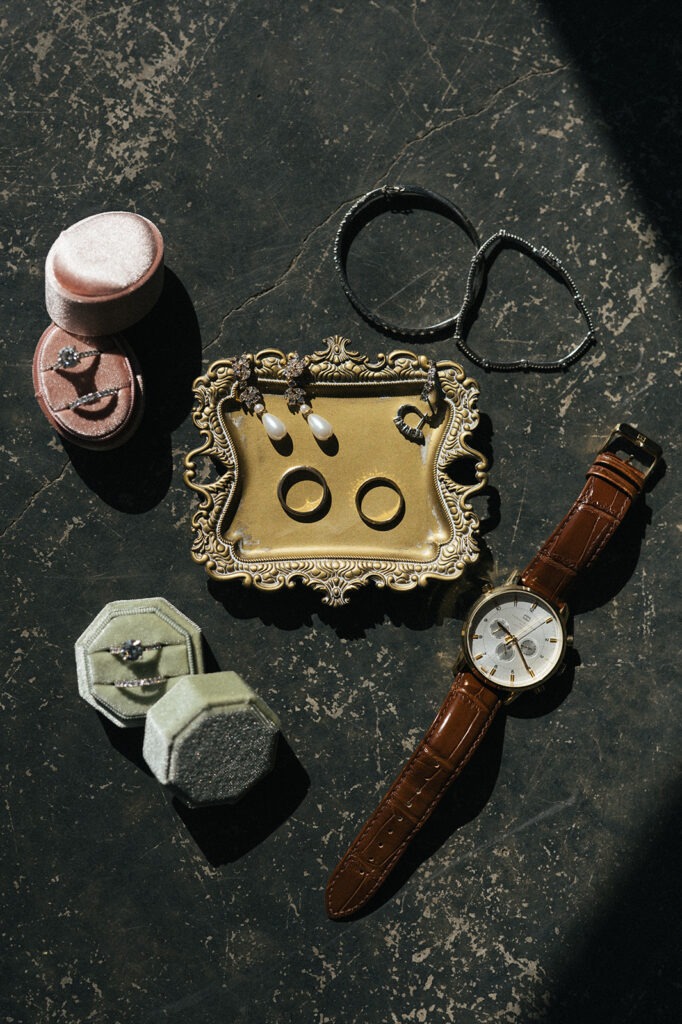
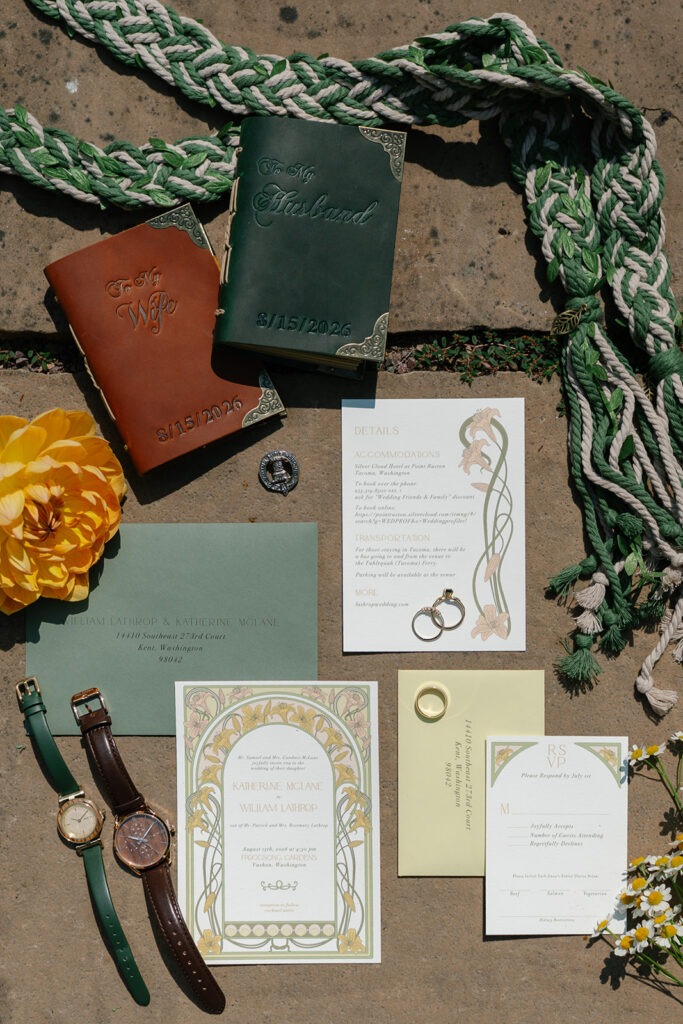
A beautifully styled wedding flat lay looks effortless in the finished image.
Trust me, it isn’t.
A thoughtful detail setup can easily take 30 minutes or more.
Photographers have to:
- find the best light
- select a surface
- gather your objects
- arrange and rearrange pieces
- style stationery
- position rings and jewelry
- incorporate flowers or additional details
- photograph it
If extensive detail photographs are important to you, that time needs to be part of your coverage.
This is another reason that an eight-hour photography timeline can fill up quickly.
Curate Your Details Instead of Giving Your Photographer Everything
You do not have to hand me every object associated with your wedding.
More items do not automatically create a better flat lay.
I find that the opposite is true.
Too many competing objects can make a composition feel cluttered and visually unbalanced.
Consider putting together a small detail box containing things like:
- your full invitation suite
- envelopes
- rings
- ring box
- jewelry
- perfume or cologne
- cuff links
- watch
- vow books
- meaningful heirlooms
- intentional accessories
I may not use every item you provide.
That isn’t because an item isn’t important. They will all be photographed.
Part of styling is deciding which pieces visually work together.
Sometimes the strongest photograph happens because I removed three things.
Ask Your Florist for a Few Loose Flowers
If you love styled detail photographs, ask your florist ahead of time to leave a few loose blooms and pieces of greenery for your photographer.
They don’t need to create an additional arrangement.
A few trimmings that match your bouquet are usually enough.
Those flowers allow me to visually connect your invitation suite, rings, and other small details to the overall design of your wedding.
Ideally, have them delivered alongside the bouquets so they are available when detail photography begins.
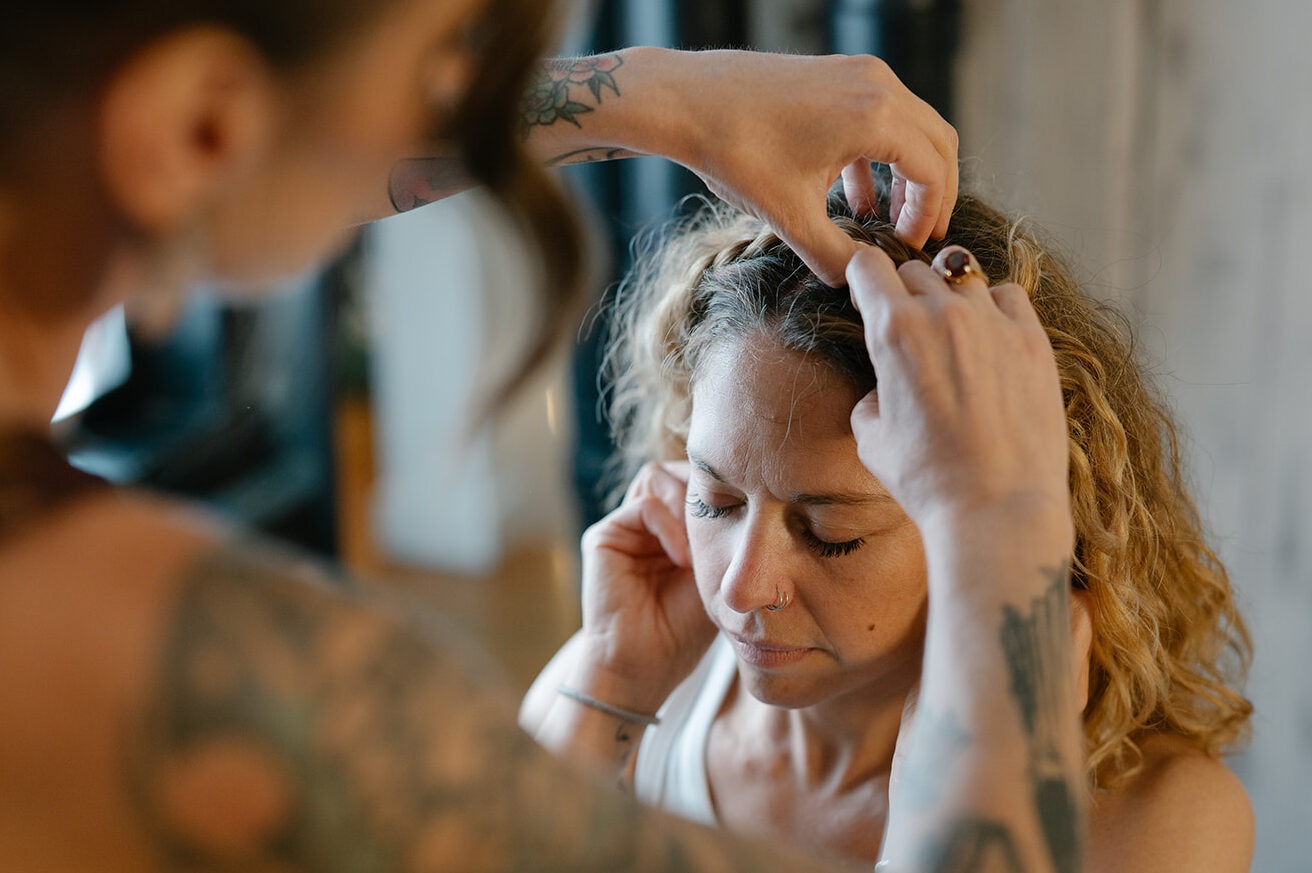
Your Getting-Ready Room Will Affect How Your Photos Look
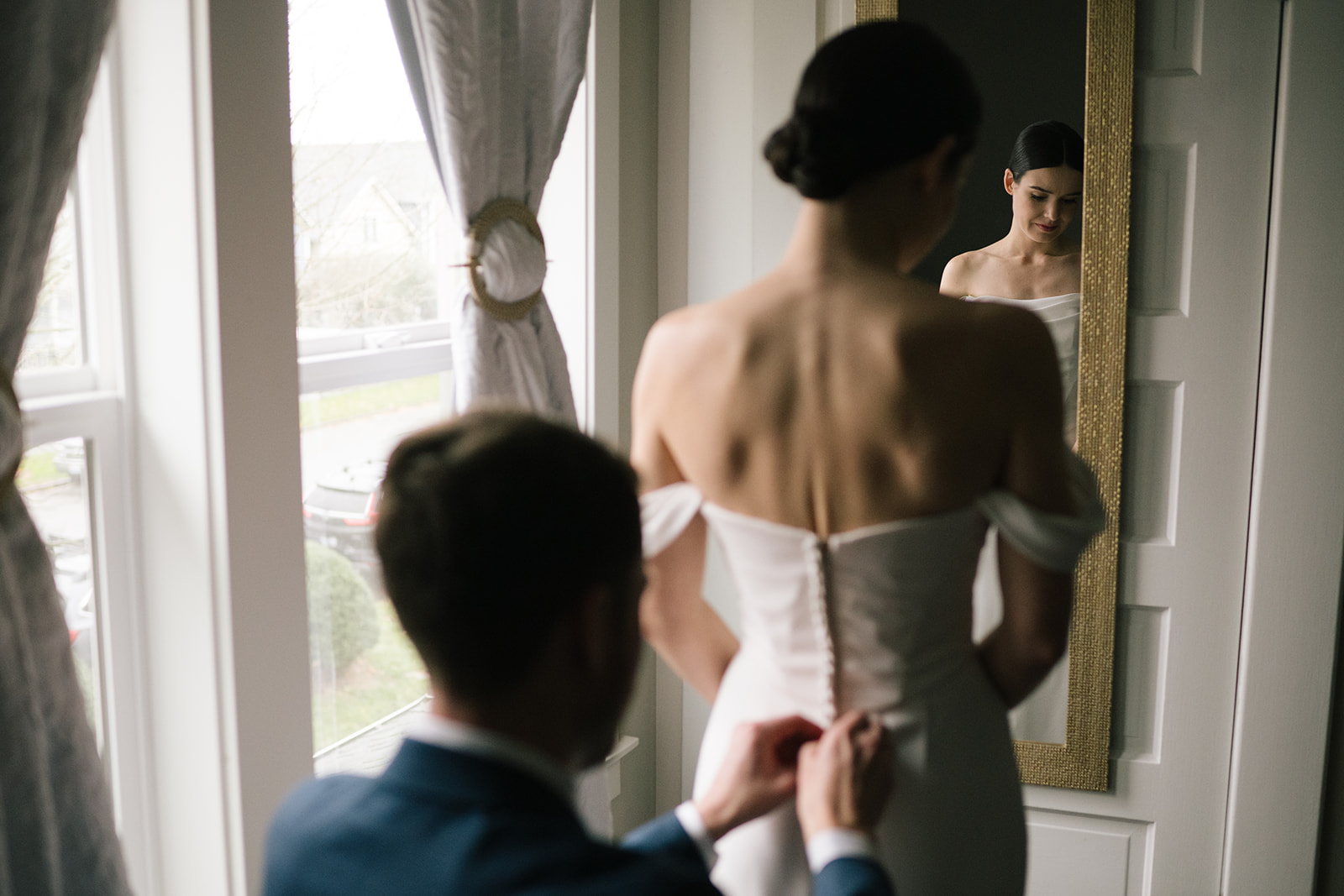
Photography is, quite literally, capturing light.
The getting-ready space you choose determines what light your photographer has available to work with.
When choosing a room, prioritize:
- large windows
- abundant natural light
- neutral-colored walls
- enough physical space to move
- an area near the window that can remain relatively uncluttered
A beautiful room is not necessarily a room that photographs beautifully.
A dark, dramatic suite with tiny windows may look amazing in person but give your photographer very little workable natural light.
Meanwhile, a relatively plain hotel room with enormous windows may produce gorgeous photographs.
If photography matters to you, prioritize light and space over decor.
If you want help picking your space, I am here!
Why Your Photographer May Turn Off the Lights
One thing you may notice when I arrive is that I immediately begin turning off lamps and overhead lights.
I promise I’m not trying to make everyone get ready in the dark.
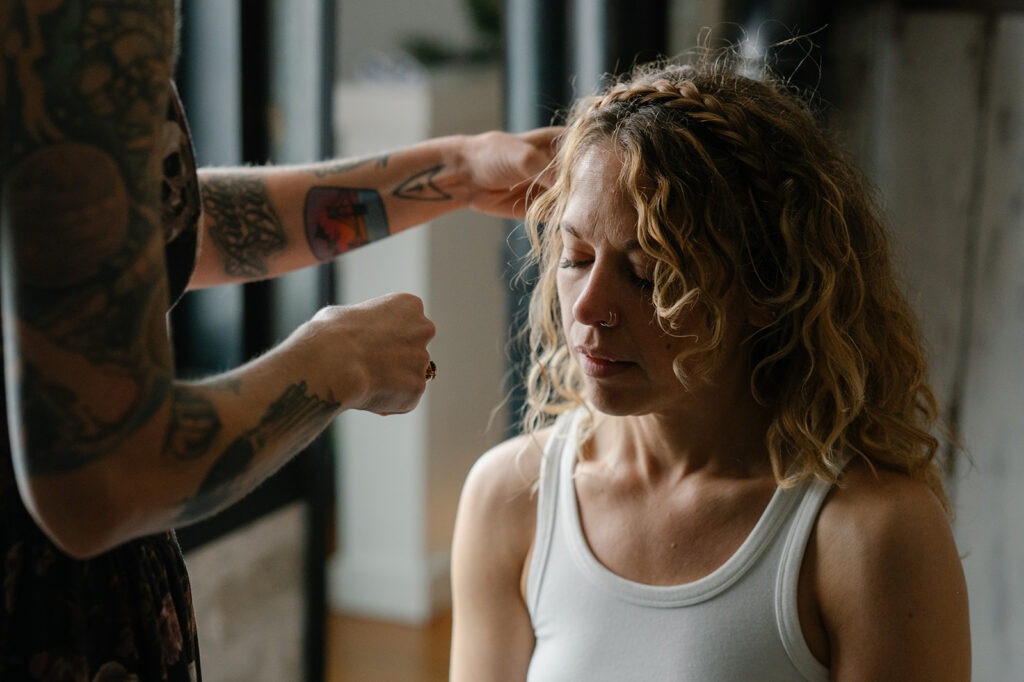
Indoor bulbs often produce a very warm yellow, orange, or even green light.
Window light is generally a different color.
When both illuminate someone’s skin at the same time, we get what photographers call mixed lighting.
You might have beautiful neutral light hitting one side of your face while orange light is hitting the other.
Editing can’t always fix that completely because correcting one light source may make the other look worse.
Whenever there is enough window light available, I usually prefer turning off the overhead lighting.
But if the room is extremely dark without it, we may have to leave artificial lights on.
That changes the final image.
This is one of the biggest reasons choosing a bright getting-ready location matters.
Your First Look Deserves Actual Time
The literal moment of seeing each other during a first look may only take a minute.
That doesn’t mean I schedule one minute for it.
I generally reserve about 15 minutes for the first-look experience itself.
That gives you time to:
- approach each other
- react
- hug
- talk
- look at each other’s outfits
- settle into the moment
- spend a few minutes together without immediately being directed
One of the best things about a first look is that it can create a rare pocket of private time together before the wedding gets busy.
I don’t want your first look to become:
“Okay, you saw each other! Great! Turn toward me! Now we have seven minutes before the wedding party gets here!”
The timeline should protect the experience, not just the photograph.
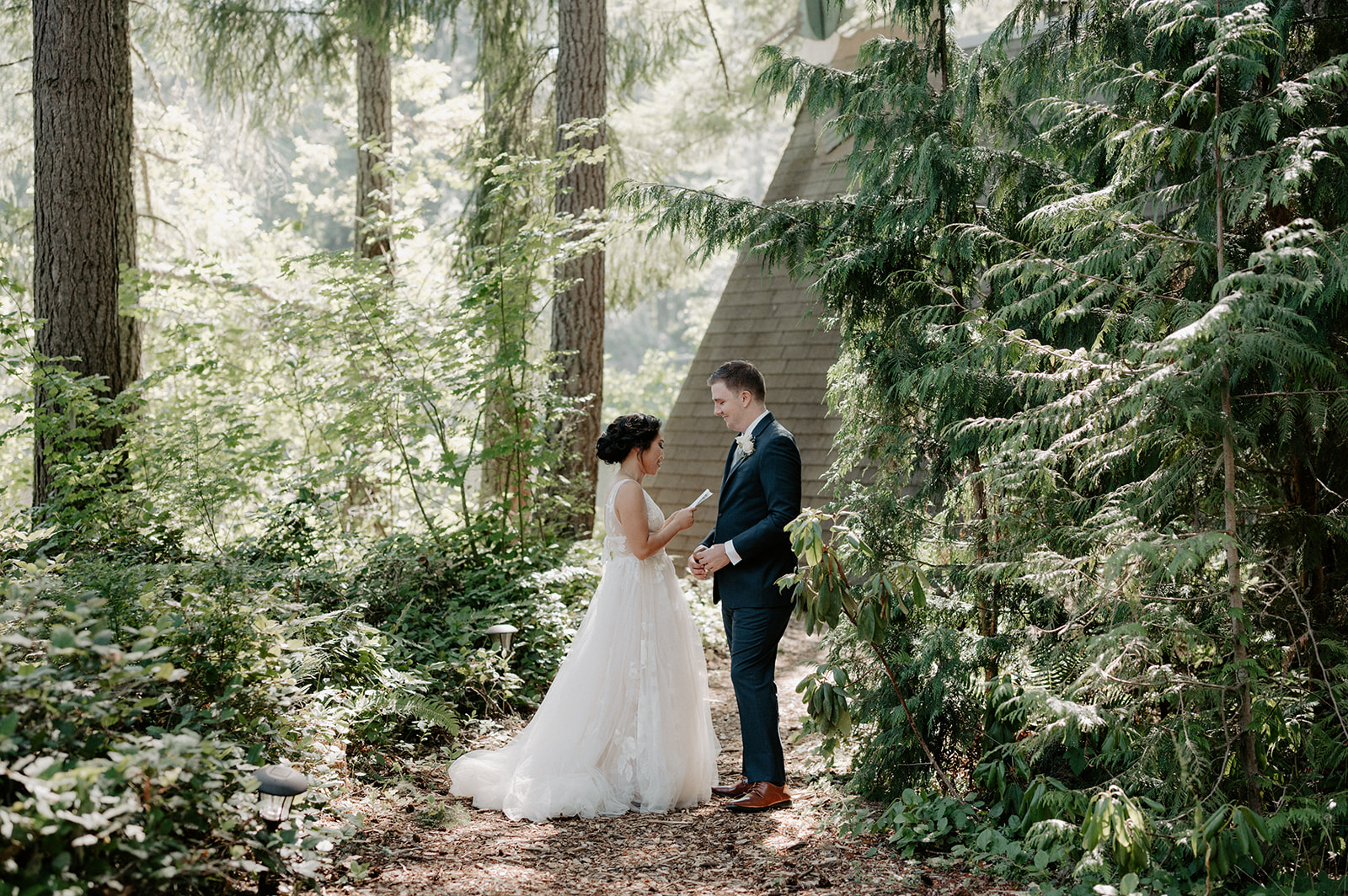
Planning Private Vows? Tell Your Photographer Before the Wedding
This one has become increasingly important.
I love private vows.
But private vows need their own time in the wedding photography timeline.
Please do not assume that because we have 15 minutes scheduled for your first look, we automatically have enough time for you to also read private vows during those 15 minutes.
We may not.
Depending on how much you have written, private vows can easily take an additional 10, 15, or 20 minutes.
The same goes for exchanging letters or gifts.
If I know about it ahead of time, that is easy.
We simply build it into the schedule.
If I learn about it when we’re standing at the first-look location and you pull out three-page letters, the time has to come from somewhere else – usually your couple portraits, wedding-party photographs, family photographs, or another part of the pre-ceremony timeline.
So if you’re planning:
private vows, letters, or gifts during your first look, tell me ahead of time.
I want you to do them.
I just want to make sure you actually have enough time to enjoy them.
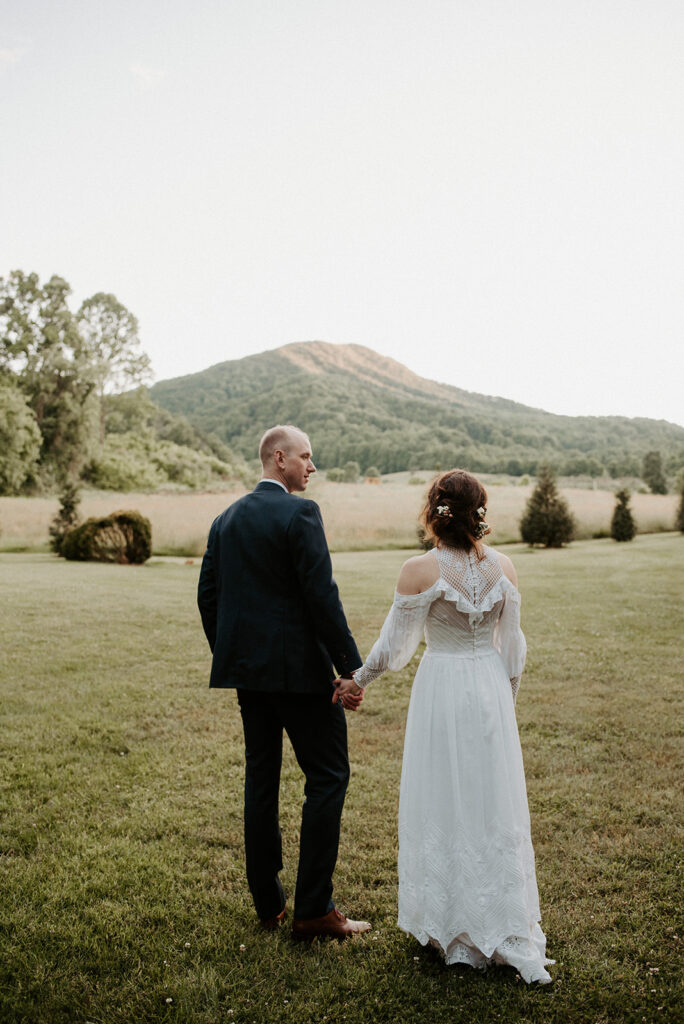
How Much Time Do You Need for Couple Portraits?
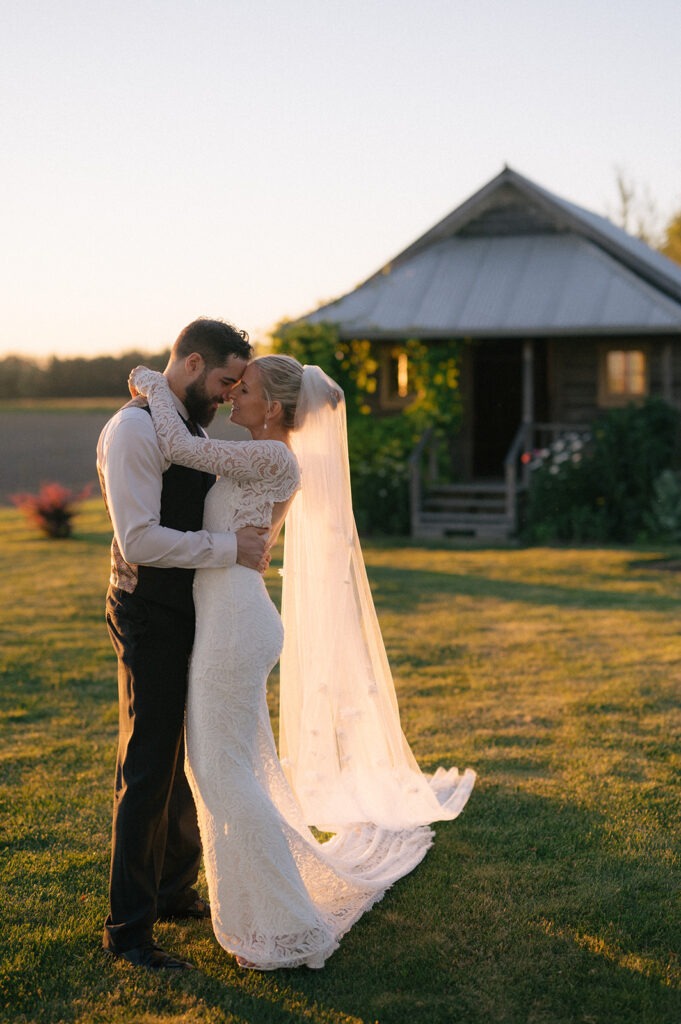
I generally recommend approximately 30 minutes for couple portraits.
Before you imagine 30 straight minutes of staring at a camera and smiling: that isn’t what I mean.
Thirty minutes gives us time to:
walk
move
talk
find good light
make classic photographs
create wider environmental photographs
take close portraits
try different compositions
make something creative
let natural interactions happen
Some of that time may simply be spent getting from one area to another.
The point is not that I need 30 minutes to figure out how to photograph two people.
The point is that variety takes time.
I can make a perfectly nice portrait in three minutes.
But when we have 30 minutes, I can respond to what is happening rather than immediately defaulting to the fastest, safest option.
More Time Does Not Mean More Posing
This is worth repeating.
When photographers recommend portrait time, couples sometimes hear:
“You would like me to spend even MORE of my wedding being photographed?”
No.
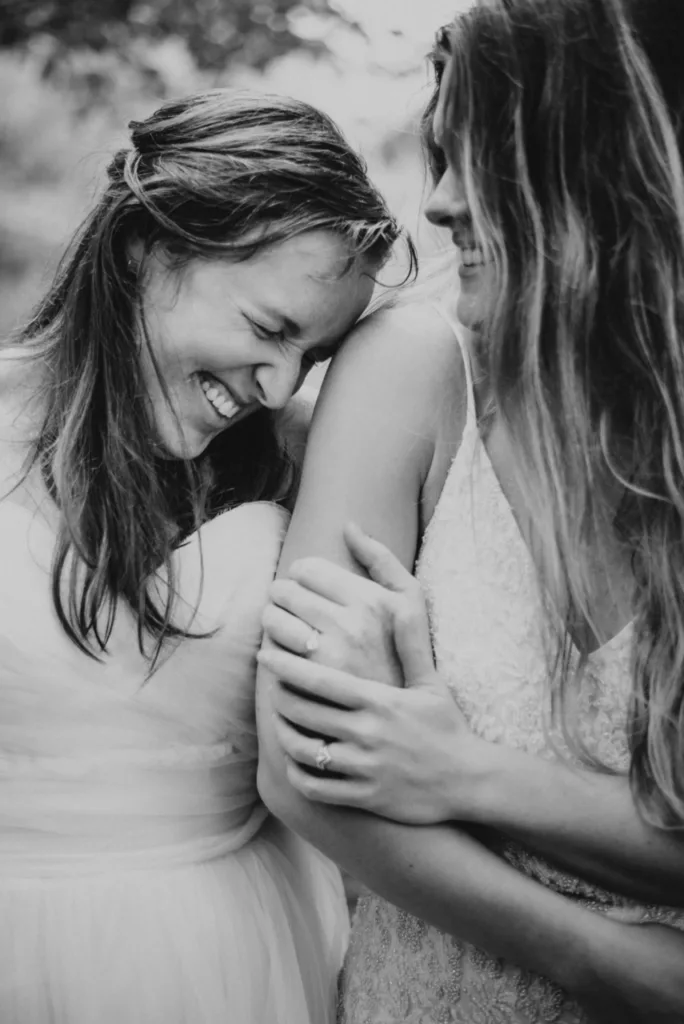
More time often means less intensity.
If I know we only have eight minutes, I have to move very efficiently.
If we have 30 minutes, you can walk slowly. You can stop talking to me and talk to each other. We can take a minute because your shoes hurt. We can wait for someone to walk out of the background. We can move toward better light.
We don’t have to squeeze every possible second out of every moment.
The goal is not to turn your wedding into a photo shoot.
The goal is to give photography enough room to happen naturally alongside the wedding.
Don’t Forget Individual Bride and Groom Portraits
Individual portraits are one of the easiest things to lose when a timeline starts running behind.
I will almost always try to grab at least a simple individual portrait.
But there is a difference between having a picture of you by yourself and intentionally creating a set of individual portraits.
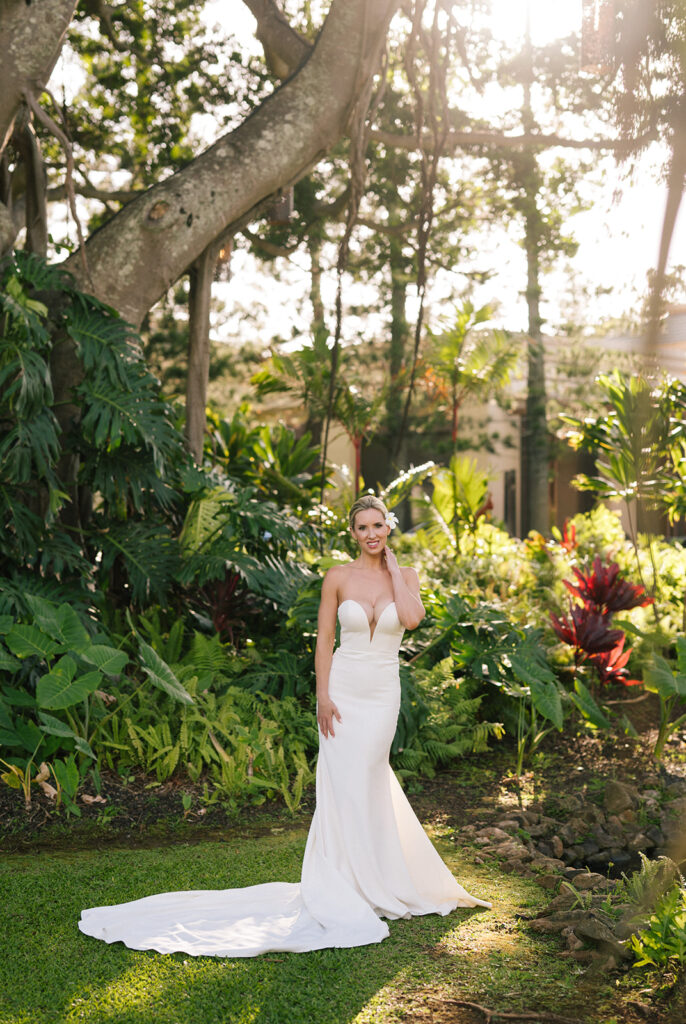
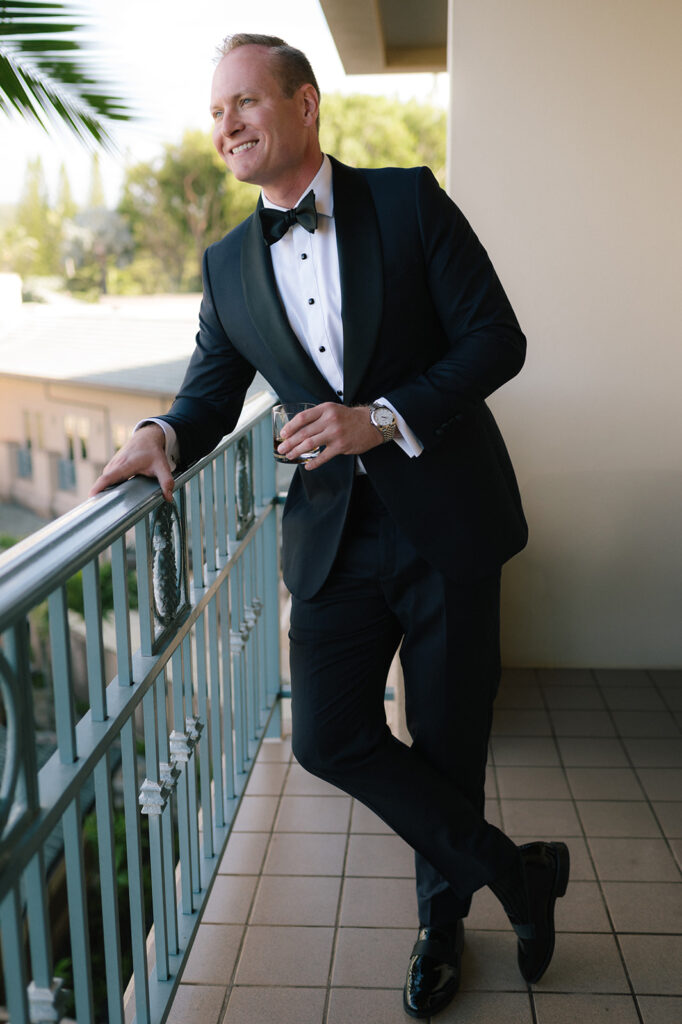
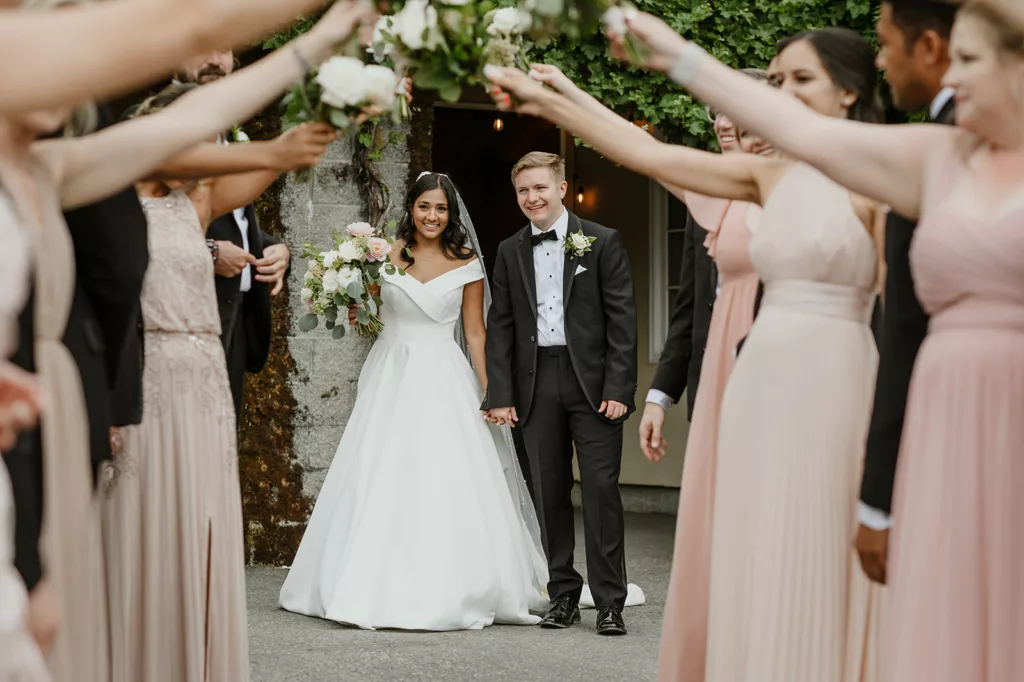
If you want more variety – full-length photographs, close-ups, movement, creative light, veil images, environmental portraits – I recommend planning approximately 10–15 minutes for each person.
If these photographs are particularly important to you, tell your photographer during timeline planning so they can protect that time.
Wedding-Party Size Changes the Timeline
A wedding party of six does not take as long to photograph as a wedding party of sixteen.
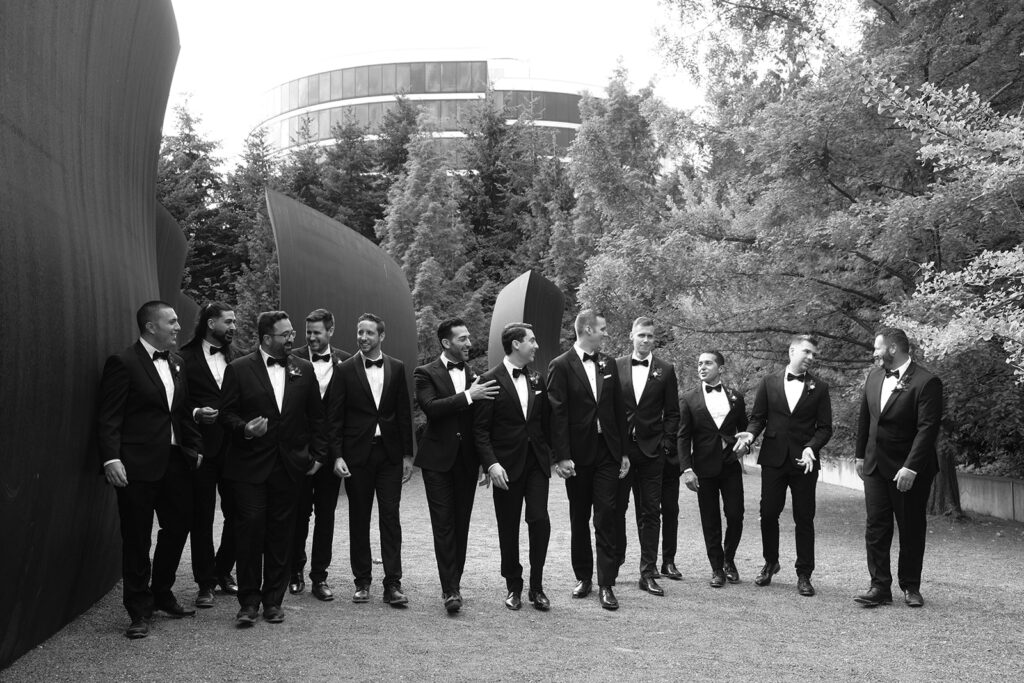
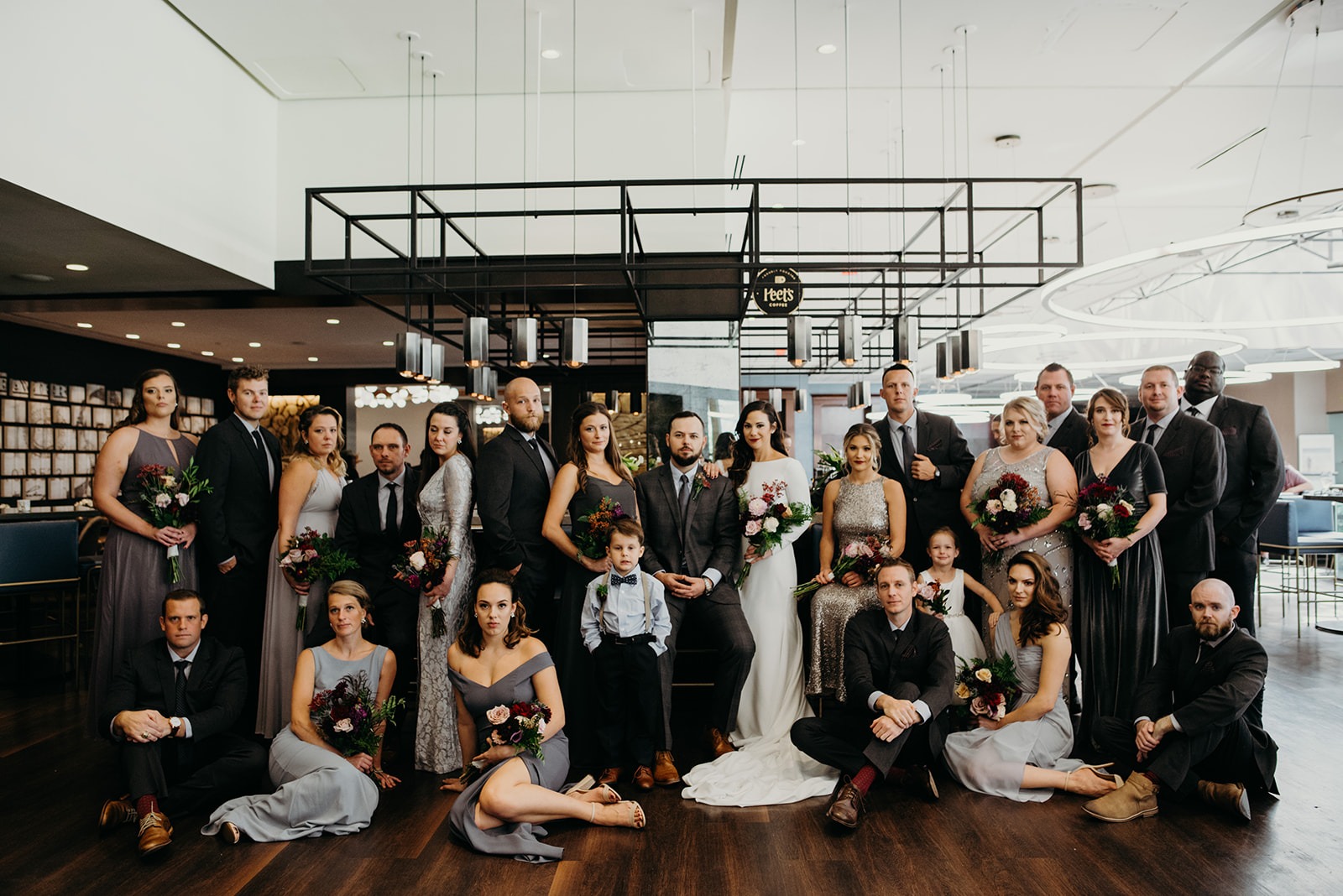
For wedding parties of approximately eight people or fewer, around 30 minutes is generally enough for a traditional set of photographs.
Once your wedding party grows beyond eight people, I usually recommend adding more time – especially if you want anything beyond the standard photographs.
A larger wedding party means more time:
- gathering everyone
- arranging people
- more direction needing to be given
- fixing bouquets
- tracking down whoever wandered away
If you want the full group, each side, individual photographs with every attendant, and creative wedding-party portraits, we need to account for that.
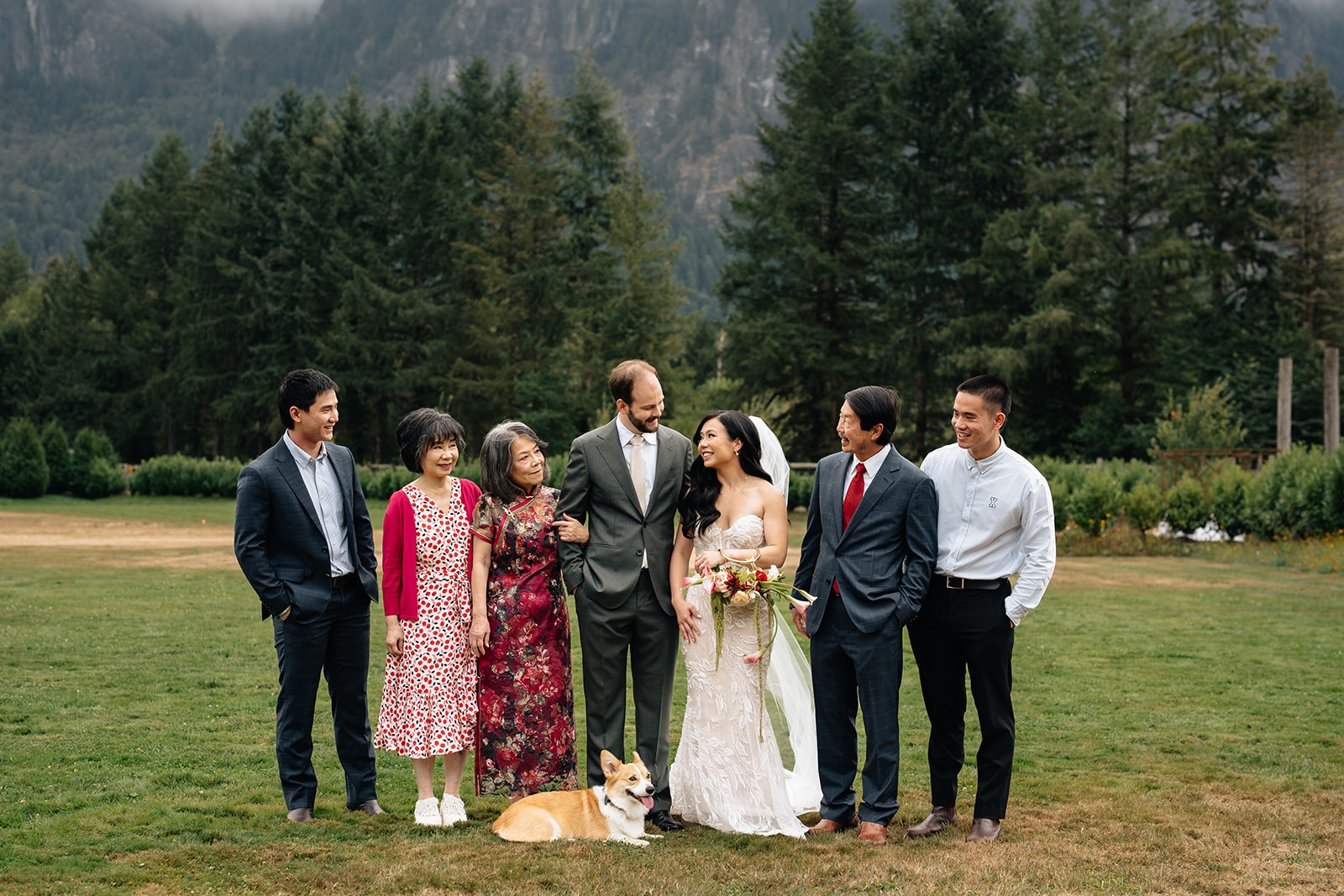
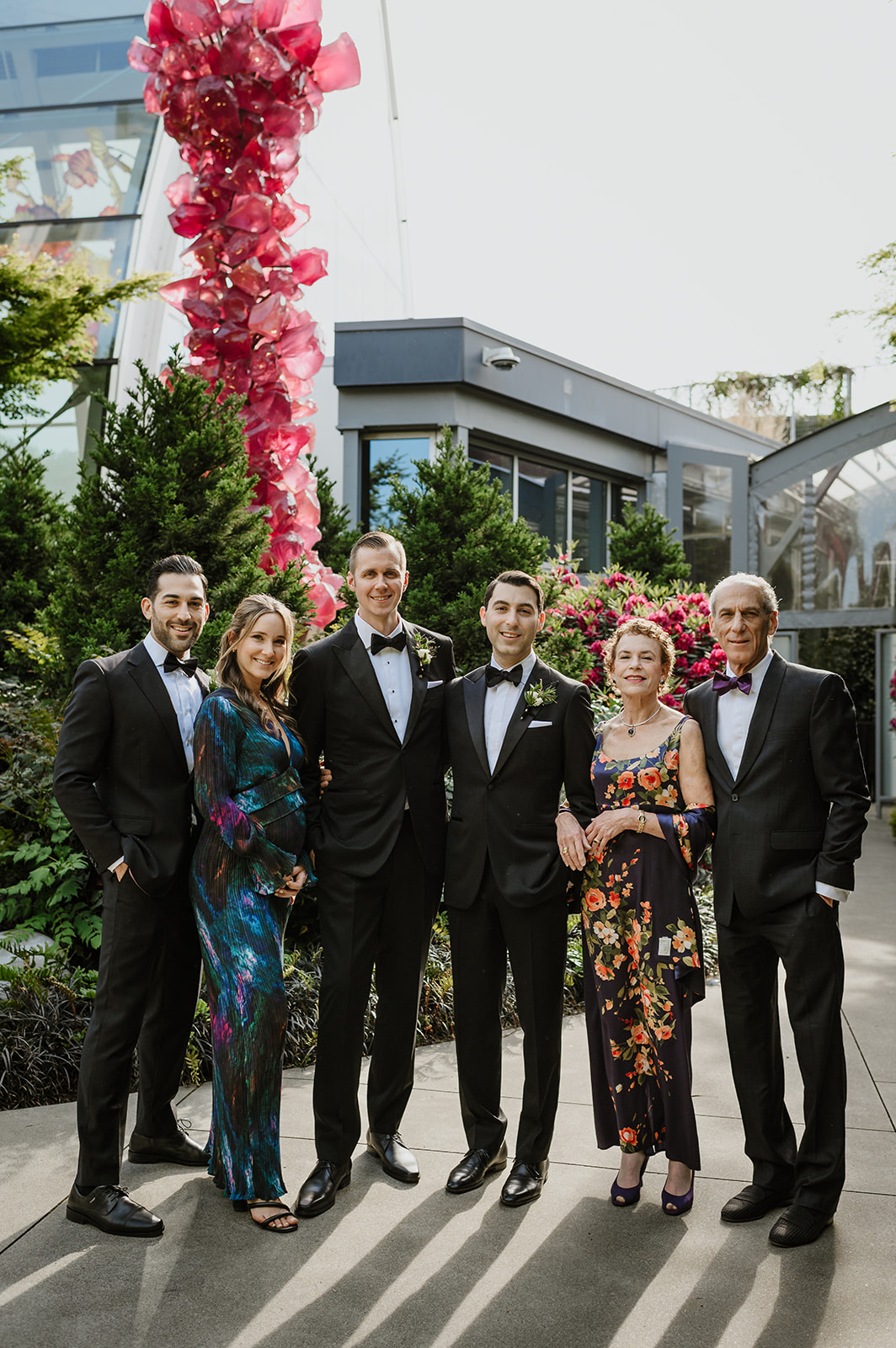
How Much Time Should You Plan for Family Photos?
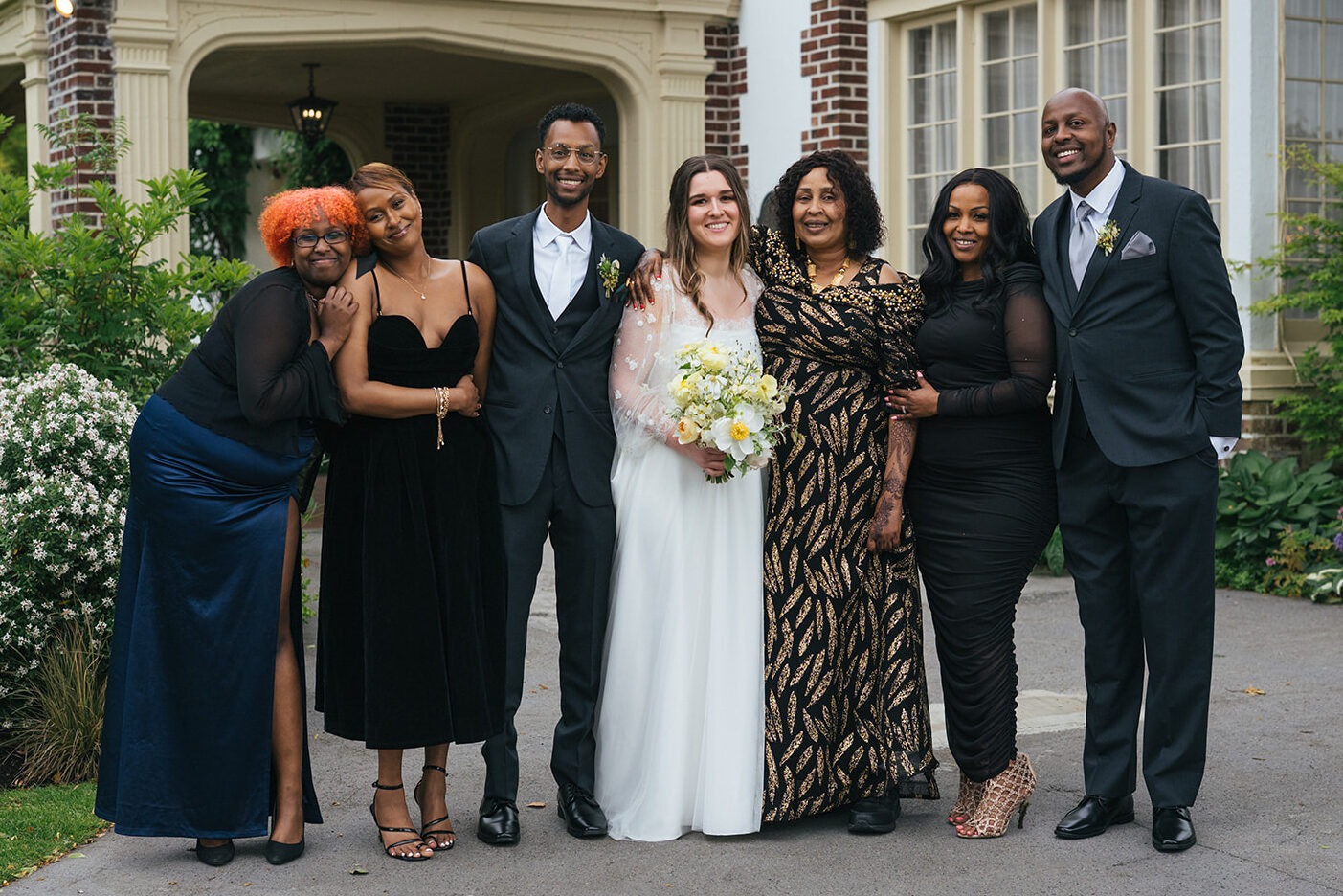
My general guideline is approximately two minutes per family grouping.
That means:
5 groupings = approximately 10 minutes
10 groupings = approximately 20 minutes
15 groupings = approximately 30 minutes
30 groupings = approximately one hour
I generally recommend keeping your formal family list to 15 combinations or fewer.
Part of that is about your timeline.
Part of it is simply because standing in the same area smiling through 30 consecutive family combinations gets tedious.
Your cheeks start to hurt.
And if you’re holding a substantial bridal bouquet through all 30 combinations, your wrist may start questioning every life choice that brought it to this moment. Oh, you have carpal tunnel? Do not pass go.
Formal family photographs are important, but more isn’t necessarily better.
Prioritize the combinations that genuinely matter.
For example:
- couple + parents
- couple + parents + siblings
- couple + immediate family
- couple + grandparents
- any especially meaningful family combinations
Extended cousins, groups of friends, coworkers, college friends, and other larger combinations can often be photographed much more organically during cocktail hour or the reception.

Tell Your Family About Photos Before the Wedding
Two minutes per grouping assumes the people in the photograph are actually there.
Please tell everyone on your formal family list before the wedding that they are needed for photographs and when those photographs will happen.
Family photographs become exponentially slower when every grouping begins with:
“Have you seen Uncle Mark?”
I’m sorry, I don’t know what Uncle Mark looks like.
And by the time we locate him, someone else has usually wandered to the bar.
If you have a large family, assigning someone who knows everyone to help gather people can make this part of the day much easier.
Your Ceremony Lighting Matters Too
Your ceremony light has a huge impact on how your photographs look, and unlike portraits, we usually cannot simply move you somewhere else if the light is difficult.
You are standing where the ceremony is happening, at the time it’s happening, and I work with whatever light exists there.
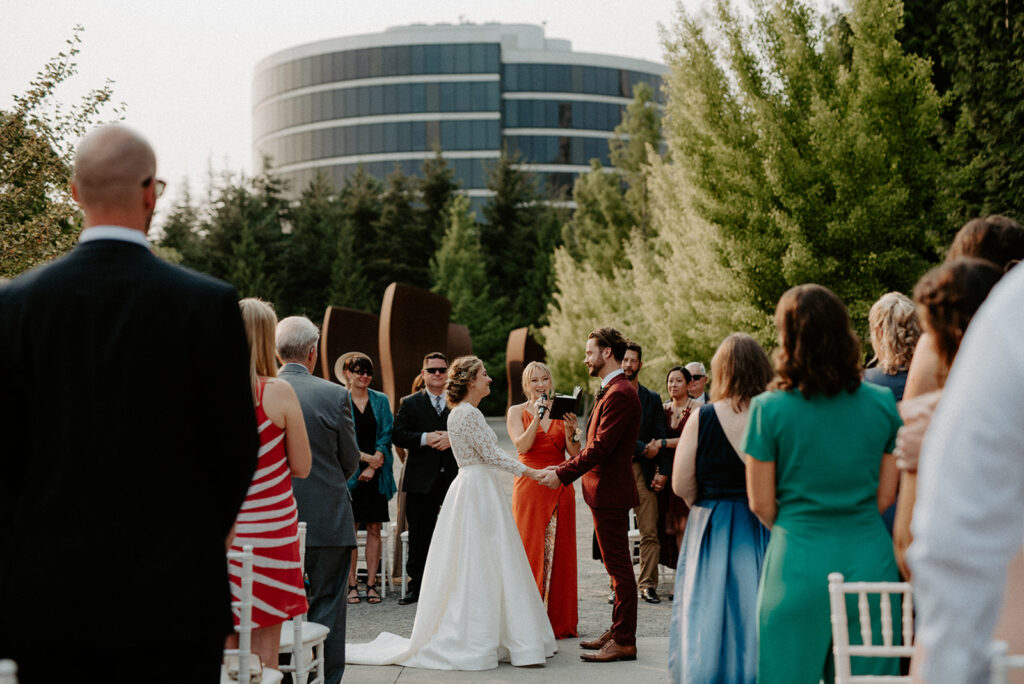
That does not mean you need “perfect” light to get beautiful photographs. I photograph ceremonies in all kinds of conditions. But different lighting creates very different results, and if photography is a major priority for you, it is worth understanding those differences before choosing your ceremony location and time.
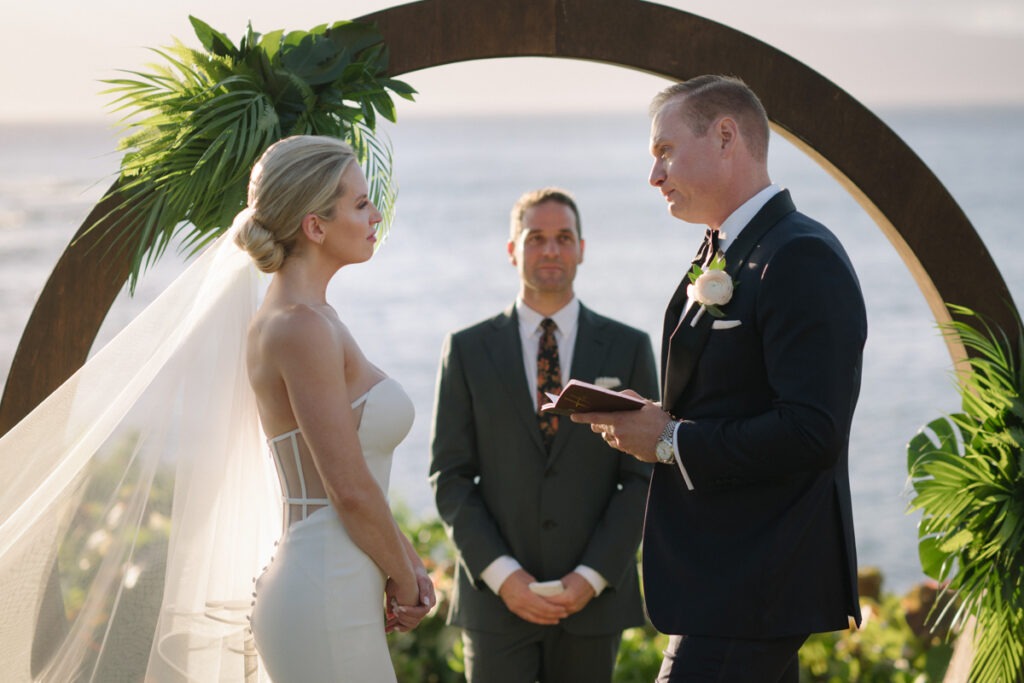
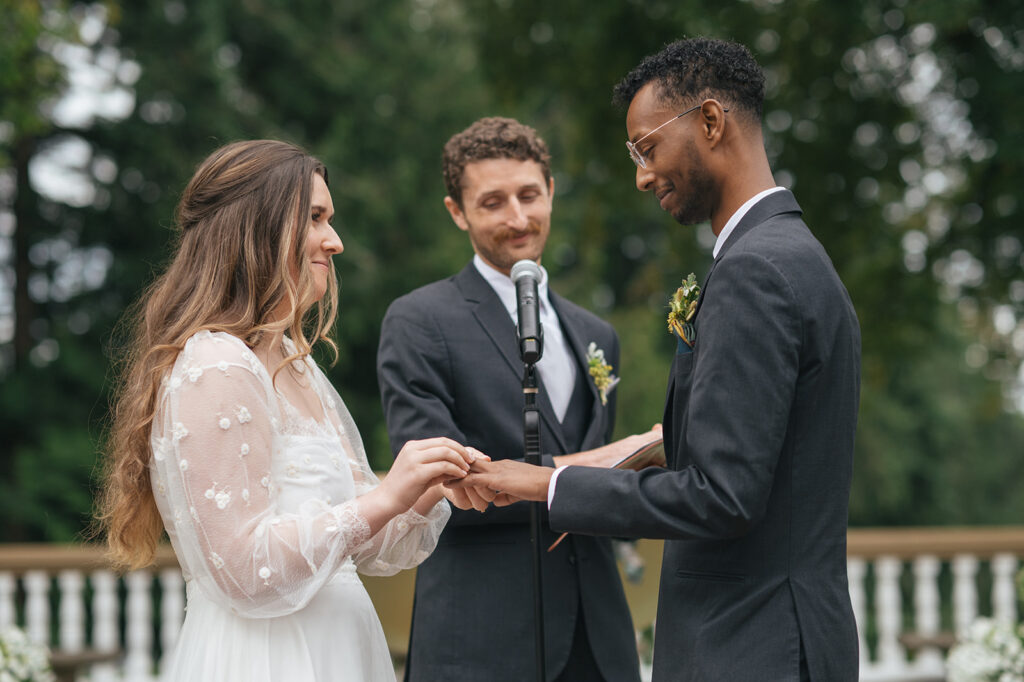
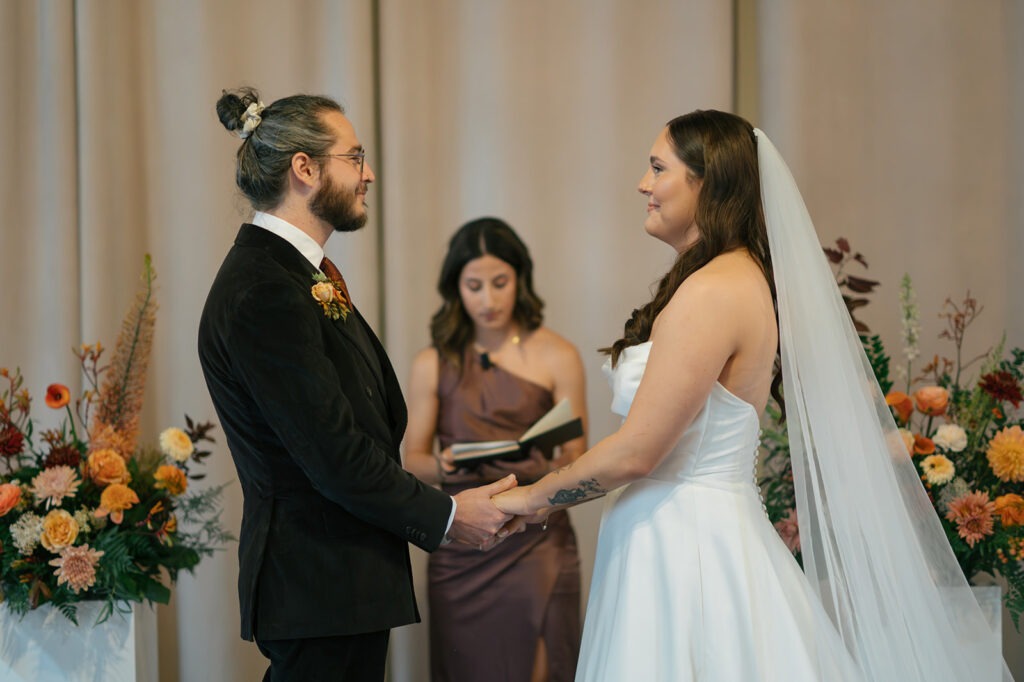
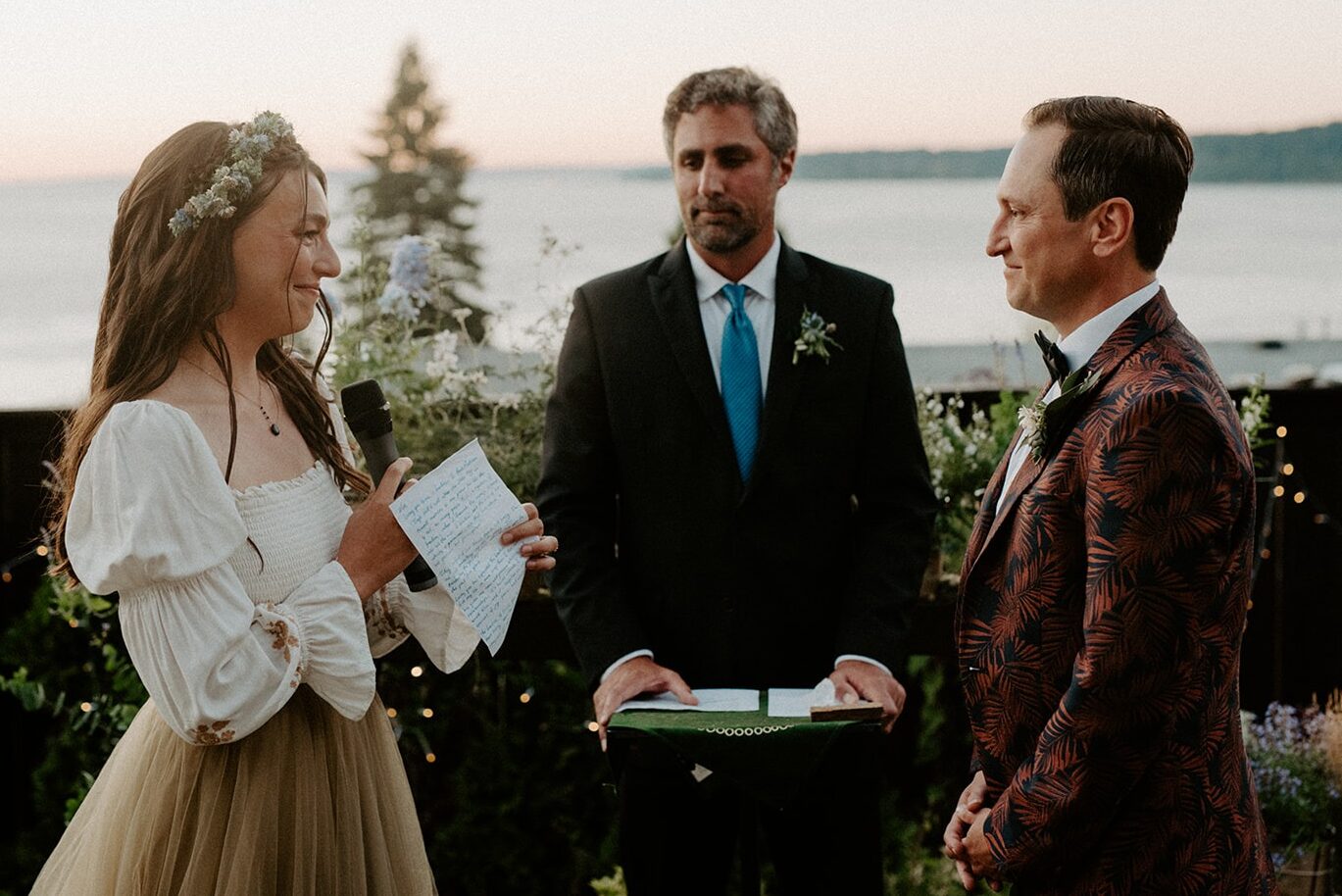
Some of my favorite ceremony lighting is backlight, front light, and overcast light.
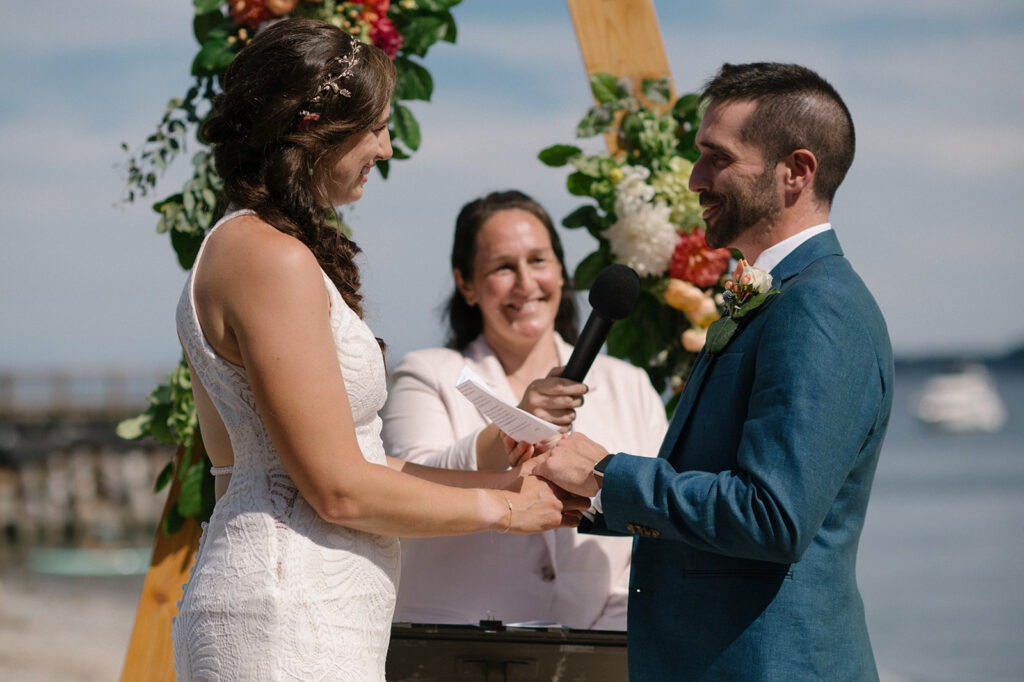
With a backlit ceremony, the sun is generally behind you from my perspective. This can create a beautiful glow, softer light on faces, and that warm, dimensional look you often see in sunset ceremonies.
Front-lit ceremonies can also photograph beautifully because the light on both of you is relatively even and predictable. The main consideration is comfort: if the sun is low and directly in your eyes, you may be squinting throughout the ceremony. The direction and height of the sun matter just as much as whether it is technically “front lit.”
And if you wake up on your wedding day and the sky is completely cloudy, please do not be disappointed.
Overcast light is some of the absolute best ceremony lighting we can get. Cloud cover essentially turns the sky into one giant diffuser, creating soft, even light with very little harsh contrast. Skin tones tend to look beautiful; there are fewer deep shadows under eyes and chins, and I have much more flexibility with angles because I am not fighting one intense direction of sunlight.
A cloudy ceremony may not look as dramatic when you first step outside, but photographically, it can be ideal.
So if the forecast says clouds, there is a very good chance your photographer is quietly thrilled.
And if you are keeping an eye on the forecast as your wedding approaches, I recommend checking a reliable local source like the National Weather Service rather than panicking over a weather-app forecast two weeks in advance. Check your local National Weather Service forecast.
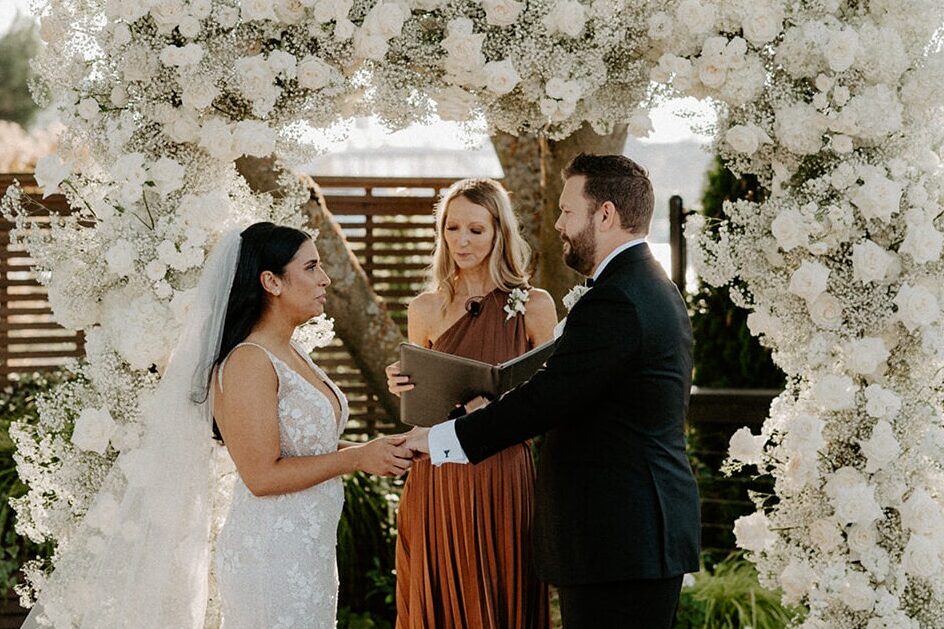
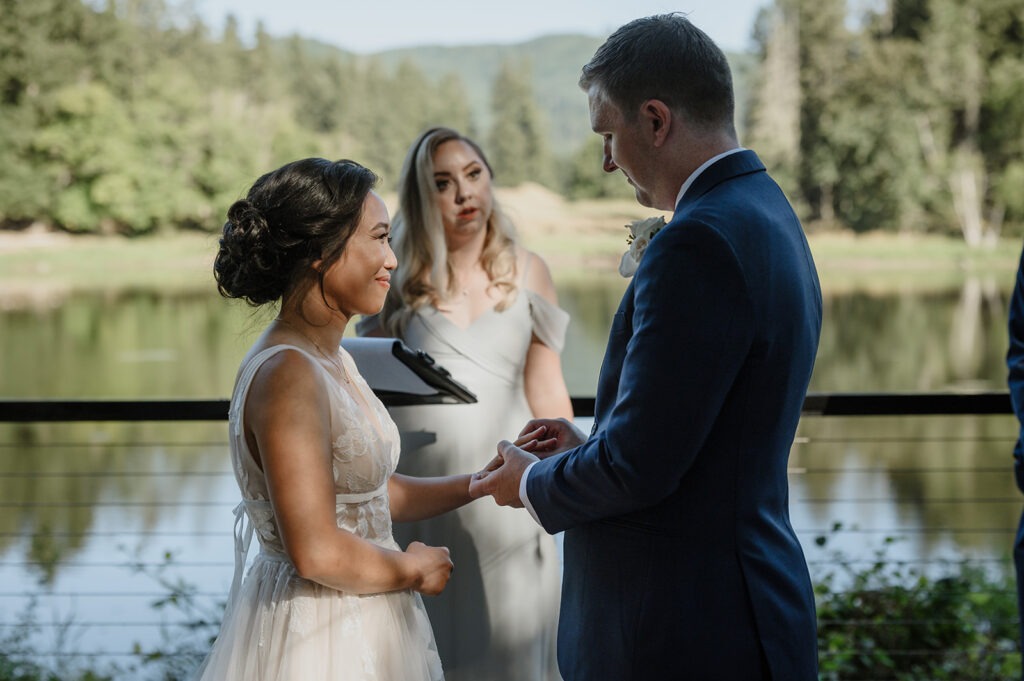
Dappled Light
Dappled light happens when direct sunlight filters through trees or another partially covered area, creating patches of sun and shade.
It can look beautiful to the human eye because we naturally adjust to the contrast.
A camera sees it differently.
One person’s face may be in bright sun while the other person’s is in shade. You may have a bright stripe of light across someone’s forehead, dress, or suit while everything immediately beside it is considerably darker.
That creates a very high-contrast image, and you can only correct it so much afterward before the photograph starts to look unnatural.
If you are planning a ceremony under trees, check the space at about the same time of day as your ceremony. A location that appears completely shaded at 10 a.m. may be covered in patches of direct sun at 4 p.m.
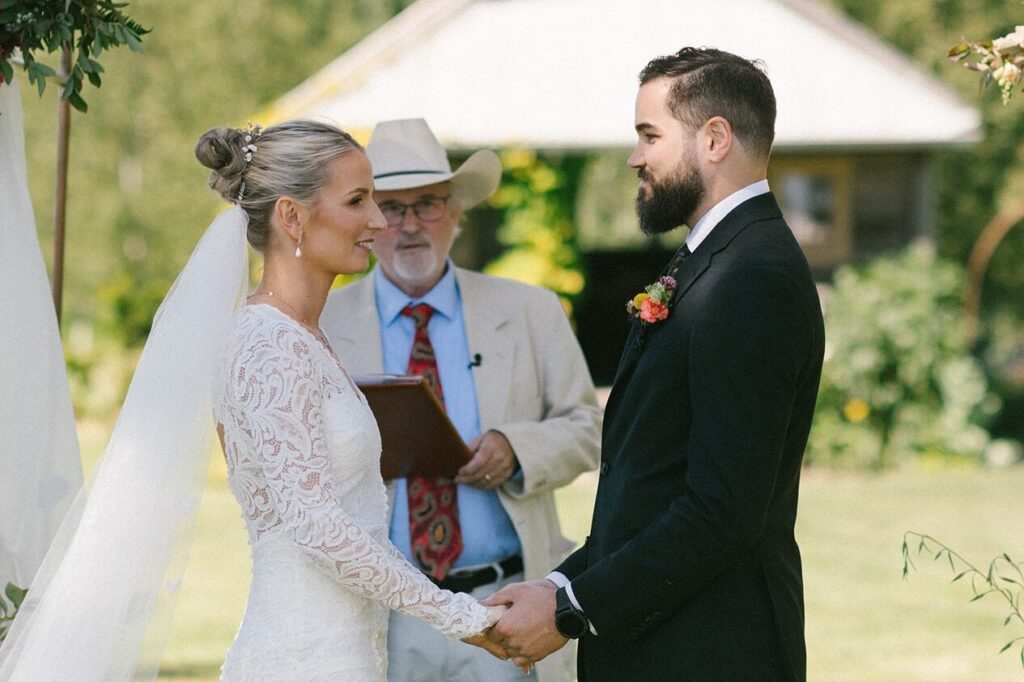
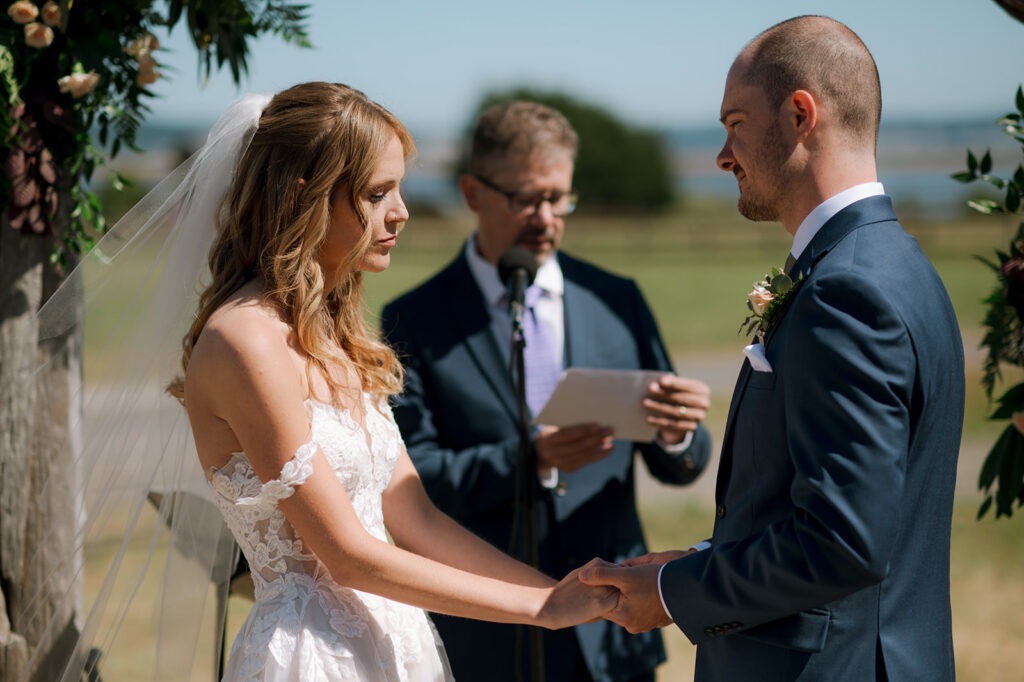
Direct Midday Sun
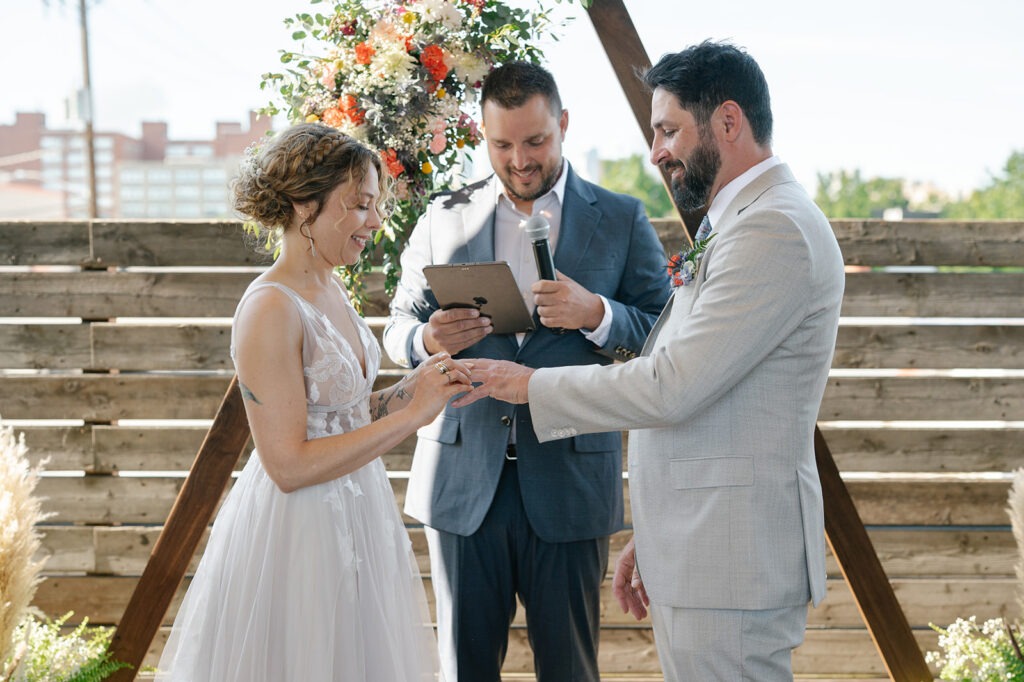
Direct midday sunlight creates strong highlights, deep shadows, and more contrast across faces.
You can absolutely photograph it, but it produces a very different look than soft evening light or overcast conditions.
If the sun is high overhead, you may also get stronger shadows underneath eyes, noses, and chins.
If you are planning an outdoor ceremony in direct sunlight and photography is a high priority, consider the direction the ceremony faces and where the sun will be during your ceremony.
Sometimes simply rotating the ceremony setup can make an enormous difference.
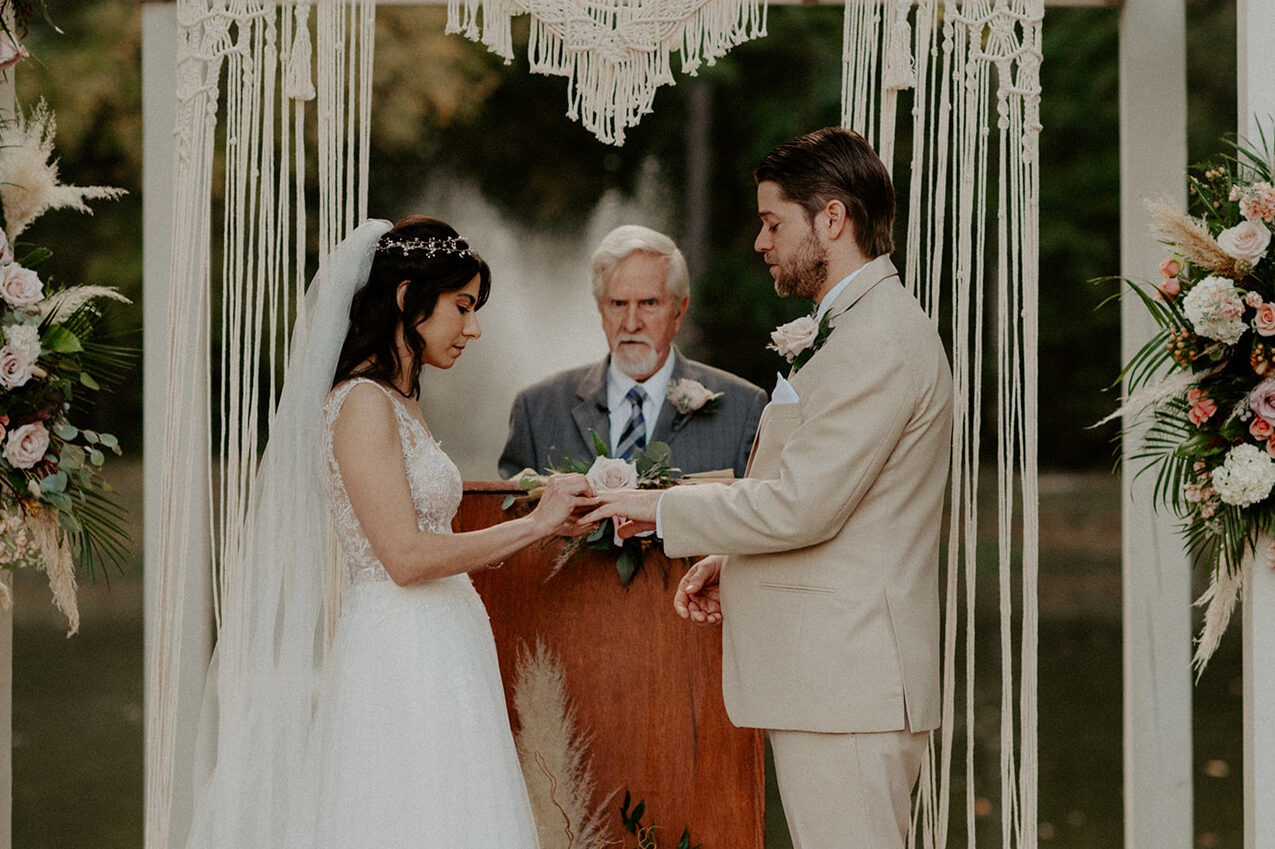
Covered Shade With a Bright Background
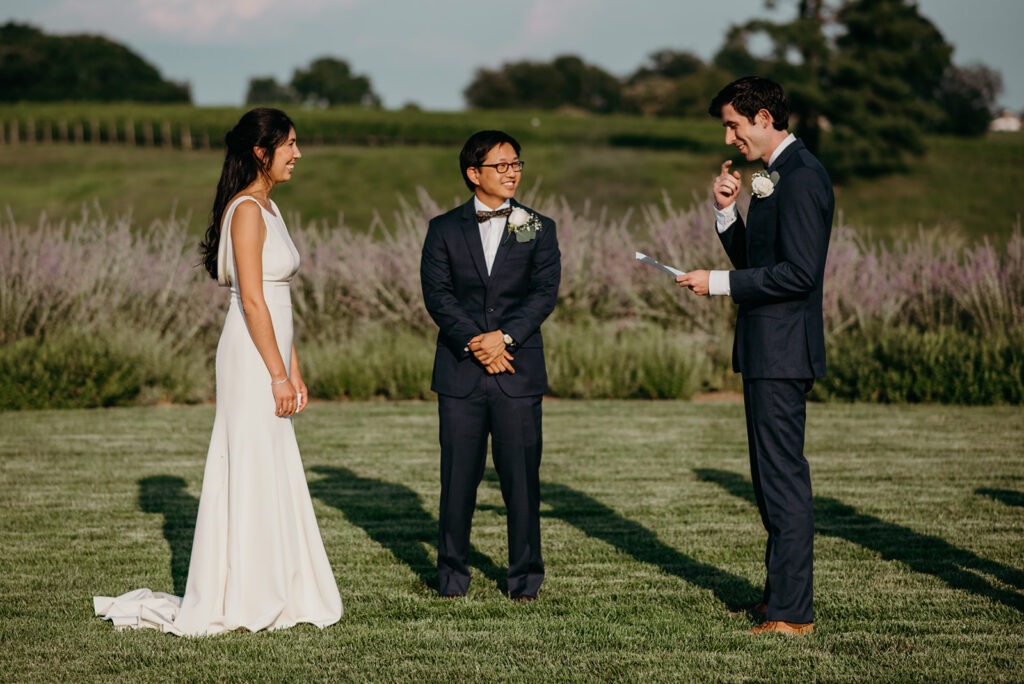
Being under a covering does not automatically mean the lighting will be completely even.
Sometimes the couple is standing in beautiful soft shade while everything immediately behind them is in intense direct sunlight.
That creates a large difference between your exposure and the background exposure.
I will generally prioritize exposing your skin correctly—which may mean the bright background becomes much brighter—or preserve more of the environment and work within the contrast.
Neither approach is “wrong.” It simply creates a different photographic look.
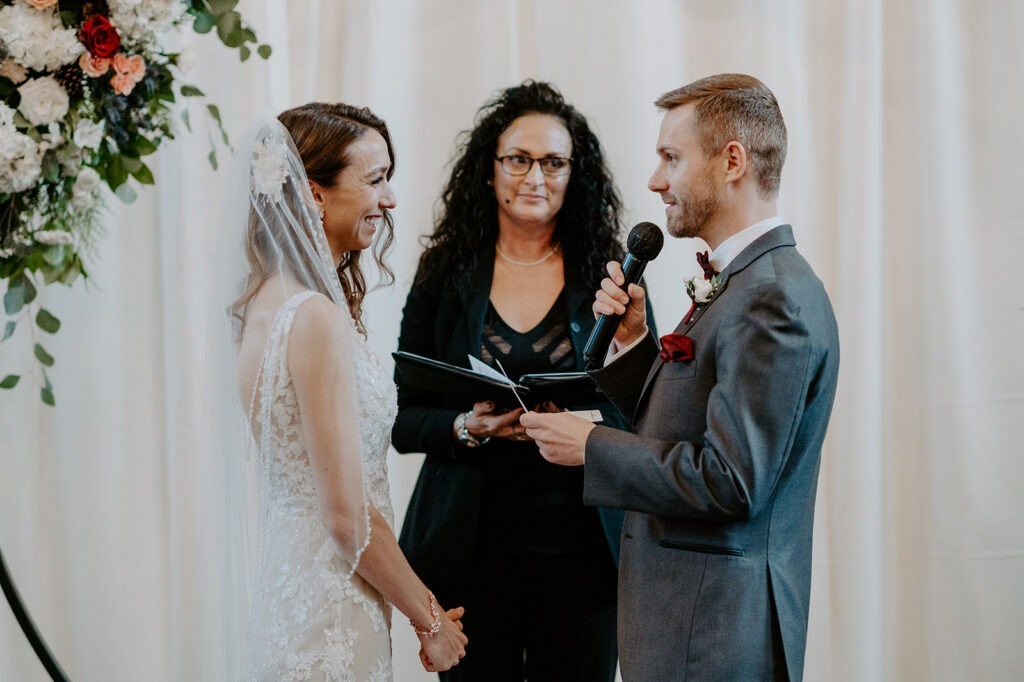
Indoor Natural Light
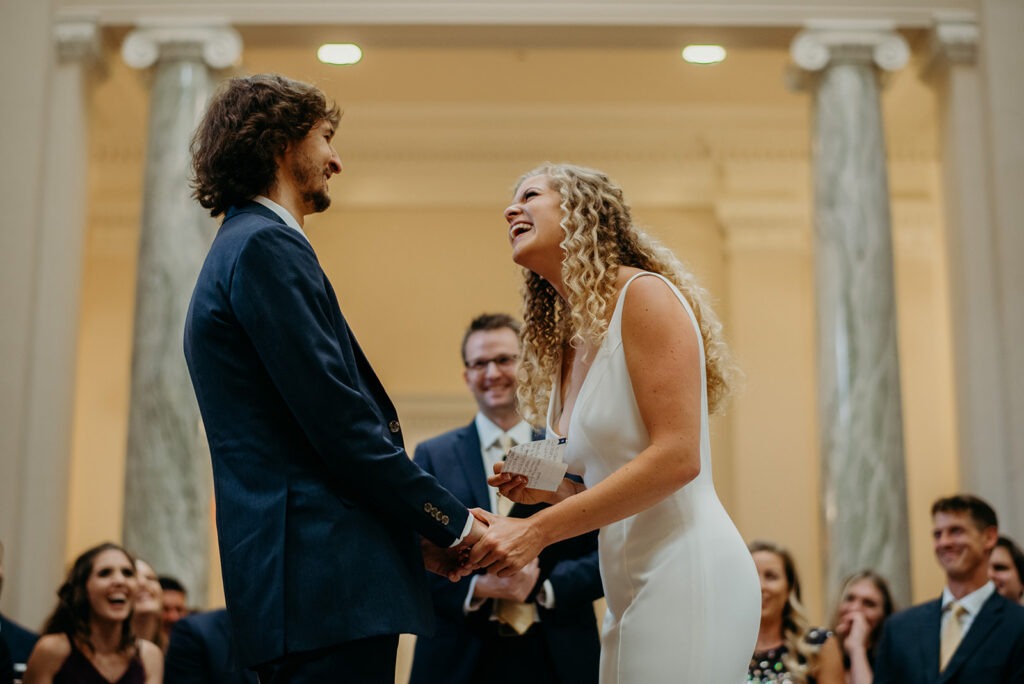
Indoor ceremonies with strong window light can be gorgeous.
Large windows, skylights, and bright neutral-colored spaces can create incredibly flattering, dimensional light without requiring much artificial illumination.
If your venue has abundant natural light, ask whether the ceremony can be lit primarily with that existing daylight.
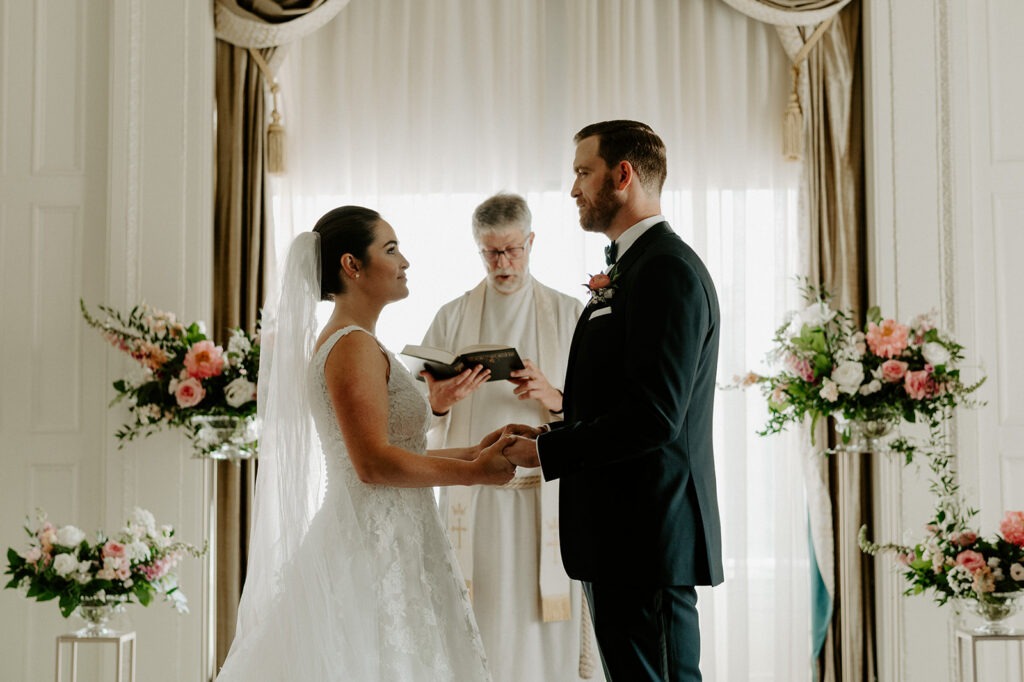
Mixed Natural + Artificial Light
Indoor ceremonies can get more complicated when daylight enters through large windows while warm chandeliers, ceiling fixtures, or other artificial lights illuminate you from another direction.
You may have cool daylight hitting one side of your face and orange artificial light hitting the other.
That is what photographers mean when we talk about mixed lighting.
There is not always one editing adjustment that completely corrects it because the photograph contains multiple colors of light at the same time.
In some spaces, you can dim or turn off warm overhead fixtures while still leaving plenty of natural ambient light.
Every venue is different, but it is worth asking.

Colored Uplighting and Ceremony Lighting
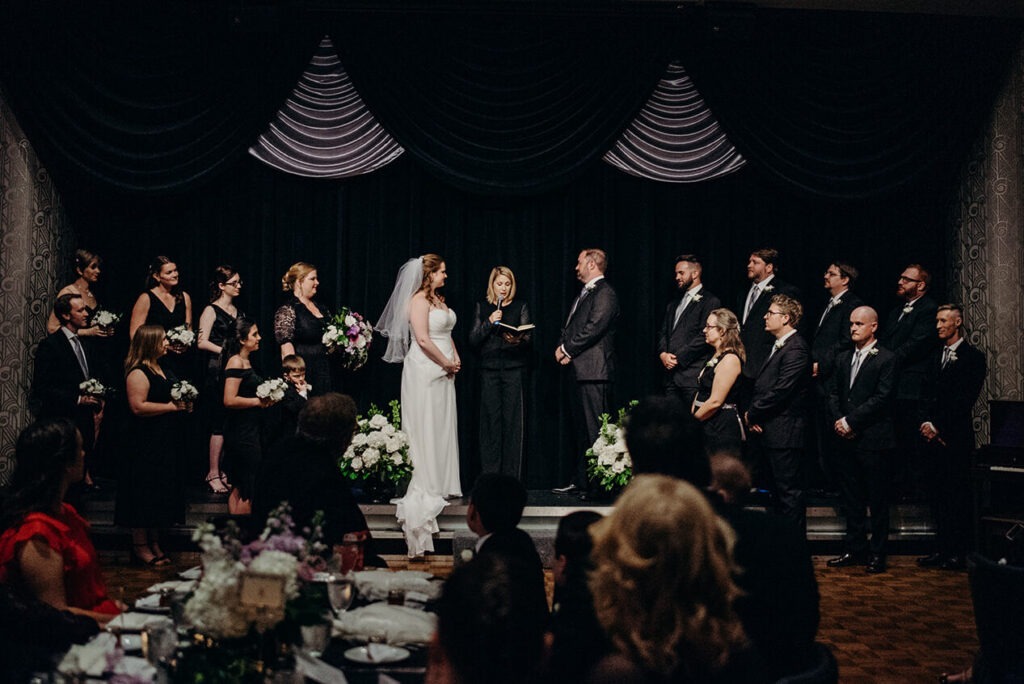
Strong blue, green, red, or magenta lighting can dramatically change skin tones.
Colored lighting can be a fun design element, but if it is projected directly onto the ceremony area, that color becomes part of your skin, clothing, flowers, and surroundings in the photograph.
That effect cannot always simply be “edited out.”
If you love colored uplighting but also want clean, natural ceremony photographs, consider keeping the ceremony lighting more neutral and introducing stronger colors later during the reception.
If Photography Is a Major Priority, Ask These Questions
Before finalizing your ceremony setup, it can be helpful to ask:
- Where will the sun be at our ceremony time?
- Will we be facing toward it, away from it, or sideways to it?
- Will trees create patchy or dappled sunlight?
- Will we be standing in shade with a dramatically brighter background?
- Does the indoor space have strong natural window light?
- Can warm overhead lighting be dimmed if necessary?
- Will colored uplighting hit our faces during the ceremony?
- Can the ceremony orientation be adjusted if the existing light is especially difficult?
You do not need to design your entire wedding around photography.
But if you are choosing between two equally beautiful ceremony setups, the direction and quality of the light may be what makes one photograph substantially better than the other.
And if you are unsure, ask me. If I know the venue, ceremony time, and orientation, I can often help you anticipate what the light will look like before the wedding day.
If you are planning a ceremony under trees, look at the space at about the same time of day as your ceremony. A location that appears completely shaded at 10 a.m. may be covered in patches of direct sun at 4 p.m.
You can also use SunCalc to check the sun’s position for your ceremony location, date, and time. It can give you a better idea of where the light will come from before you finalize your ceremony setup. Check the sun’s position with SunCalc.
Your First Kiss: Give It a Second
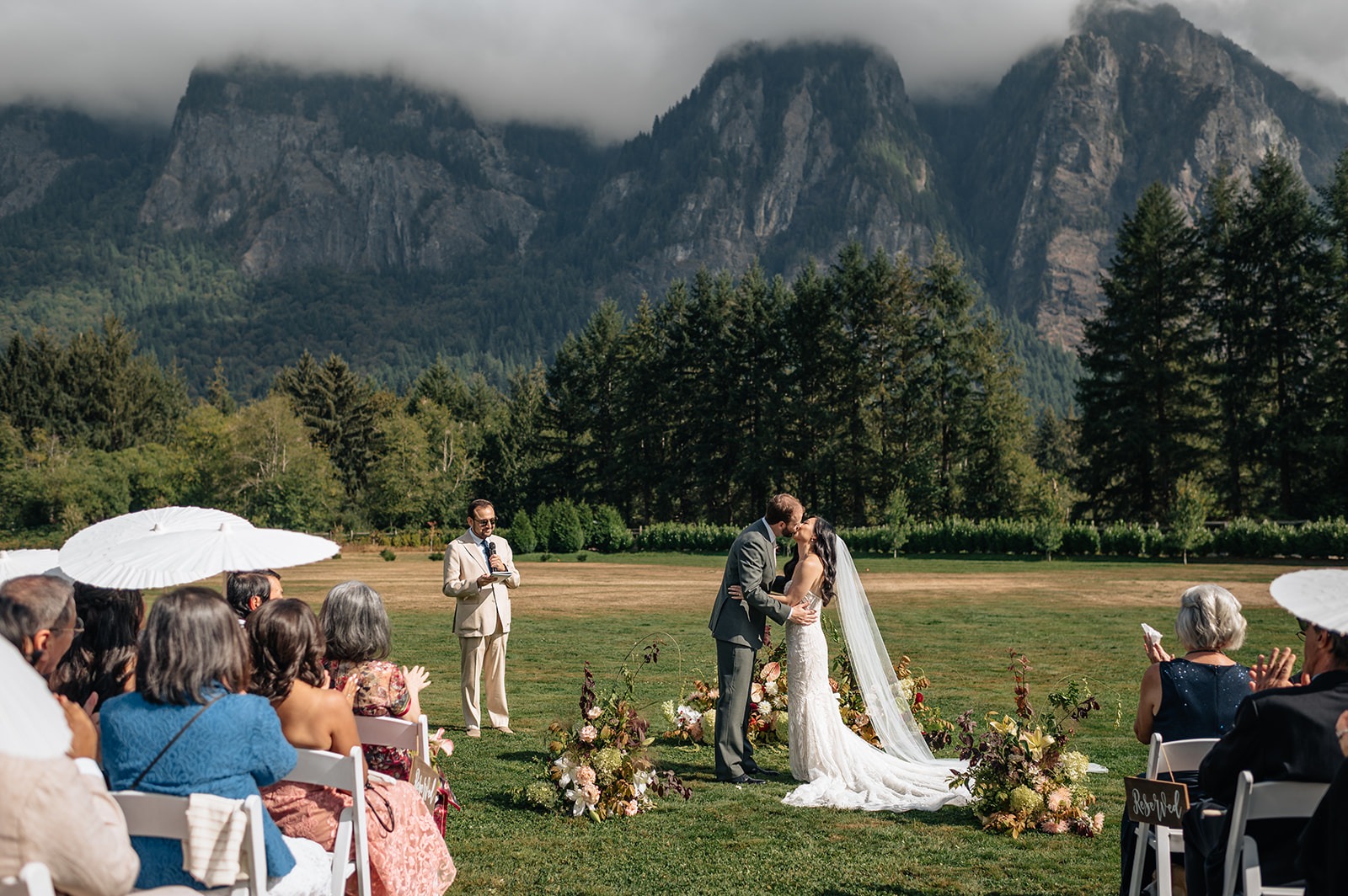
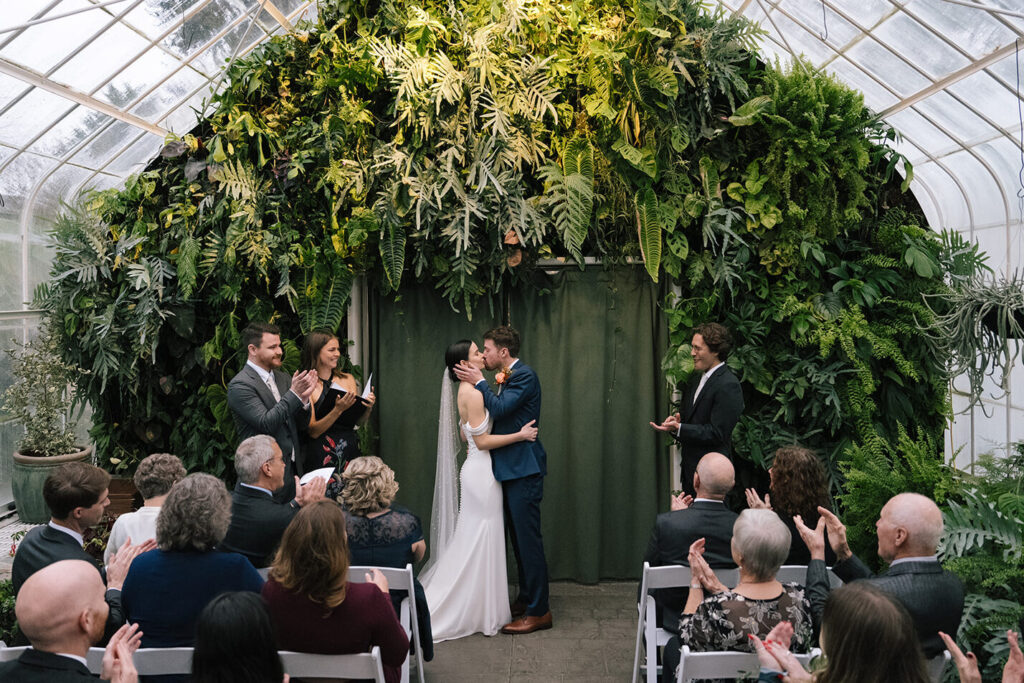
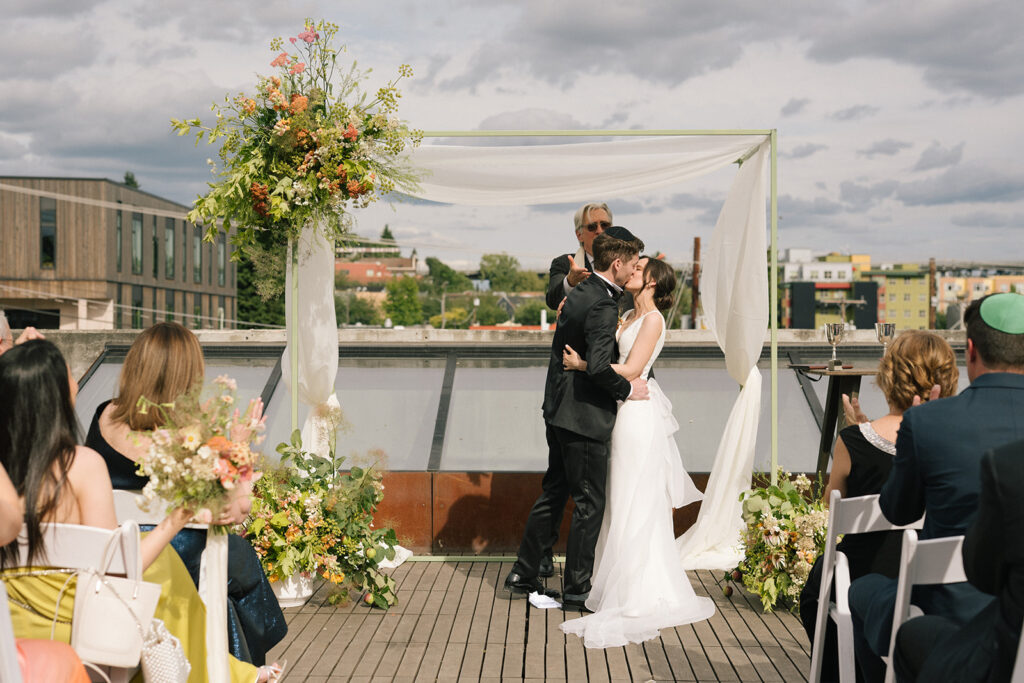
Your first kiss does not need to be long or dramatic, but try not to make it a lightning-fast peck.
Cameras are fast, but there are still moments when a camera is writing files or refocusing, and an extremely quick kiss can happen almost entirely between frames.
A good rule of thumb is to count to three.
That gives me enough time to capture a few frames, gives your guests time to react, and makes the moment feel more intentional.
And honestly – it’s your first kiss! Make it a good one 🙂
Think Twice Before Signing the Marriage License Immediately After the Ceremony
One small timeline choice that can have a surprisingly big impact on your photographs is when you sign your marriage license.
Many couples automatically plan to do it immediately after the ceremony because it feels like the logical time.
But photographically, that can mean stepping away from one of the most emotionally charged parts of your entire wedding day.
You just got married.
Your friends and family are excited. People are crying, hugging you, laughing, grabbing your hands, celebrating, and reacting in ways you can’t really recreate later.
Those first few minutes after the ceremony often include some of the best candid photographs of the day.
If we leave that moment immediately to photograph paperwork, I may miss all of that.
If photographs of signing your marriage license are genuinely important to you, that is completely fine. I will absolutely be there to document it.
But if I had to choose between photographing you signing a document and photographing you celebrating with the people you love at the emotional peak of the day because you just did the damn thing, I am going to choose the hugs every time.
My photographer heart breaks a little whenever I am pulled away from those once-only reactions to document something that could realistically happen at another point in the day.
So consider moving the license signing.
If you are doing a first look and private vows, you may be able to sign it then if your officiant and any required witnesses are present.
You can also sign it later during the reception once things have settled down.
Another option is to incorporate the signing into the ceremony itself in front of your guests. If you do that, complete as much paperwork ahead of time as legally permitted so everyone isn’t standing there watching you fill out addresses and dates.
The exact timing depends on your officiant, witnesses, and local marriage-license requirements, but the bigger idea is simple:
Protect the moments that can only happen once.
The paperwork will still be there 30 minutes later.
A tearful post-ceremony hug from your dad might not be.
Your Vendor Choices Can Affect Your Photographs
Weddings are collaborative.
Photographers do not work in isolation.
Your hair and makeup team can affect when photography begins.
Your planner influences the timeline.
Your florist determines when bouquets and details are available.
Transportation affects whether everyone arrives on time.
Your DJ controls much of the reception lighting.
Your videographer and photographer often try to document the same moment from the same physical space.
This is one reason photographers create preferred-vendor lists.
My preferred vendors aren’t people you are required to hire.
I have worked successfully alongside all kinds of wedding professionals.
They are simply professionals whose work, communication, professionalism, or collaborative approach I trust.
Check out my preferred wedding vendors!
You should absolutely hire the team that feels right for you.
But understand that no wedding vendor exists in a vacuum.
If another vendor significantly delays the timeline, changes photography plans without communicating with me, repeatedly enters photographs, independently directs portions of photography, or creates lighting conditions that dramatically affect the images, I cannot guarantee the same photographic possibilities that would have existed without those limitations.
Photography and Videography: We Have to Share the Same Space
Photography and videography are probably the clearest example of how one vendor can affect another.
I photograph weddings and also offer wedding videography, so I have worked on both sides of this relationship.
And one thing becomes very obvious when you’ve done both:
We can absolutely ruin each other’s shots if we aren’t paying attention.
Photographers and videographers often need very similar positions.
During a processional, we may both want a clean view down the aisle.
During a first look, we both want to see the reaction.
During portraits, we may both want the most flattering angle.
During a first dance, we are both moving around the dance floor looking for clean backgrounds and good light.
There will inevitably be moments when one of us appears in the other’s frame.
The goal isn’t perfection.
The goal is professional awareness and cooperation.
A collaborative photography and videography team communicates, watches each other’s cameras, takes turns when necessary, and recognizes when the other person has the better position.
If a videographer plants themselves directly behind you during portraits, they may appear in the photographs.
If I walk directly in front of a videographer’s locked-off ceremony camera at the worst possible moment, I may ruin part of your video.
Neither is ideal.
And both are often avoidable.
Professional collaboration also means not repeatedly redirecting someone else’s poses, monopolizing a critical location, intentionally stepping into another person’s frame, or asking the couple to continually reenact moments without coordinating with the other creative team.
Sometimes video needs five seconds to get movement.
Sometimes photography needs five seconds to get a clean still frame.
Good teams give each other those five seconds.
Ultimately, your photographer and videographer should have the same goal:
Giving you excellent photography and excellent video without making you feel like you’re caught between two competing production crews.
This is something worth considering when choosing your team.
Your Planner and Photographer Should Collaborate on the Timeline
If you have a planner, I’m happy to work with them to build your wedding timeline.
Planners understand the logistics of the entire wedding.
I understand the photography requirements.
Those things should work together.
Problems arise when photography time is shortened or moved after we have already built the timeline, without anyone checking how that change affects the photographs.
A planner may look at a 30-minute portrait block and think:
“We need more time somewhere else. Let’s make this 15.”
But those 30 minutes may have been intentionally scheduled around light, family photographs, transportation, sunset, or the number of photographs you told me were important.
Moving one event by 20 minutes can create a domino effect.
I don’t need complete control of your wedding timeline.
I simply ask that significant changes affecting photography are discussed with me so I can explain the trade-off before a decision is made.
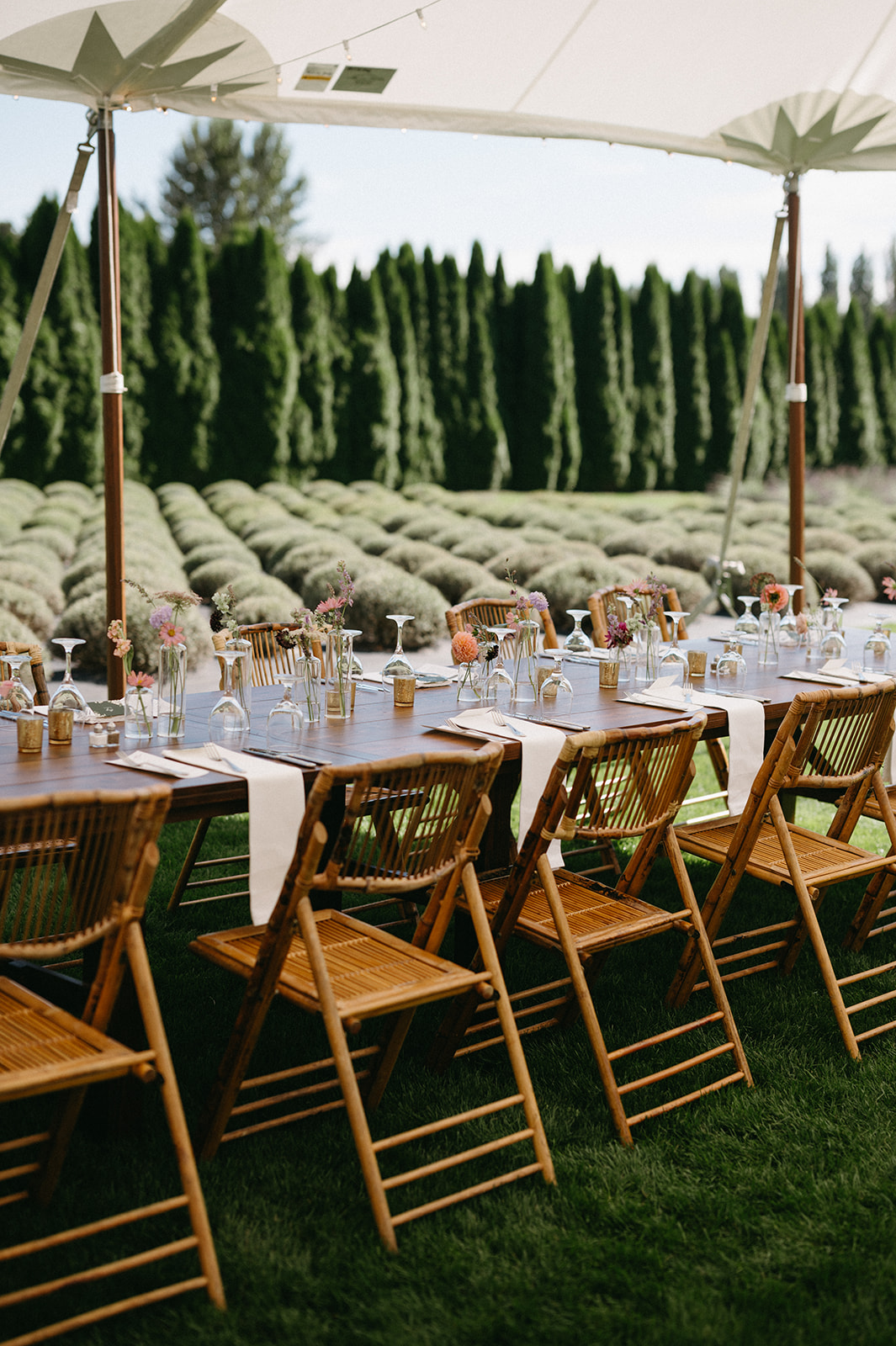
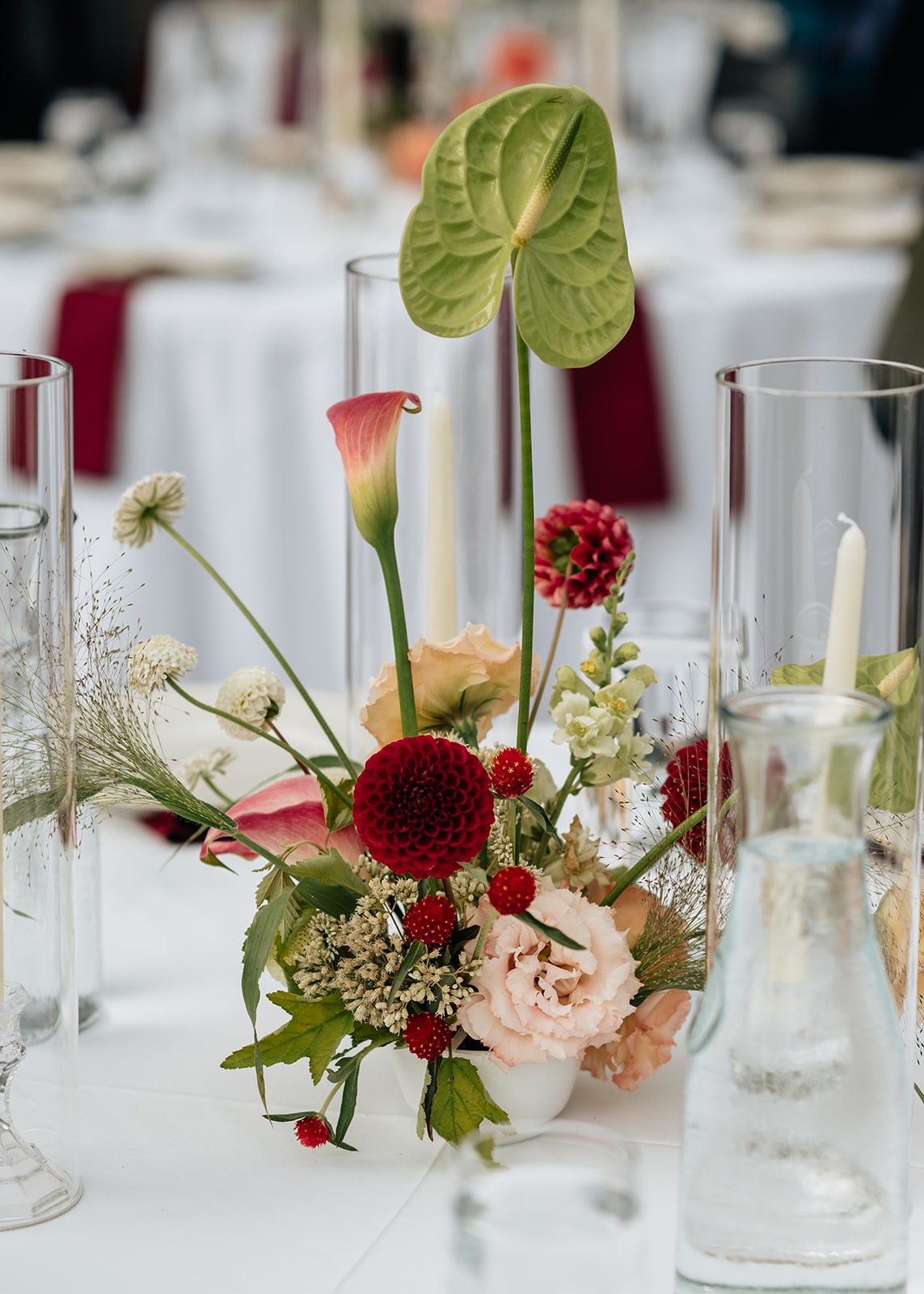
Reception Detail Photos Need an Empty Reception Space
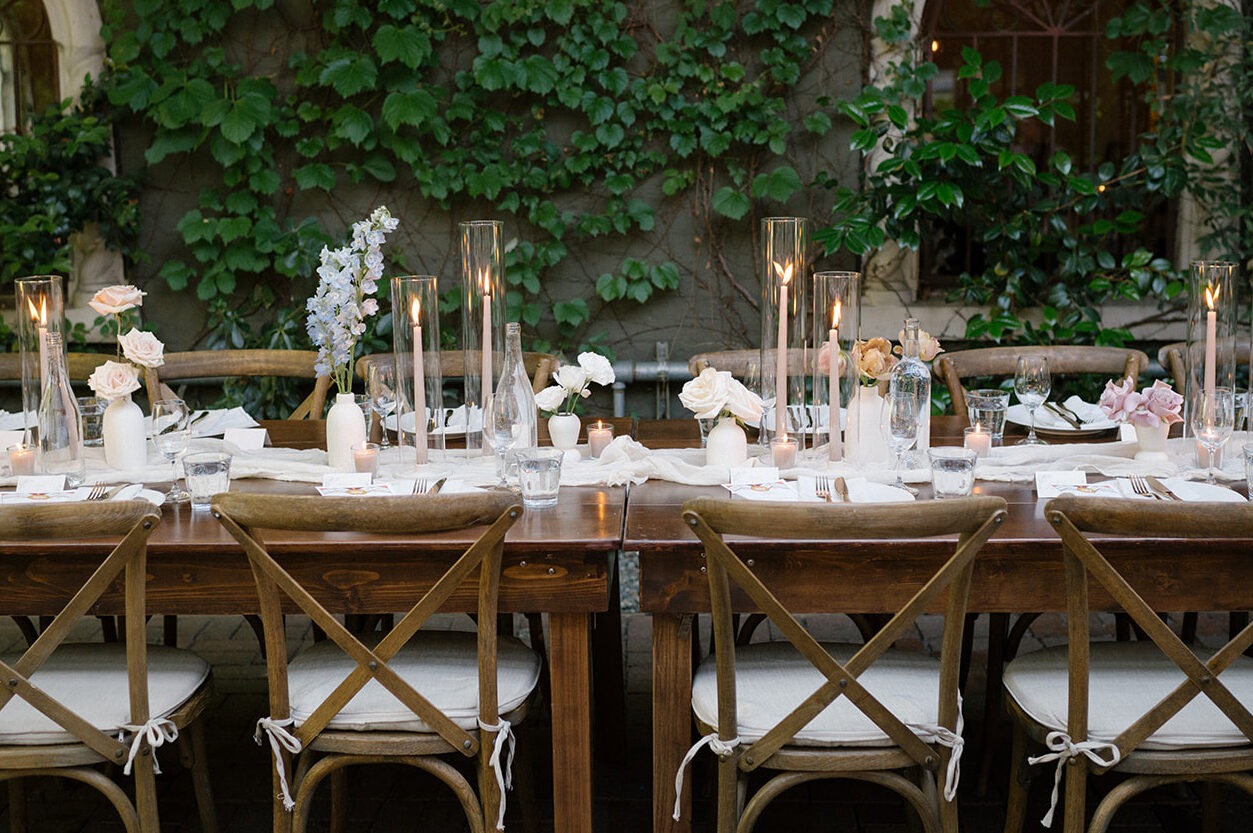
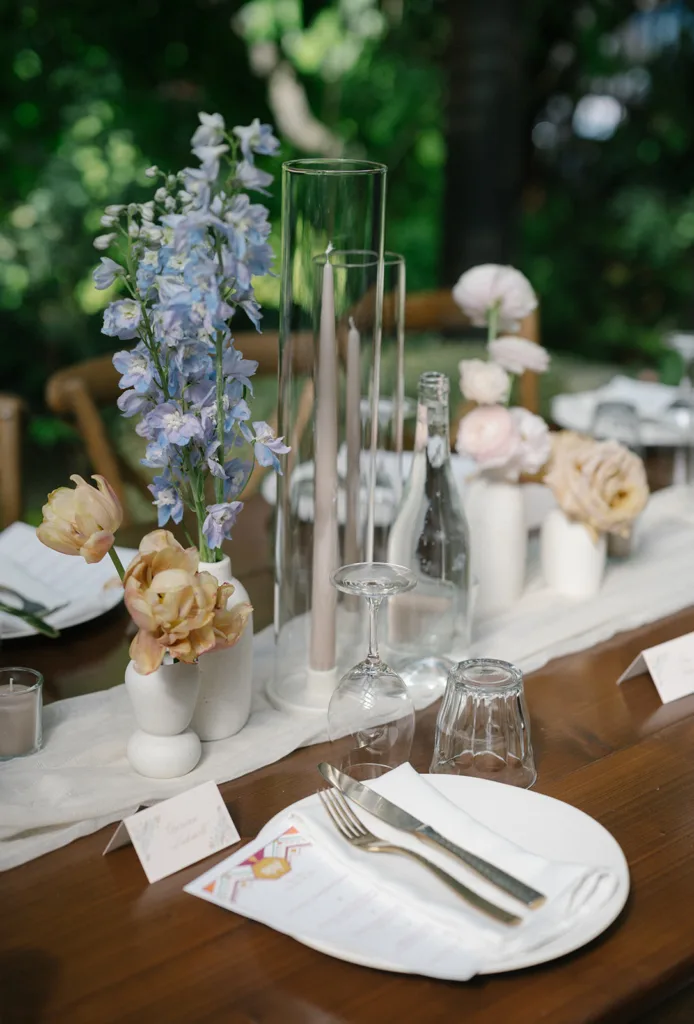
Those wide photographs of an untouched reception room happen during a very small window.
The florals are installed.
The tables are set.
The candles are lit.
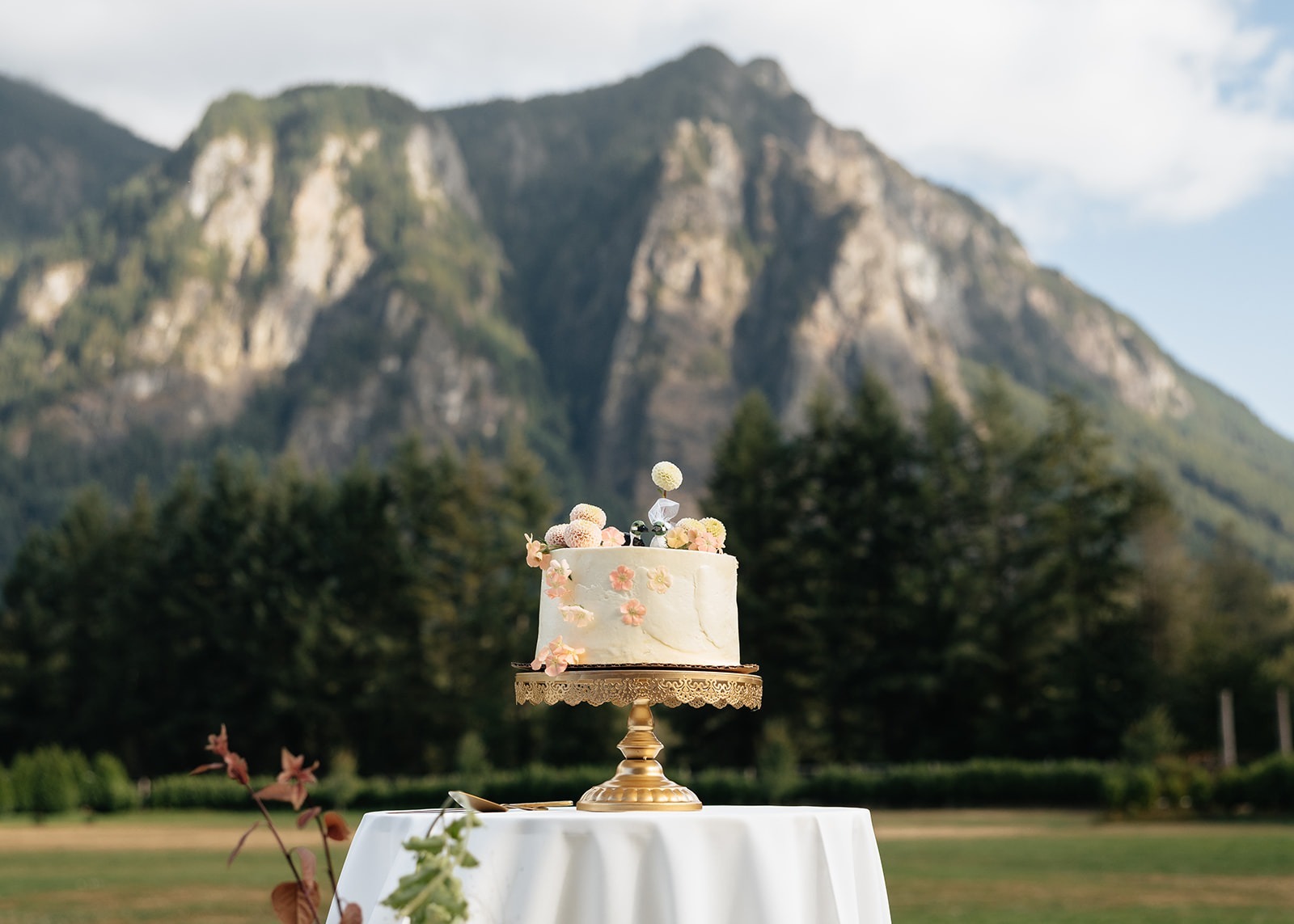
The cake is untouched.
The chairs are perfect.
And nobody has entered yet.
Then cocktail hour ends.
Within minutes:
- jackets appear on chairs
- purses go on tables
- drinks appear
- details change position
- guests begin sitting down
- staff start working around the room
At that point, I can absolutely continue photographing the reception details.
But I cannot photograph the untouched room that existed 15 minutes earlier.
If your tablescape and reception design are important to you, I generally recommend giving your photographer approximately 10–15 minutes of access to the completed reception room before guests enter.
Your planner, catering team, florist, and venue all need to be aware of that plan.
You Don’t Necessarily Need an Unplugged Ceremony
I don’t require unplugged ceremonies.
Your guests are excited.
They want pictures.
They want memories on their phones.
That’s okay with me.
What does create a problem is when guests physically lean or step into the aisle while photographing your processional.
Recently, I’ve seen more and more guests stretch several feet into the aisle holding their phones in front of the person walking toward the ceremony.
At that point, I don’t have a magical alternate angle.
The guest is simply in the photograph.
If you don’t mind phones appearing in some ceremony photographs, you don’t need to ban phones just because your photographer told you to.
But if photographs with a clear aisle are important to you, you need to communicate that expectation to your guests.
A good compromise might be:
Feel free to take photographs from your seat, but please keep the aisle completely clear during the ceremony and processional.
That allows your guests to enjoy the wedding the way they want without blocking the professional coverage you hired.
A 15-Minute Drive Is Not a 15-Minute Wedding Transition
Google Maps might say your locations are 15 minutes apart.
That does not mean I put 15 minutes on your wedding timeline.
We also need to:
- gather everyone
- walk to transportation
- load bouquets
- load dresses
- get into vehicles
- drive
- park
- unload
- walk to the actual photography location
- wait for anyone traveling separately
Suddenly that 15-minute drive takes 30 minutes.
Transportation delays are incredibly common on wedding days, particularly with larger wedding parties and multiple vehicles.
If you are changing locations, build in actual transition time – not just drive time.
Talk to Your DJ About Laser Lights
Reception lighting can completely change the look of your photographs.
This is especially true with lasers.
Laser effects can project dots, lines, or patterns directly across people’s faces, clothing, and skin.
These light casts are very difficult to correct in editing, so they generally aren’t.
Strong blue, green, red, and magenta lighting can create similar issues with skin tones.
That doesn’t mean your reception needs boring lighting.
Fun lighting can look fantastic once everyone is dancing.
My recommendation is simply to ask your DJ to save lasers and extremely strong colored effects until open dancing.
Cleaner lighting tends to photograph much more naturally. I suggest keeping that clean lighting for important reception events such as:
- introductions
- first dance
- parent dances
- speeches
- cake cutting
Once the formal events are over? Turn the party lights on.
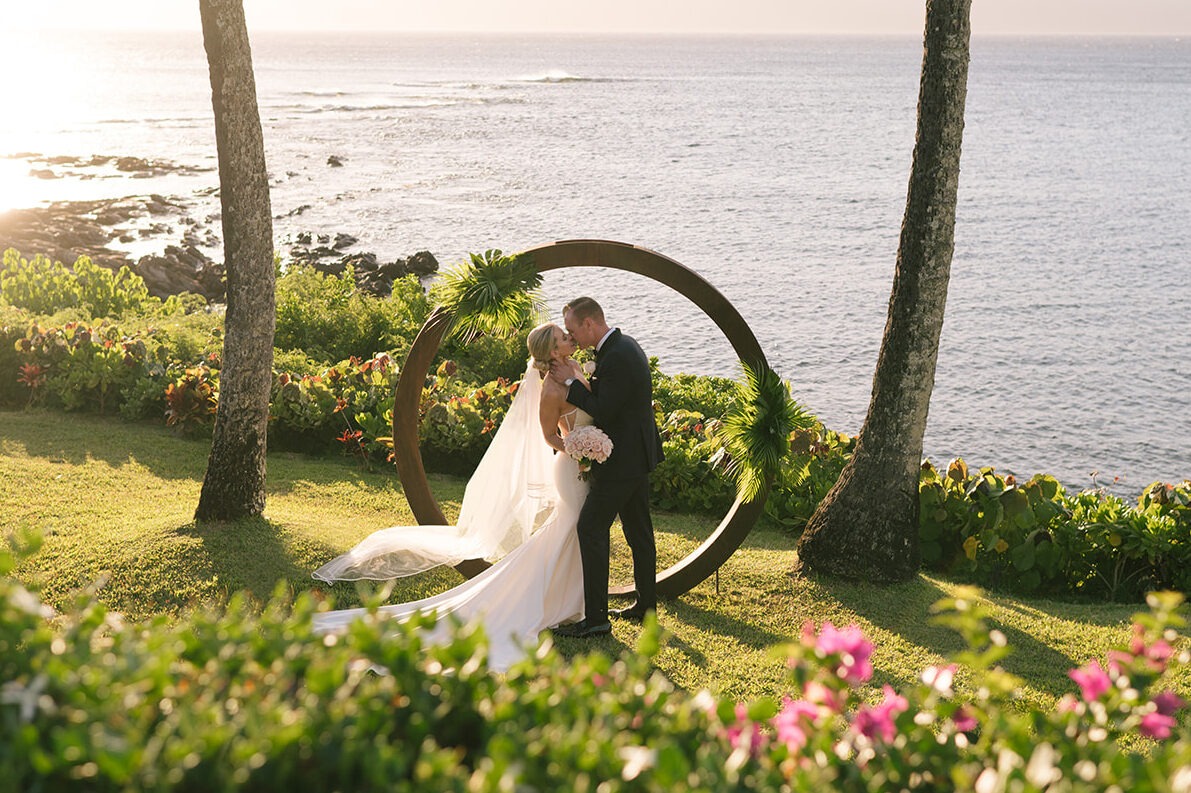
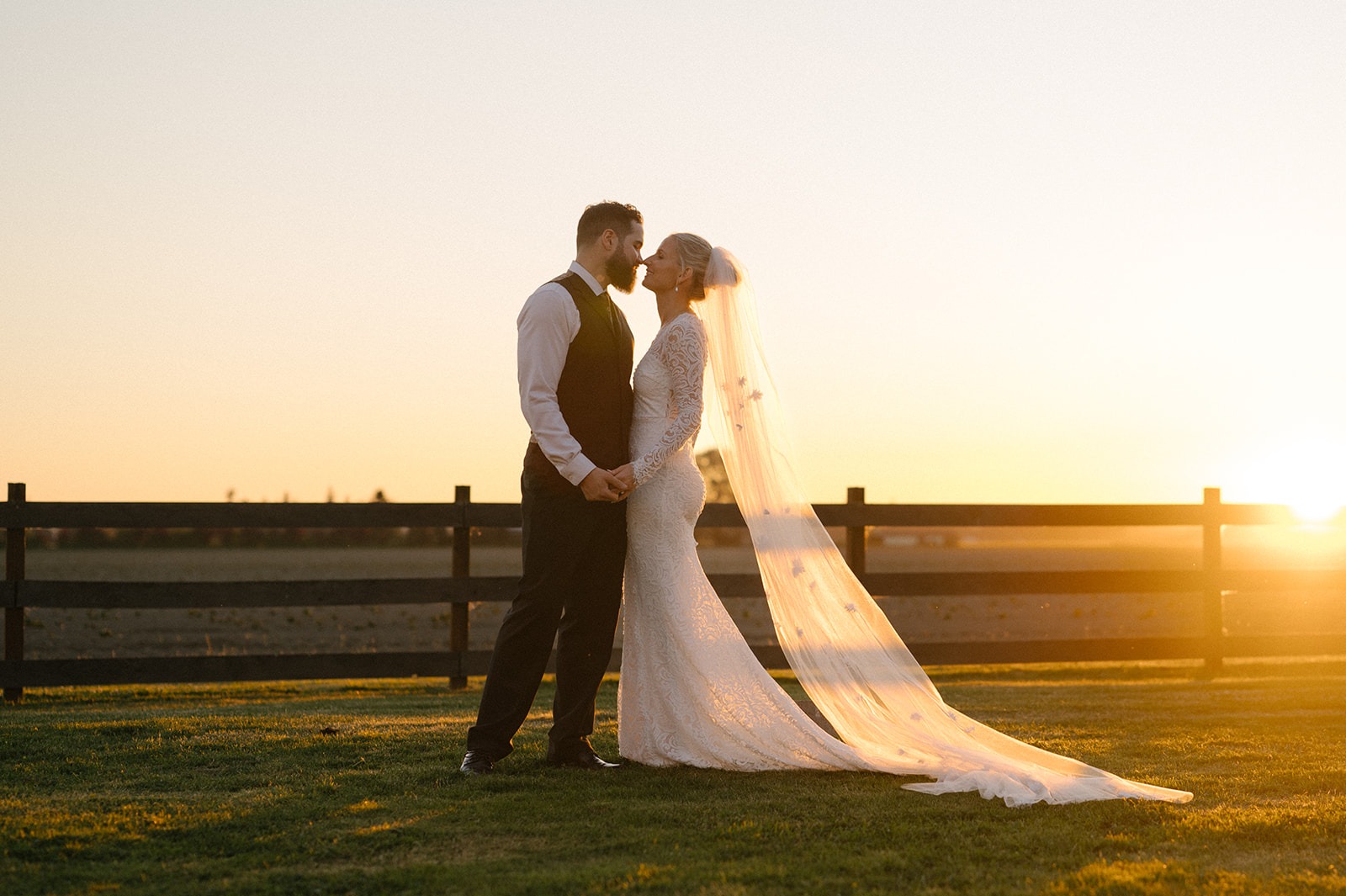
Sunset Will Not Wait Because the Wedding is Running Late
This seems obvious, but it becomes very relevant on wedding days.
Your timeline can move.
Sunset cannot.
If the best light is happening at 7:45, it will still happen at 7:45 even if dinner started late.
If sunset photographs are important to you, protect that window.
Sometimes I will recommend stepping away from dinner or the reception for 10–15 minutes because the light outside is especially beautiful.
You don’t have to.
But you can’t recreate that exact light an hour later.
If sunset portraits are high on your priority list, tell me so I can intentionally plan around them.
A Sample Wedding Photography Timeline
Every wedding is different, but these are useful starting points when building your photography timeline:
Getting Ready
Photography ready: approximately 30–45 minutes before the first-look process begins
Built-in buffer: approximately 15 minutes
First Look
First look/private time: approximately 15 minutes
Private vows or letters: add additional time based on length
Portraits
Couple portraits: approximately 30 minutes
Individual bride portraits: 10–15 minutes
Individual groom portraits: 10–15 minutes
Wedding party of eight or fewer: approximately 30 minutes
Wedding party larger than eight: 30+ minutes depending on group size and the amount of variety you want
Family
Family photographs: approximately two minutes per grouping
My recommendation: aim for approximately 15 formal combinations or fewer when possible
Details
Styled flat lays: 30+ minutes for extensive detail coverage
Completed empty reception room: 10–15+ minutes before guests enter
These aren’t arbitrary numbers.
They are based on how long it realistically takes to create photographs thoughtfully without turning your wedding day into one giant photo session.
So, How Many Hours of Wedding Photography Do You Actually Need?
There isn’t one answer.
An intimate wedding where everyone gets ready at the venue, the ceremony and reception are in one location, the wedding party has four people, and the couple doesn’t care about a formal exit may fit beautifully into eight hours.
Another wedding may have:
- two getting-ready locations
- a 14-person wedding party
- 20 family combinations
- elaborate details
- a first look
- private vows
- three different locations
- significant transportation
- a full reception timeline
- sunset portraits
- a sparkler exit
Those are not the same eight hours.
You should strongly consider additional coverage if:
- you have a wedding party larger than eight
- you have a long family-photo list
- you have multiple locations
- you want extensive detail coverage
- individual portraits are particularly important
- you are planning private vows
- you have significant transportation
- your reception is packed with events
- you want both getting-ready coverage and a formal exit
- you know you tend to run late
- you want your photography experience to feel particularly relaxed
Explore my wedding photography collections here.
The Best Wedding Photography Timeline Isn’t the Tightest One
A perfectly optimized wedding timeline isn’t one where every minute is filled.
It is one where there is enough breathing room that when your mom can’t find her shoes, your boutonniere breaks, the shuttle is seven minutes late, or your veil needs adjusting, nobody panics.
It is one where you actually get to talk to each other during your first look.
Where we can make a creative photograph because the light looks interesting instead of saying, “We don’t have time.”
Where you can stop and hug your grandmother without worrying that you’re destroying the schedule.
Where photography documents your wedding instead of your wedding becoming an exercise in producing photographs.
That is ultimately why I care so much about timelines.
Not because I want your wedding to run like a military operation.
Because I don’t.
I want you to have enough structure in place that you can forget about the structure once the wedding begins.
Time creates options.
It gives us room for photographs, yes.
But more importantly, it gives you room to actually experience the day those photographs are meant to remember.
Planning a Wedding in Seattle or the Pacific Northwest?
I photograph weddings throughout Seattle, Tacoma, Kitsap County, and the greater Pacific Northwest, and I work through timeline planning with every couple.
If you have a planner, I am happy to collaborate with them. If you don’t, I can help build the photography timeline with you so that your priorities, available light, wedding-party size, family photographs, travel, and reception events all make sense together.
Get in touch / inquire about your wedding, or see more of my wedding photography work!
