
Going Without a Wedding Party? 8 Meaningful Ways to Include Friends
Let’s Ditch the Wedding Party: Unique Ways to Include Your Friends in Your Wedding
So you’ve decided you don’t want a traditional wedding party — or maybe you’re still on the fence, half-convinced you’re supposed to want one. Either way, you’re not alone. More and more couples are skipping the matching dresses and assigned roles in favor of something that actually reflects who they are and how their relationships work. And a wedding without a wedding party doesn’t have to mean a wedding without your people front and center. There are so many more meaningful ways to honor the people you love than handing them a bouquet and asking them to stand in a straight line.
This isn’t about doing your wedding wrong. It’s about doing it your way — and figuring out how to include everyone who matters without the structure of a traditional wedding party telling you how. Turns out, when you ditch the assigned roles, you have a lot more room to be intentional about the people you love. I am going to take you through my favorite ways to include friends in your wedding without a wedding party.

Why Couples Are Moving Away from Traditional Wedding Parties
The classic setup — maid of honor, best man, bridesmaids, groomsmen, maybe a flower girl and a ring bearer — made a lot of sense in a certain era of weddings. But modern couples often don’t fit neatly into that structure anymore, and the reasons are as varied as the couples themselves.
Maybe you have a huge, close friend group, and the idea of choosing four people to stand up front while twenty others sit in the crowd feels genuinely cruel. Maybe your closest people are scattered across different cities and couldn’t commit to all the pre-wedding obligations even if they wanted to. Maybe you and your partner both have close friends of all genders, and the traditional “bridesmaids on one side, groomsmen on the other” visual just doesn’t represent your relationship. Or maybe you’re planning a more intimate wedding or a Pacific Northwest elopement where the whole vibe is relaxed and personal, and a formal wedding party would feel like a costume.
Whatever your reason, it’s valid. Opting to go without a wedding party doesn’t mean you’re prioritizing your relationship any less or that your friends don’t matter to you. Often, it means the opposite — you care too much about them to slot them into a role that doesn’t feel genuine.
There’s also a real logistical case to be made. Wedding parties come with moving parts: coordinating attire across budgets and body types, managing group chats that somehow become a part-time job, wrangling schedules for engagement parties, showers, and rehearsal dinners. Letting go of the formal structure can meaningfully simplify your planning and take pressure off both you and the people you love most.
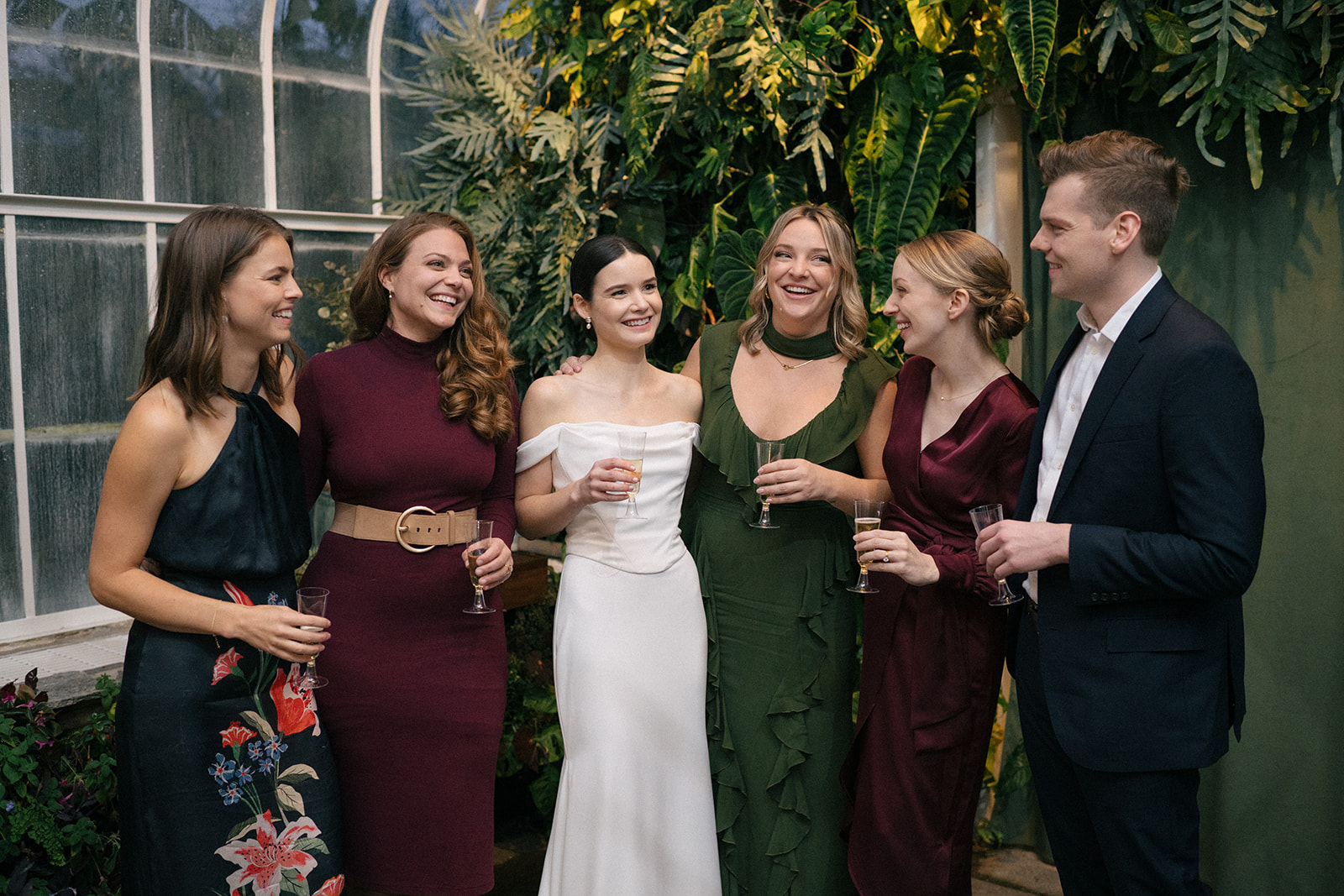
Will My Friends Feel Left Out?
This is the question that keeps most couples stuck, and it’s worth addressing directly: your friends won’t feel left out because they aren’t in a wedding party. They’ll feel left out if they feel invisible on the day.
The cure isn’t a matching dress. It’s intentionality — finding genuine, personal ways to weave the people you love into the day so they leave feeling like they were part of something, not just an audience.
8 Ways to Include Friends in Your Wedding Without a Traditional Wedding Party
1. Ask a Friend to Officiate
This might be the single most meaningful role you can give someone, and it has nothing to do with a wedding party. A friend who officiates isn’t standing off to the side — they’re at the literal center of your ceremony, the person who guides you through your vows and tells the story of your relationship to everyone in the room.
In Washington State, anyone can become ordained through organizations like the Universal Life Church in minutes. If you have a friend who’s a natural storyteller, who genuinely loves you both as a couple, and who can hold a room — seriously consider this. It’s one of those touches guests always remember, because it sounds different from a ceremony officiated by someone who met the couple twice.
2. Give Someone a Reading or a Blessing
Not every friend can or wants to officiate, but many would be genuinely moved to share something during the ceremony. A reading can be a poem, a passage from a book that means something to you as a couple, song lyrics read as prose, or even something the reader wrote themselves.
What makes readings land: specificity. “I want you to read this because you were with me when I first read it” is a completely different ask than a generic “would you do a reading?” One feels like an honor. The other feels like a task. Be specific about the piece and about why you’re asking them.
Blessings work similarly and can be especially meaningful if you have guests from different faith traditions or want to honor a particular cultural heritage as part of your ceremony.
3. Reimagine How Guests Are Seated
This is a small structural shift with a surprisingly big emotional payoff. Dropping the “bride’s side/groom’s side” split and inviting guests to sit wherever they’d like immediately changes the energy of a room — it feels like a gathering of people who all belong there together, rather than two separate parties who happen to be attending the same event.
Take it a step further by asking a few friends to serve as greeters at the entrance. This is a low-pressure, genuinely warm role that makes arriving guests feel welcomed rather than just directed. It also gives those friends a sense of purpose from the moment they walk in.
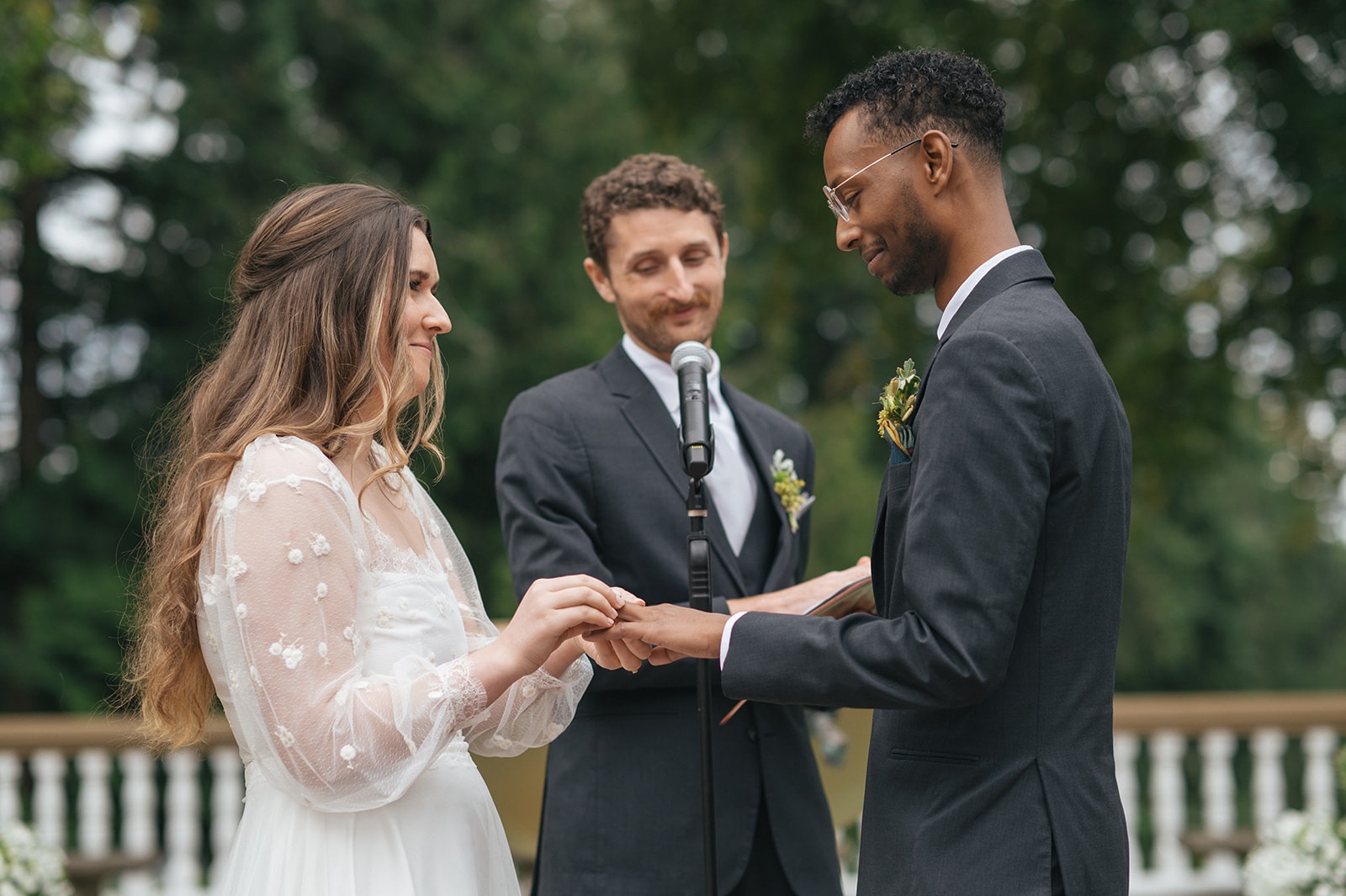
4. Create Ceremony Roles That Feel Personal, Not Performative
Some of the most touching moments in ceremonies happen when someone is given a small, specific job that is clearly chosen with care. These don’t have to be traditional roles — they just have to feel true to your relationships and your day.
Some ideas: lighting a unity candle or participating in a sand or wine ceremony; carrying or presenting something meaningful — a family heirloom, a photo of someone who passed, a cultural object that’s part of your ceremony; ringing a bell or chime at a meaningful moment; or walking elderly family members to their seats with intention rather than as an afterthought.
The framing matters as much as the role itself. When you tell your guests why you chose this person for this moment, even a small gesture carries real weight.
5. Let the Right Friends Shine at the Reception
The reception is usually where you have the most flexibility — and it’s the perfect place to highlight the specific things your people are actually good at.
A friend who’s a musician playing during cocktail hour is almost always more personal than a playlist. A friend who’s a natural storyteller or just genuinely funny, giving a toast is something guests will talk about for years. A creative friend who puts together a video montage or a custom piece of art that becomes part of your décor brings something no vendor could replicate. If your friend group has a shared tradition, an inside joke, or a meaningful ritual, find a way to bring it into the evening — even something small, like a signature cocktail named after a shared memory, can make people feel seen.
6. Build in Intentional Time With Your Closest People
One of the underrated gifts of planning a wedding without a wedding party is that you’re not sequestered with a small group for photos and pre-ceremony obligations all day. Use that freedom intentionally.
Schedule a private dinner the night before, a morning-of breakfast with a handful of people, or a post-wedding brunch where things can finally be relaxed and joyful in a low-stakes way. Some couples even do a “first look” with a close friend or family member, in addition to (or instead of) the traditional partner reveal. These quiet, small moments often become the memories everyone holds onto the longest — and without a wedding party pulling your attention in a dozen directions, you actually have the space to have them.
7. Work With Your Photographer to Make Sure Relationships Get Captured
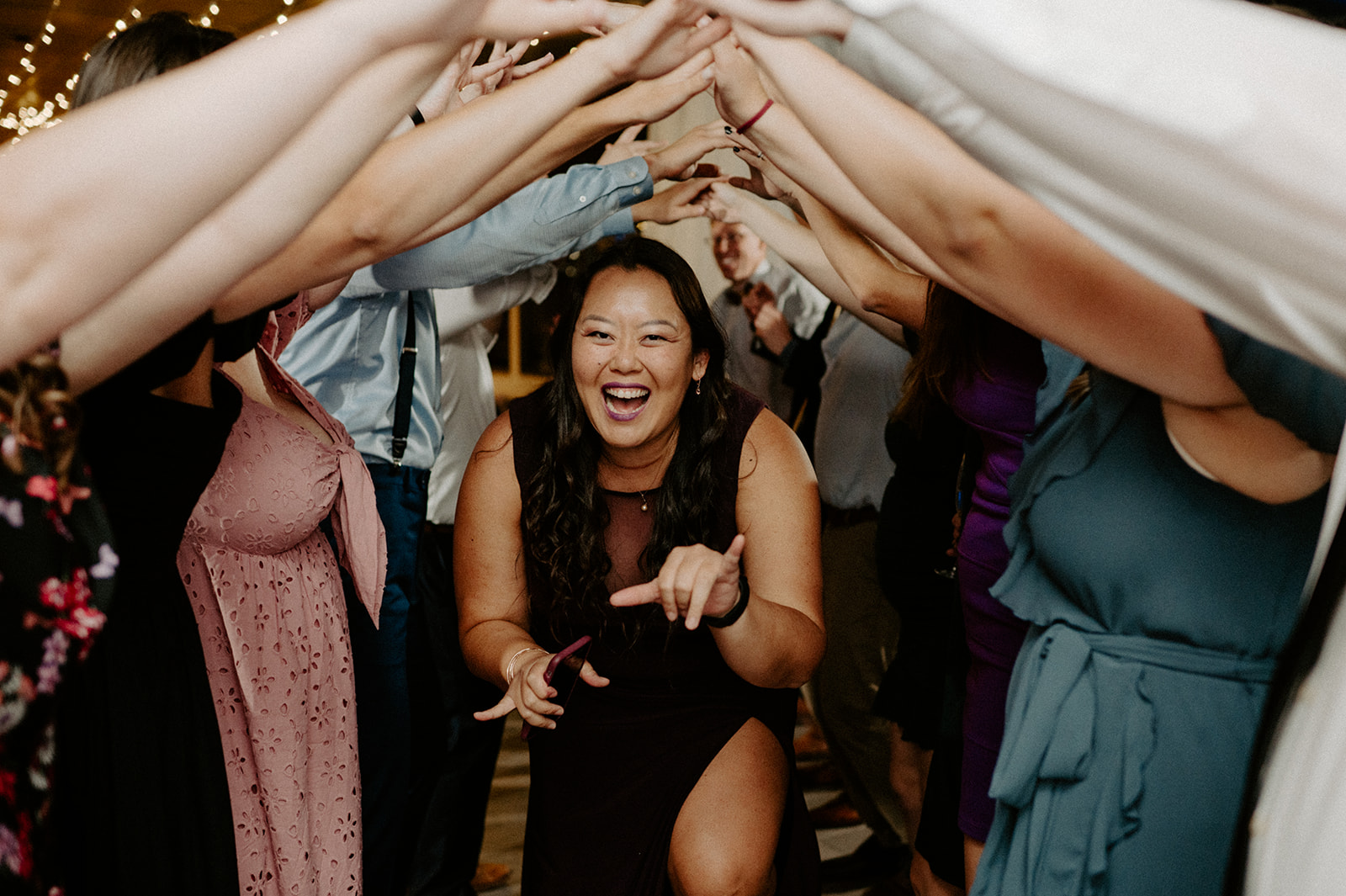
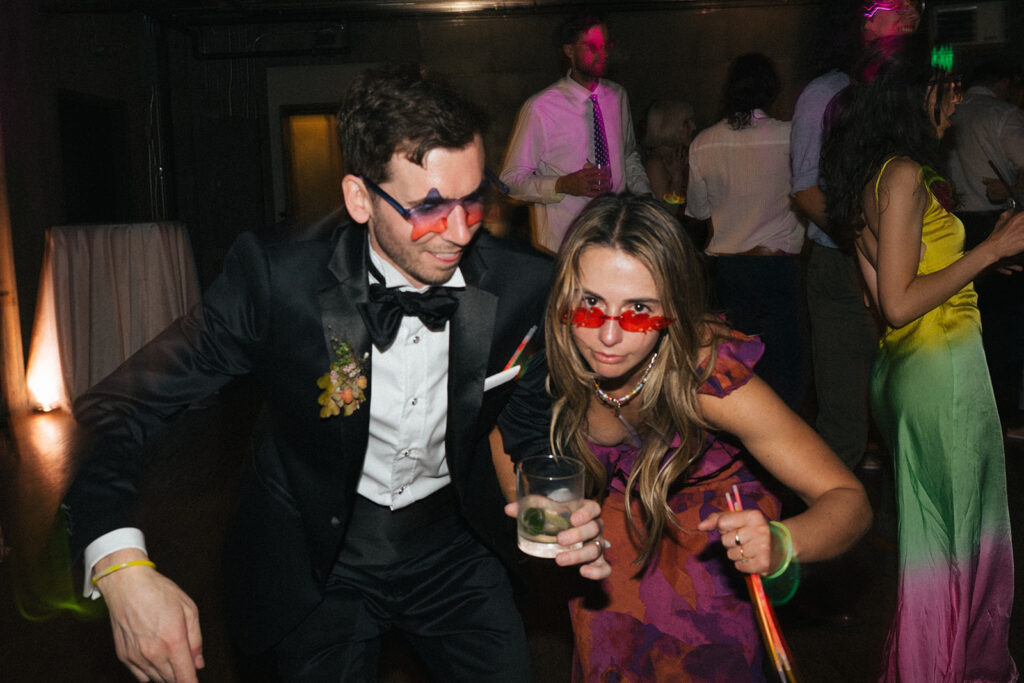
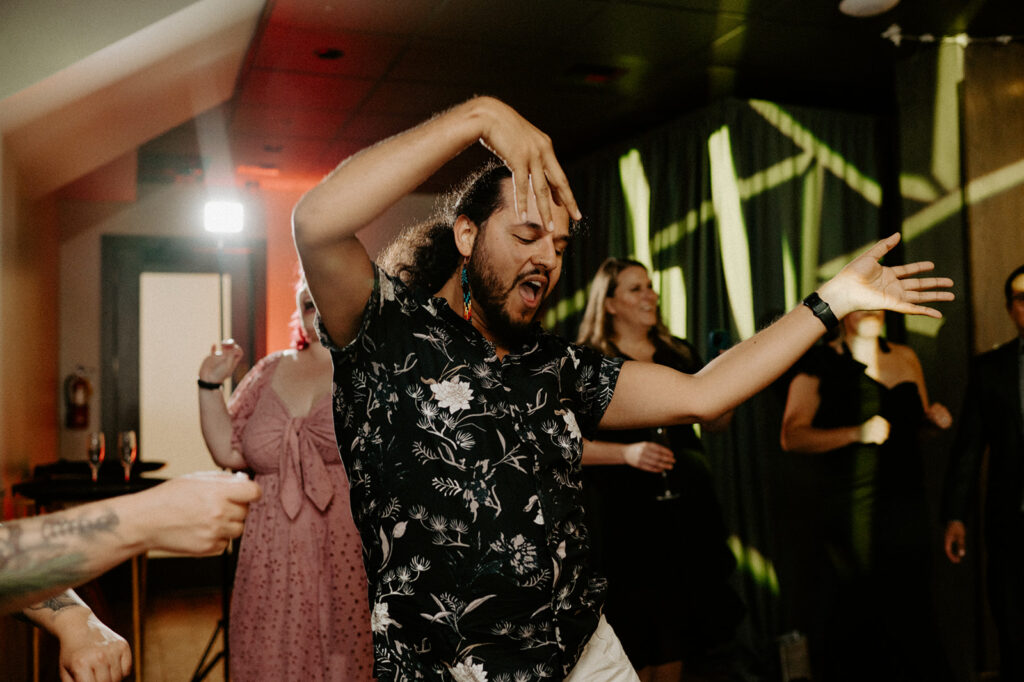
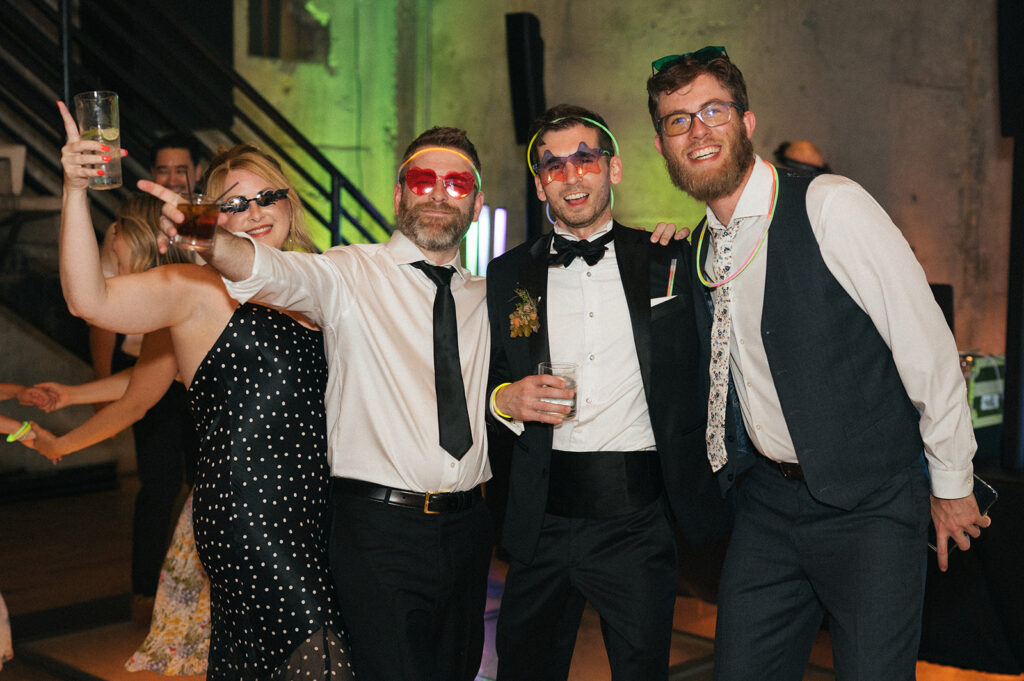
If you’re working with a documentary-style photographer, let them know ahead of time which guests are most important to you. A good photographer will make sure those relationships are captured throughout the day — the candid moments, the reunion hugs, the quiet conversations — without you having to orchestrate any of it.
This matters especially when you don’t have a wedding party, because there’s no built-in structure to ensure your closest people end up in photos. A quick list of five or six names and why they matter is genuinely helpful for any photographer who cares about telling the full story of your day.
8. Create a Photo Opportunity That Brings People Together
A photo booth is a classic for good reason — it gives guests something active and fun to do together and creates real-time memories. If you’re having a wedding without a wedding party, it’s also a great equalizer: nobody’s singled out, nobody has an assigned role, everyone just gets to show up and be themselves. Make it personal by using props that reference your specific friend group, adding a sign with an inside joke, or setting it up near something meaningful. And dedicate a specific moment during the night to gather everyone together for a big group photo — the chaotic, joyful, everyone-pile-in kind that no one has to be coaxed into.
How to Talk to Friends Who Might Be Expecting to Be Asked
Here’s the harder part that most planning guides skip: if you have friends who are expecting to be in a wedding party — because you were in theirs, or because the relationship is that close — it’s worth having a direct, kind conversation rather than hoping they figure it out from the invitation.
You don’t owe anyone an extensive explanation, but a personal message goes a long way. Something like: “We’ve decided to keep the wedding really simple and skip the traditional wedding party altogether — but I want you to know how much it would mean to me to have you there, and I’d love to [specific role or plan].”
The specific ask is what matters. It shows the decision wasn’t about them.
Your Wedding, Your Rules
Whether you’re planning an intimate celebration at a Seattle venue, a Washington elopement in the mountains, or a backyard wedding with fifty of your closest people, there’s no version of a non-traditional wedding that’s less real or less meaningful than one with a full wedding party lineup.
The couples whose friends rave about feeling included? They’re almost never the ones who had the most coordinated bridesmaids. They’re the ones who thought about each person and found a way to make them feel genuinely seen.
That’s what actually matters — and it has nothing to do with a matching dress.
Looking for more ideas on how to plan a wedding that actually feels like you? Browse my other planning guides — or if you’re in the Seattle or Pacific Northwest area and want to talk through what your day could look like, I’d love to hear about it.
