
How to Plan Your Magical Washington State Ferry Engagement Session in Seattle
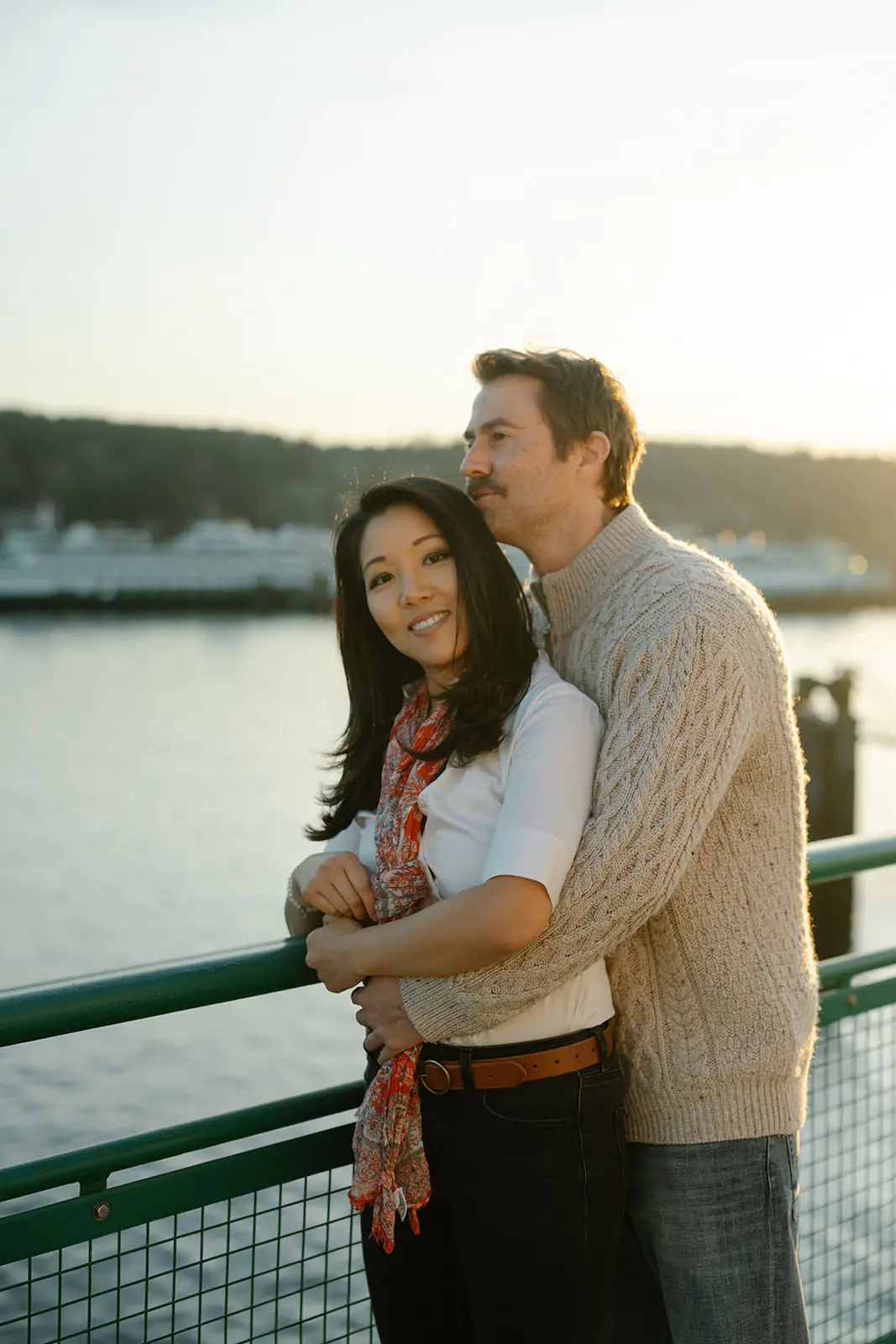
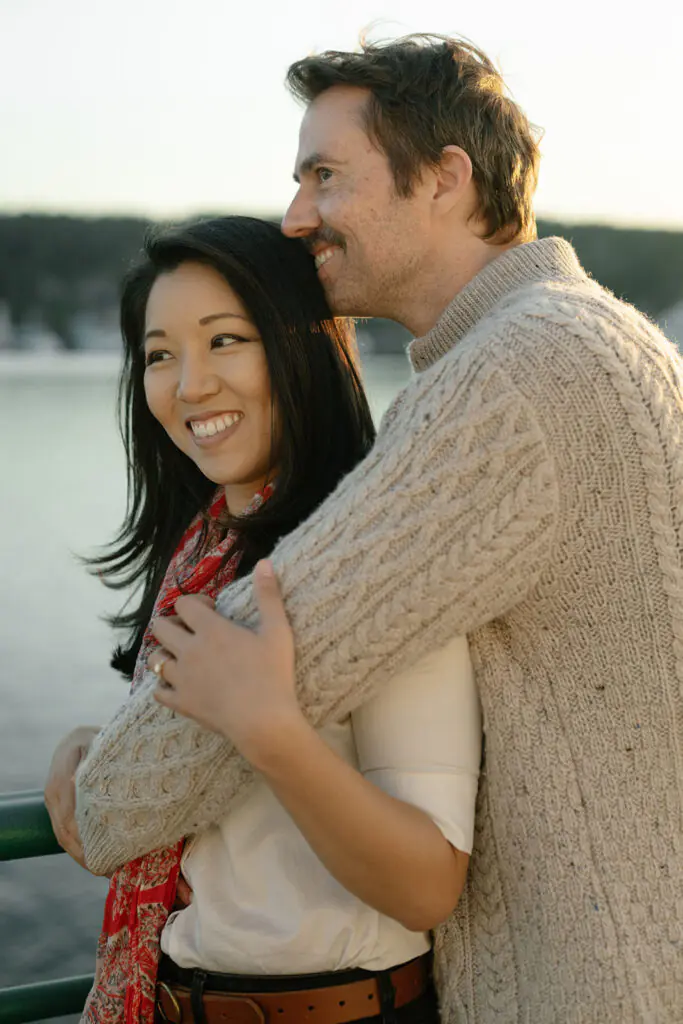
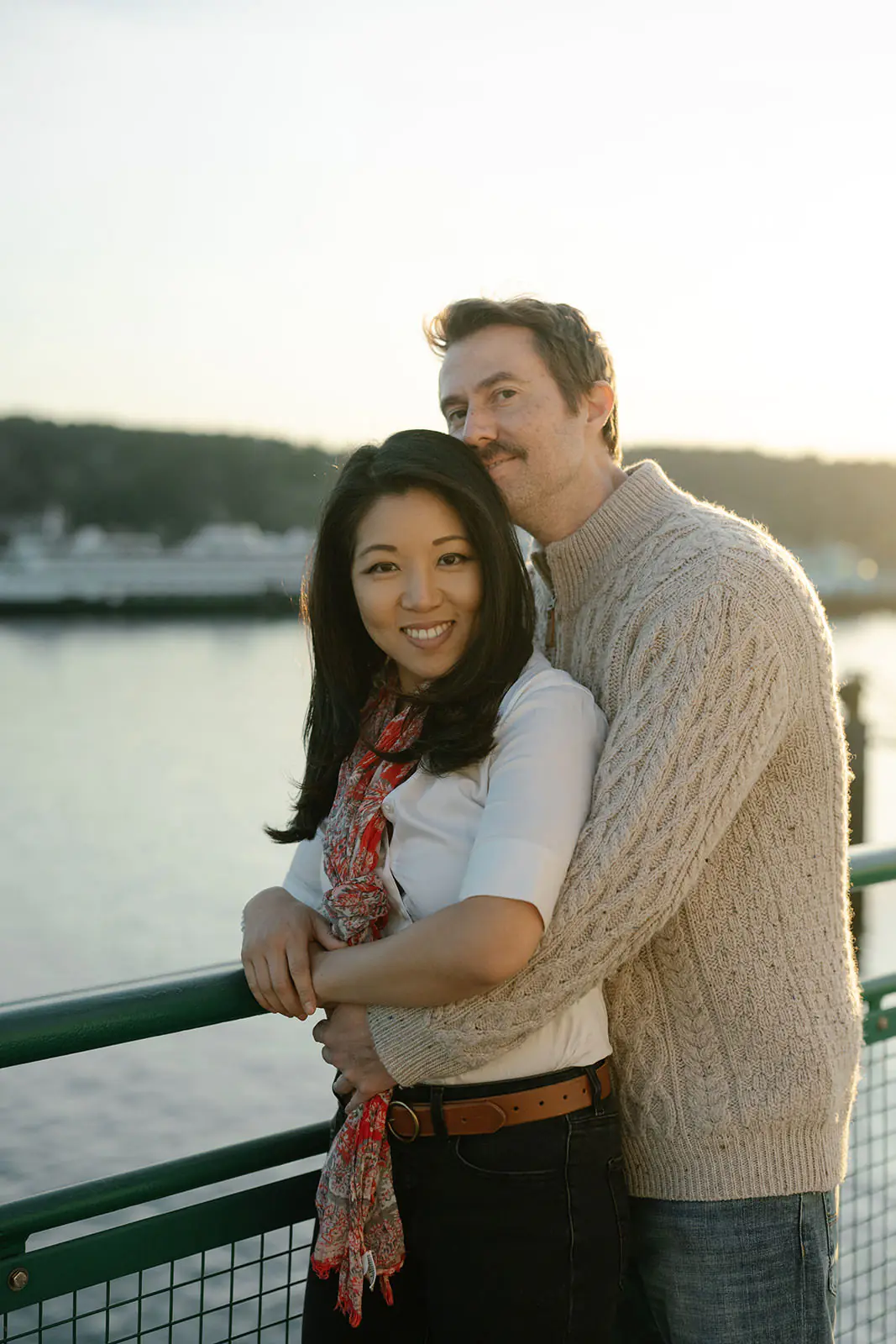
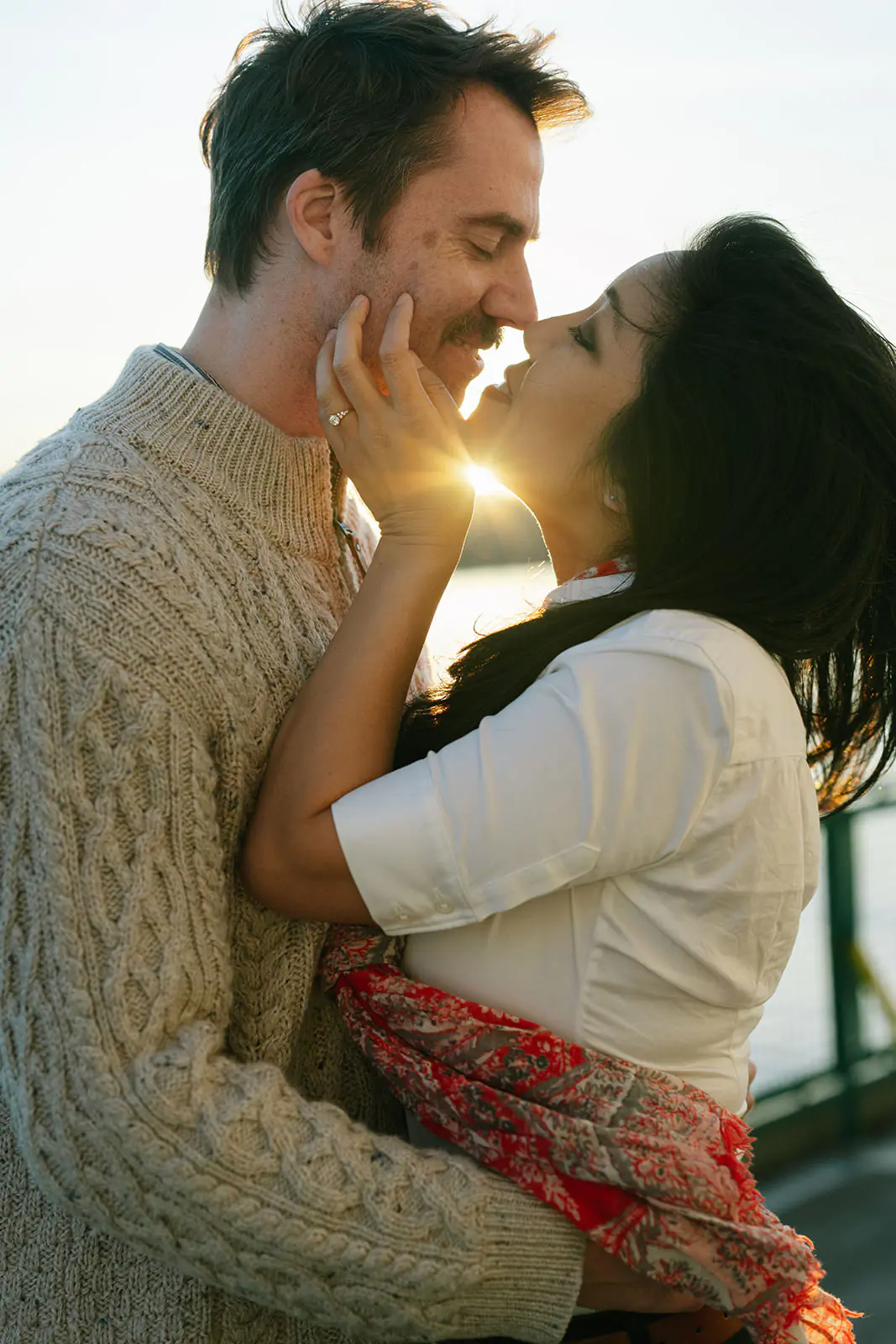
Romantic PNW Engagement Photos Aboard a Washington State Ferry at Golden Hour
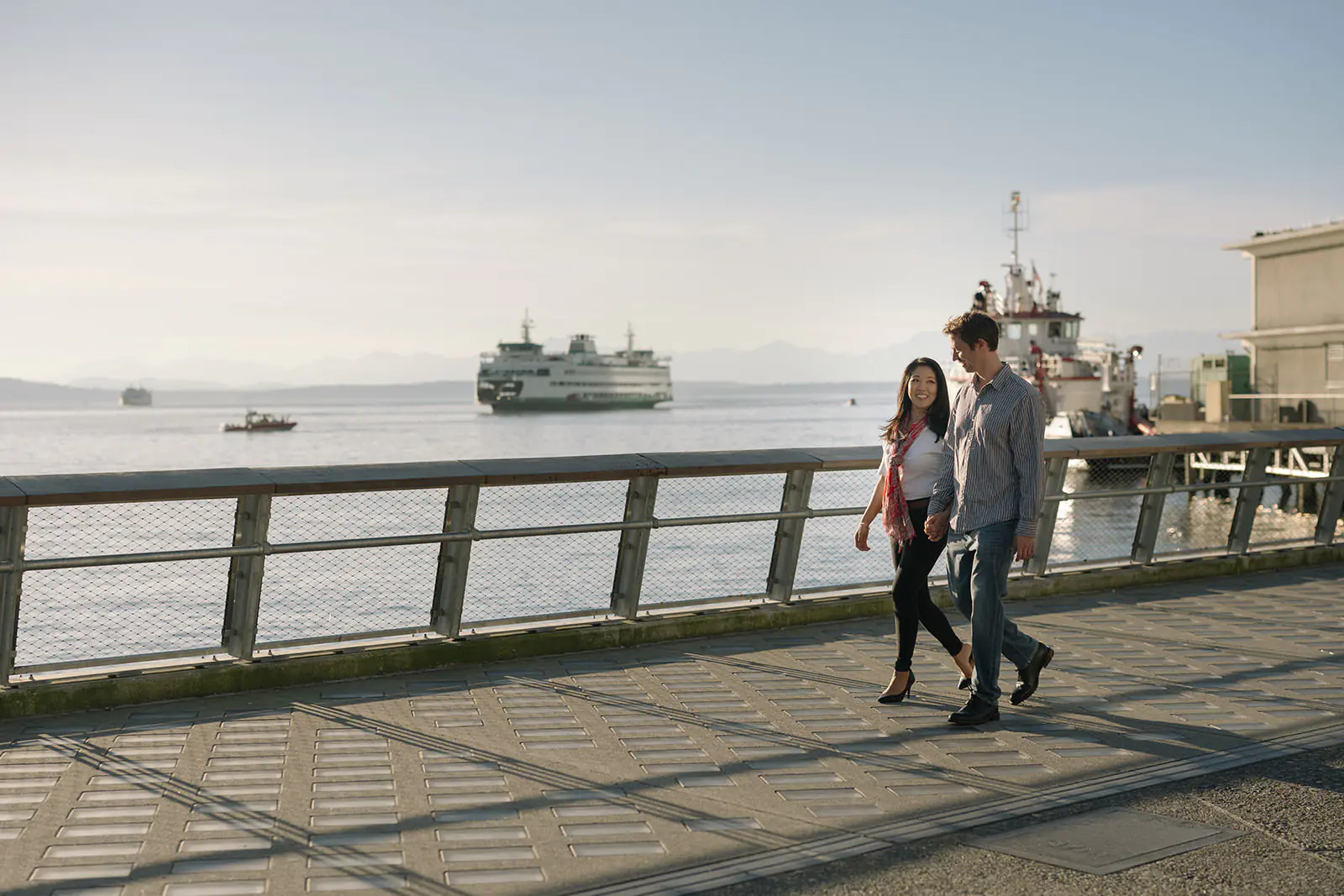
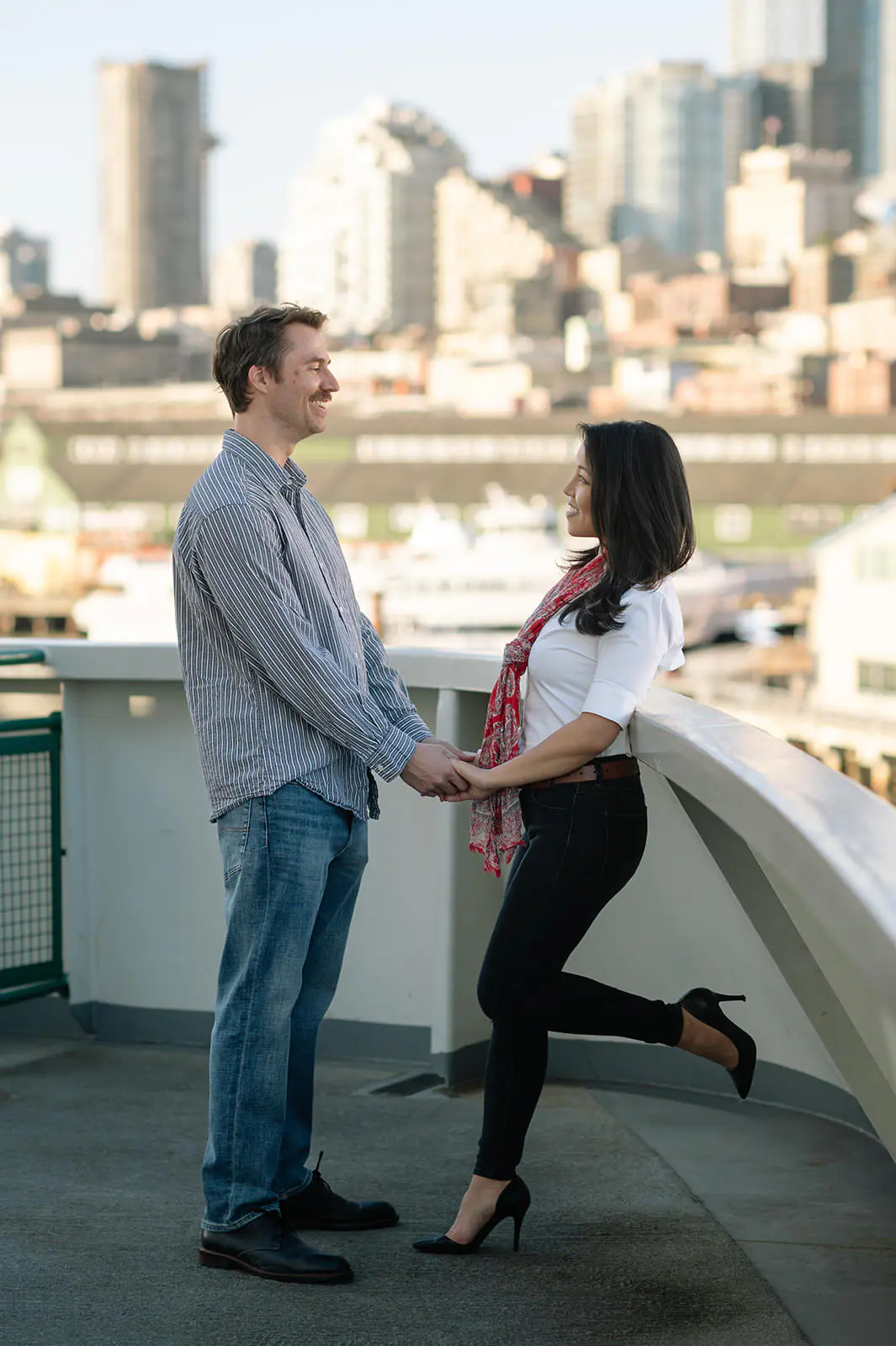
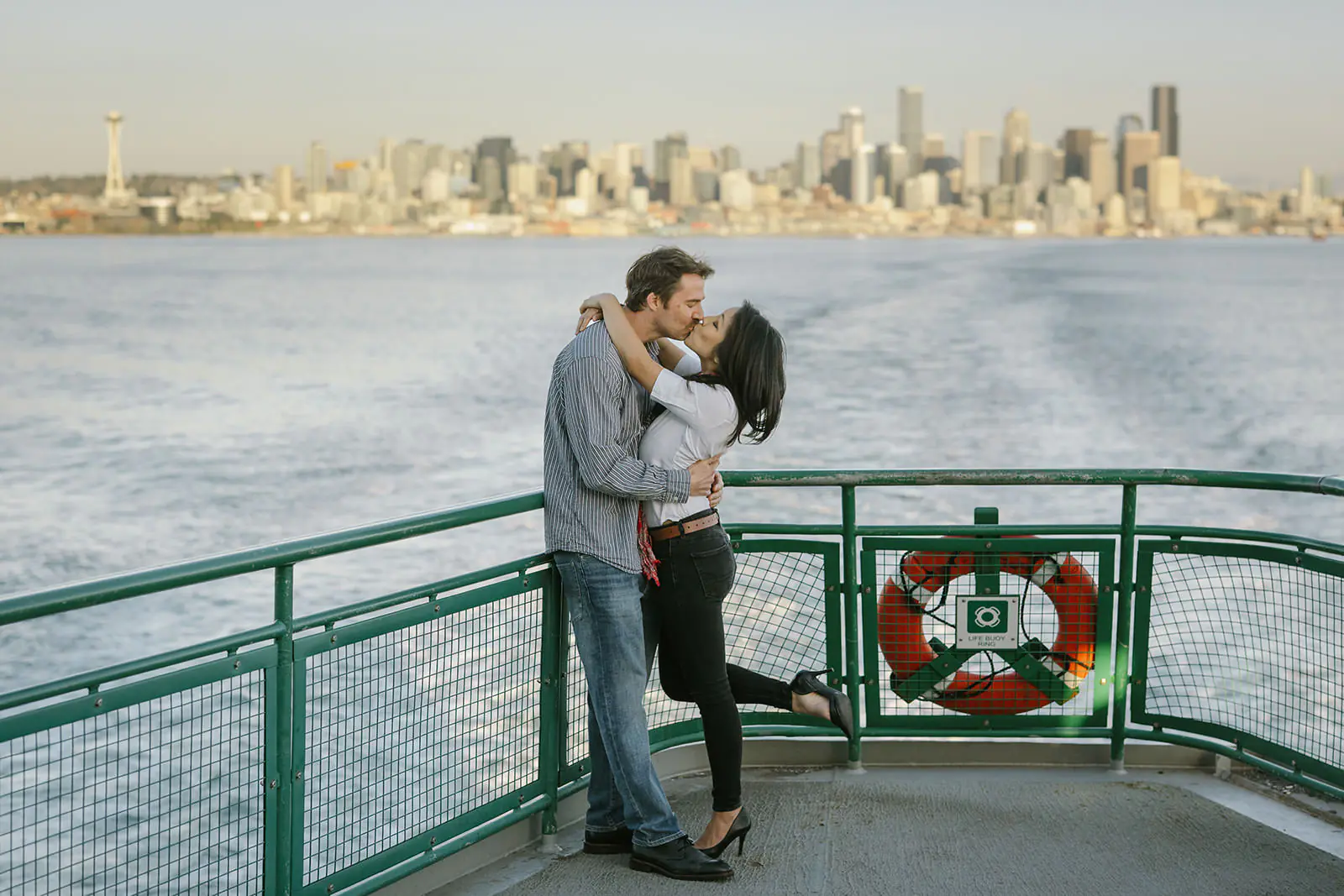
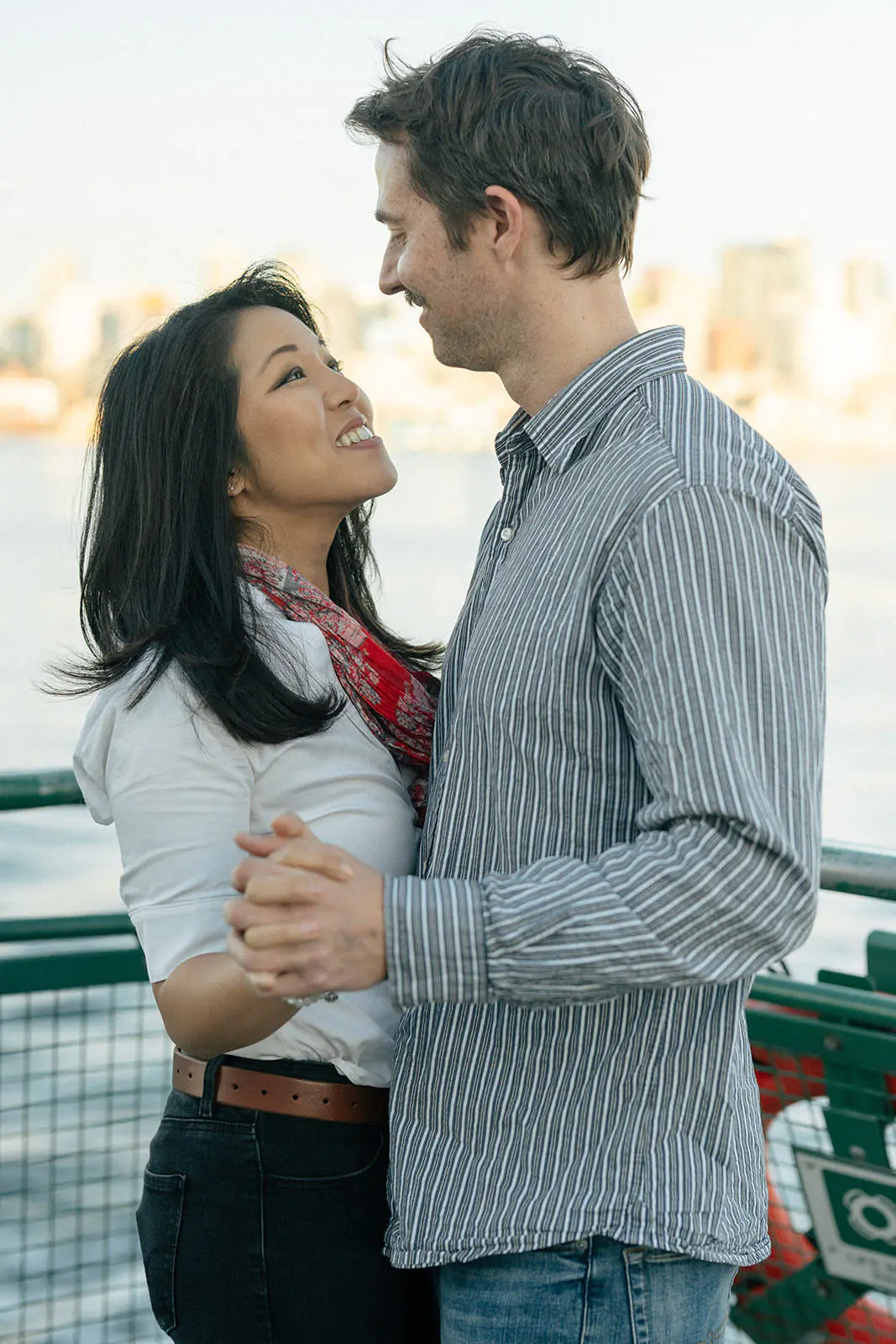
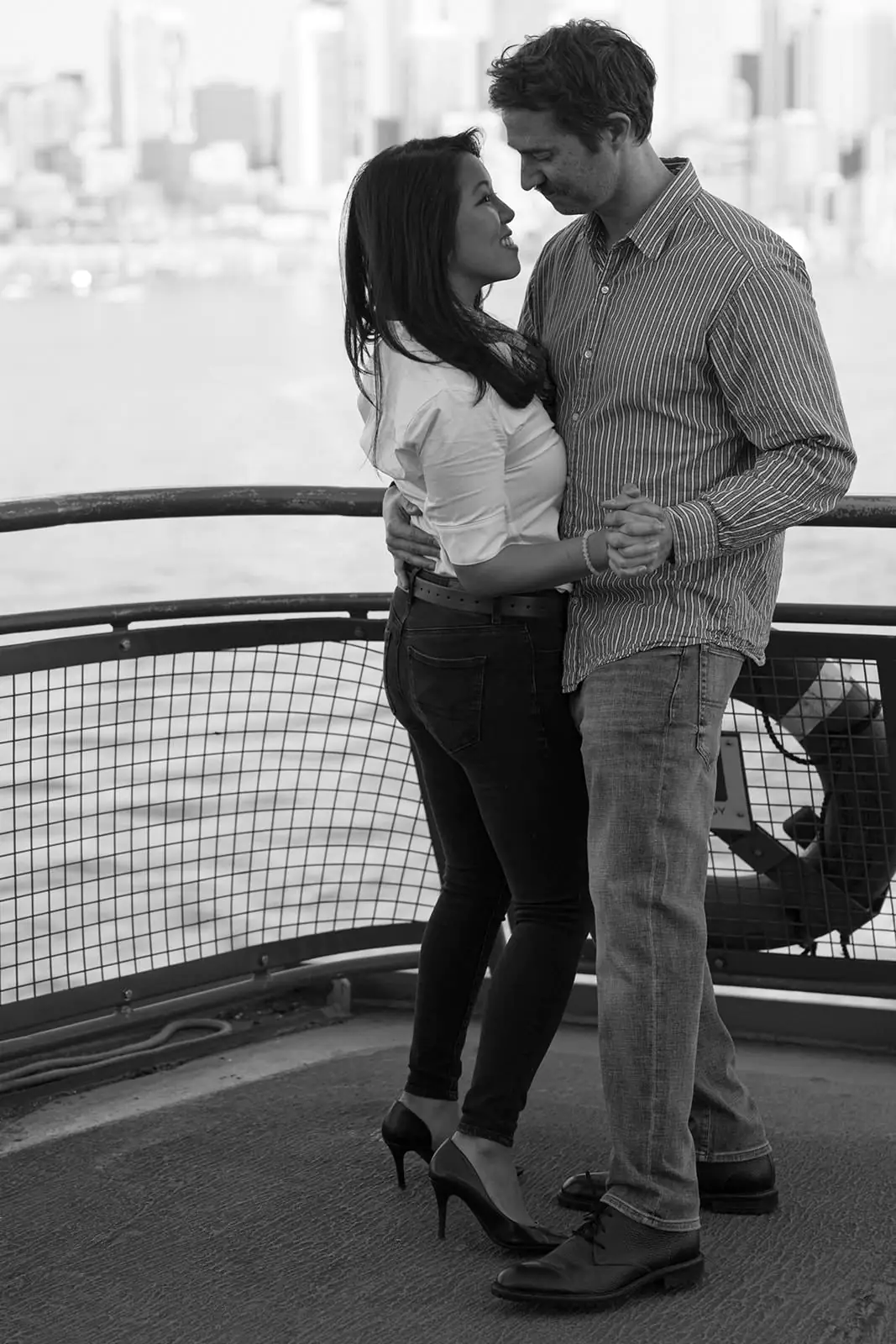
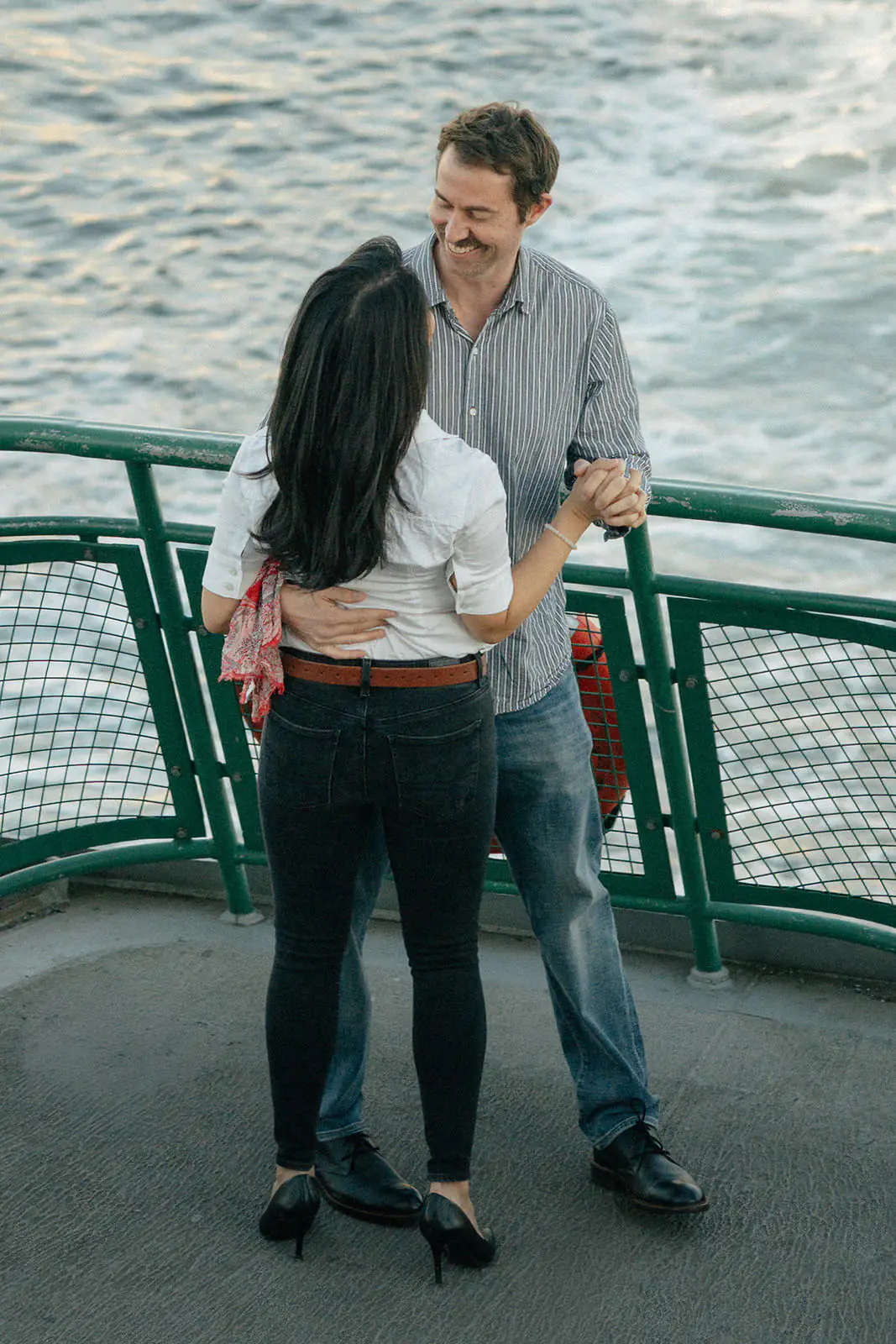
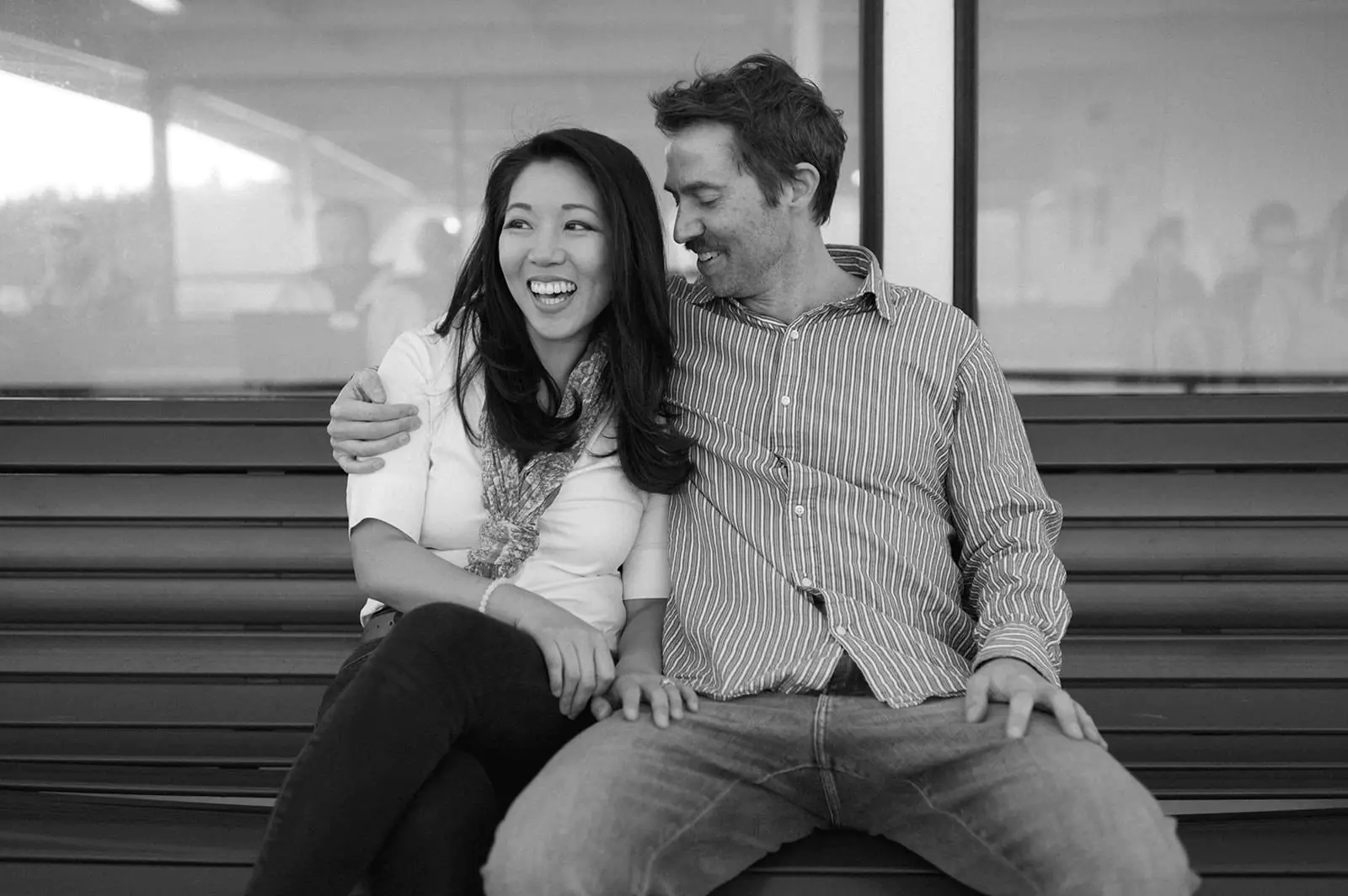
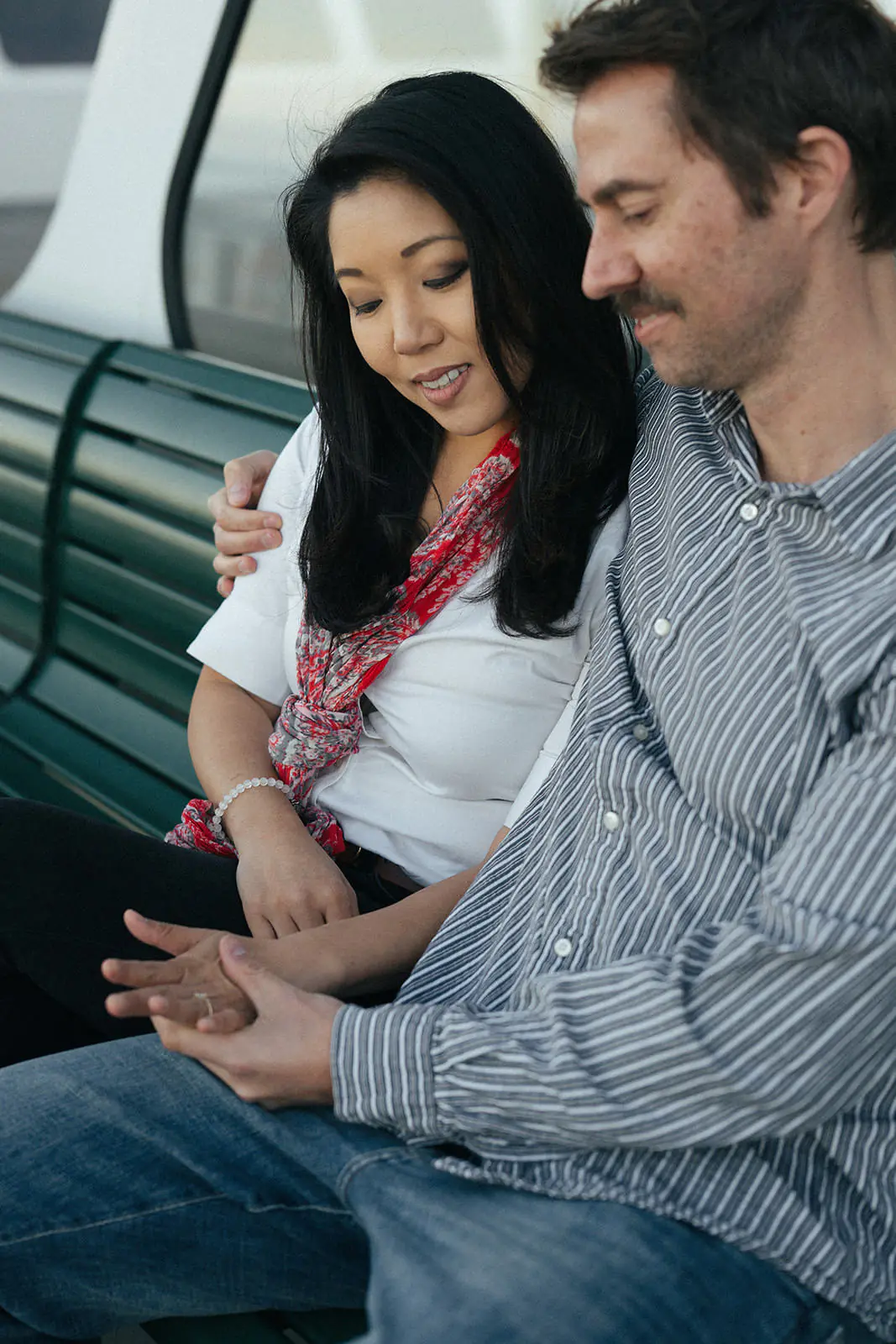
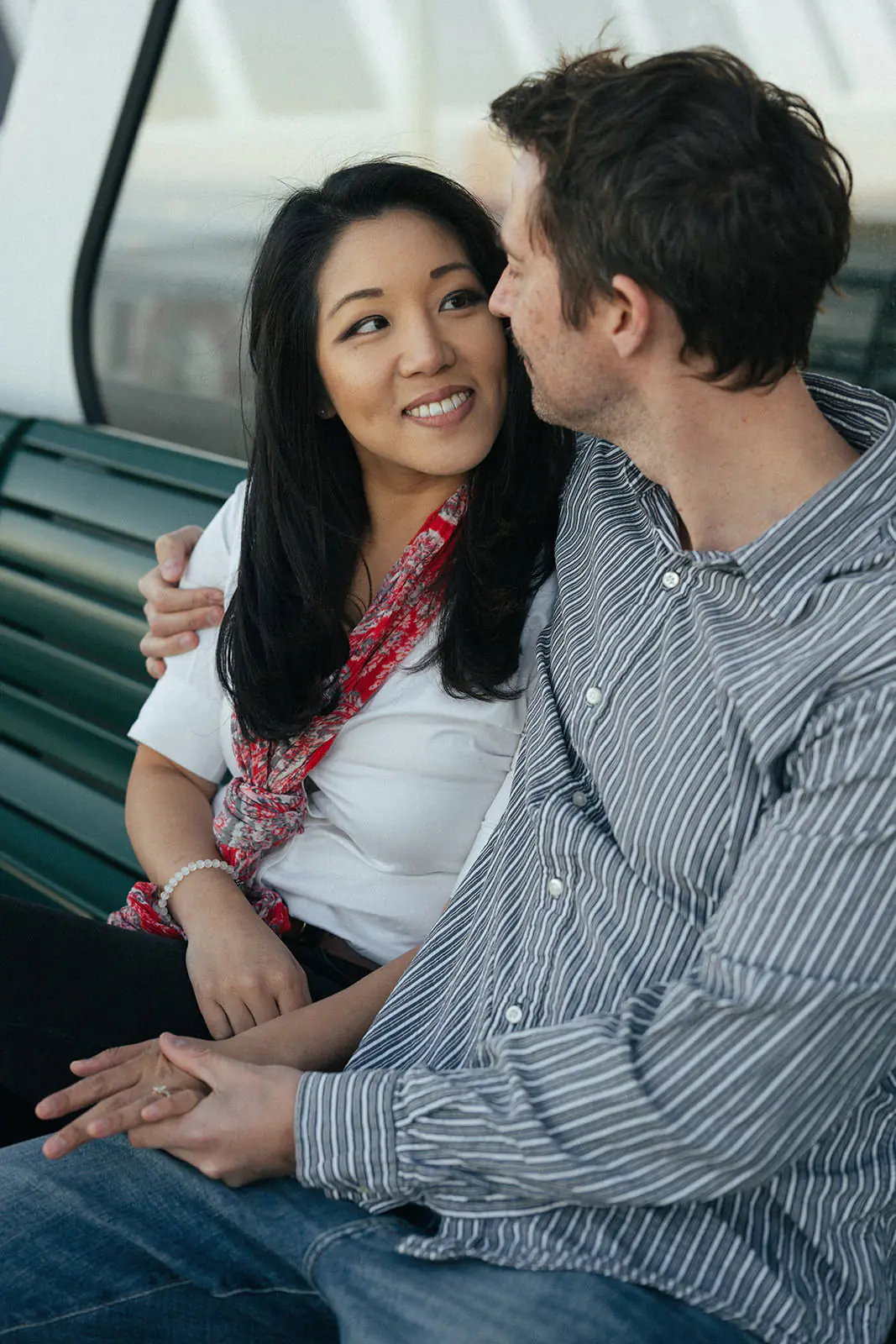
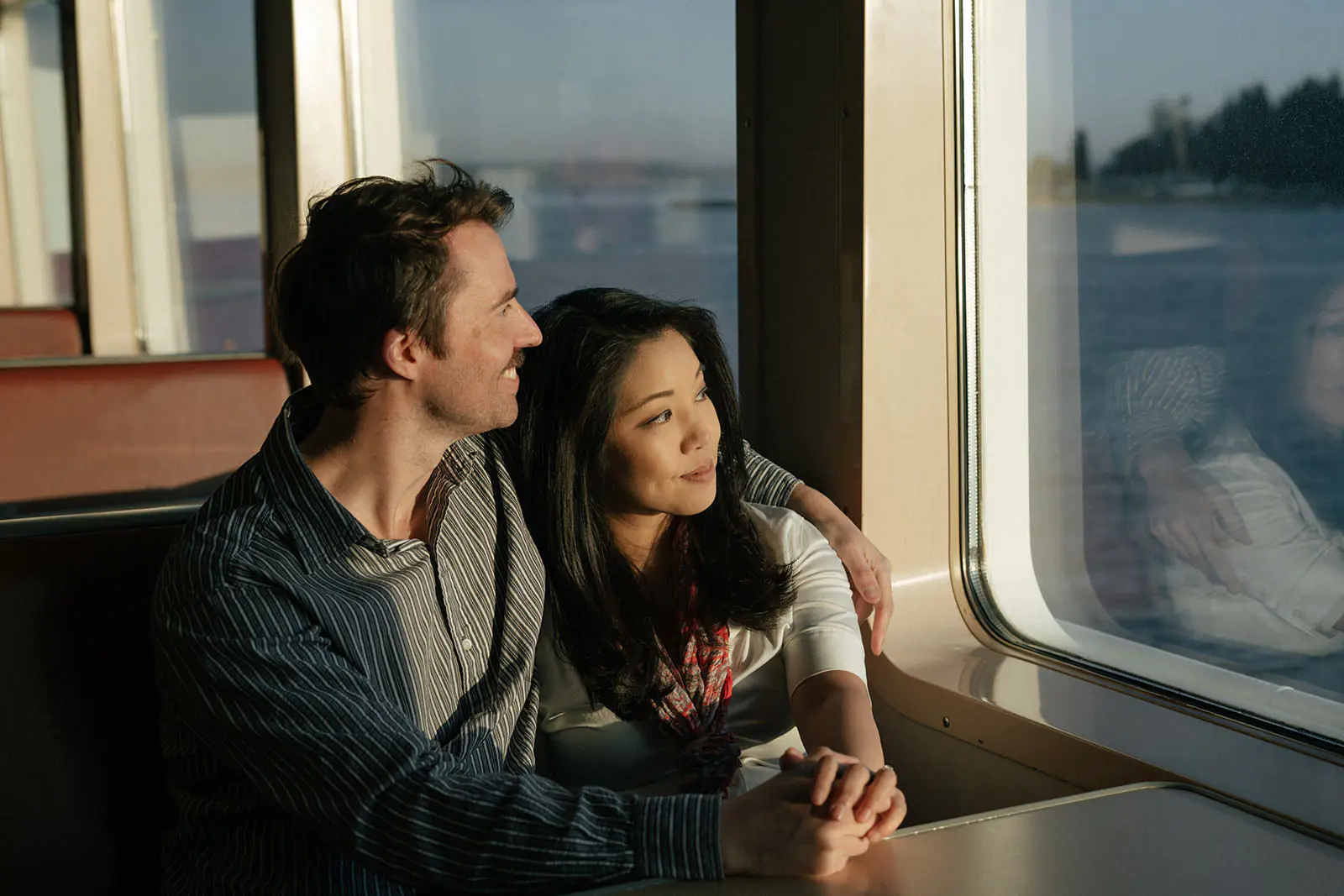
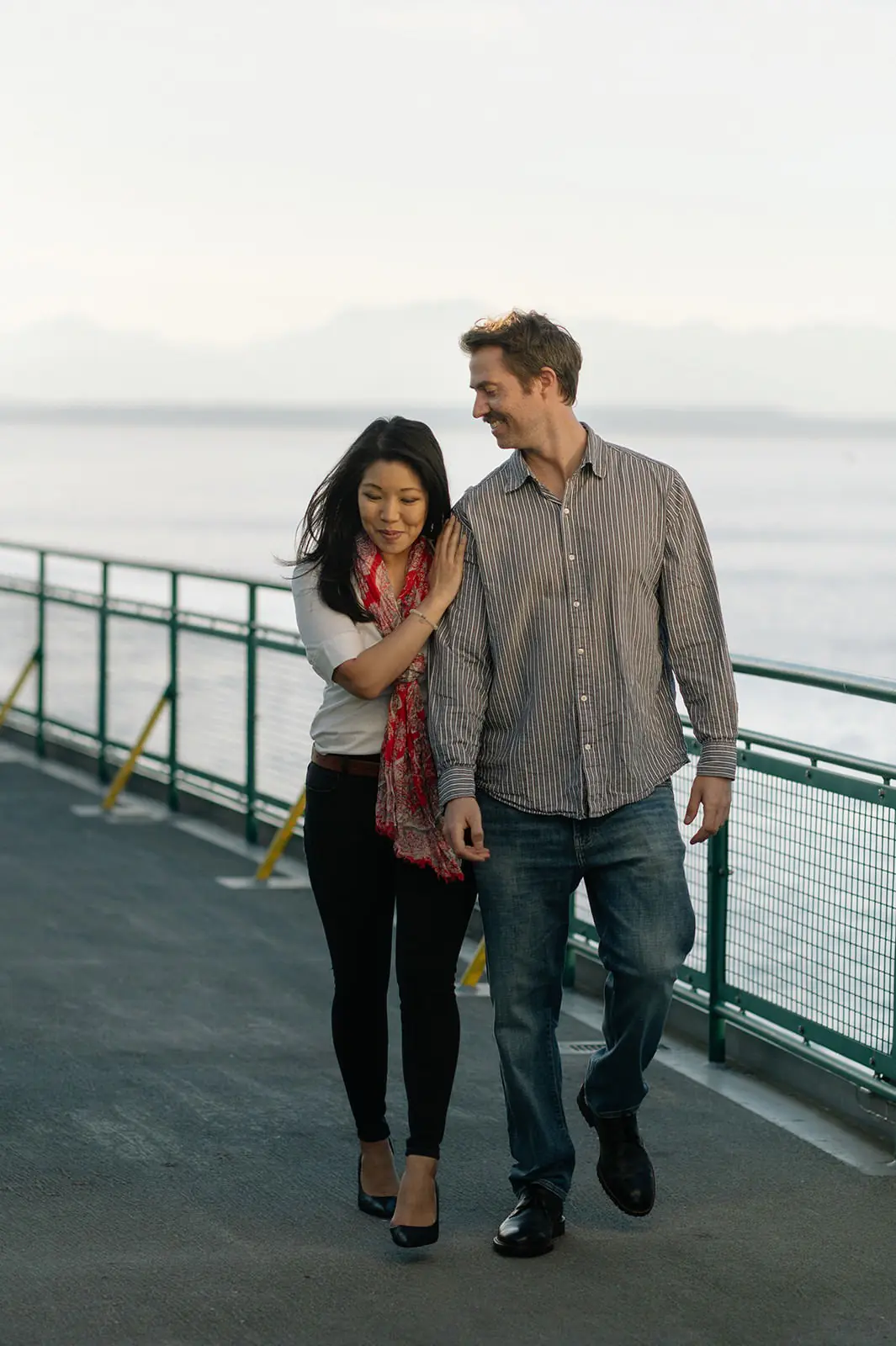
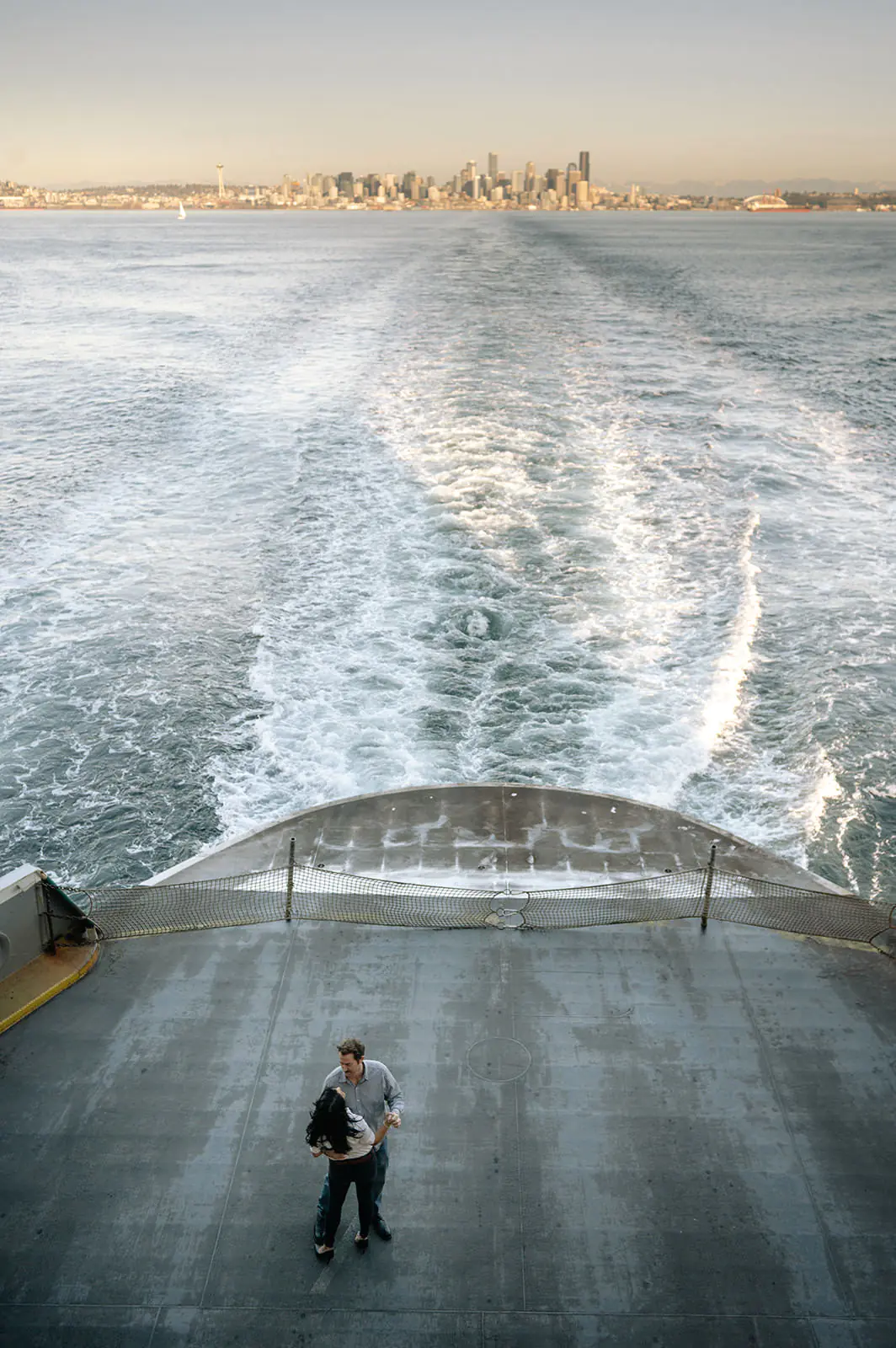
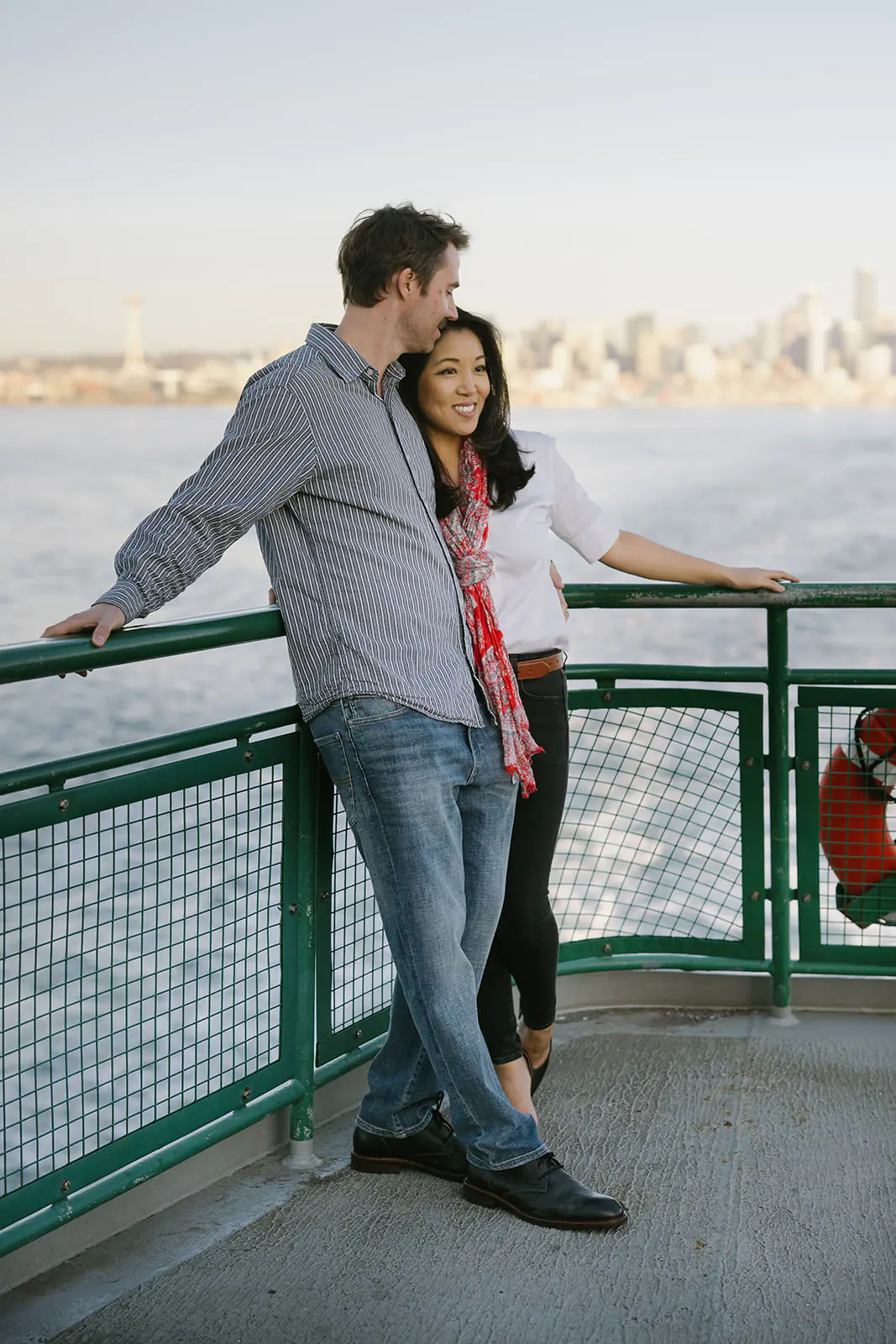
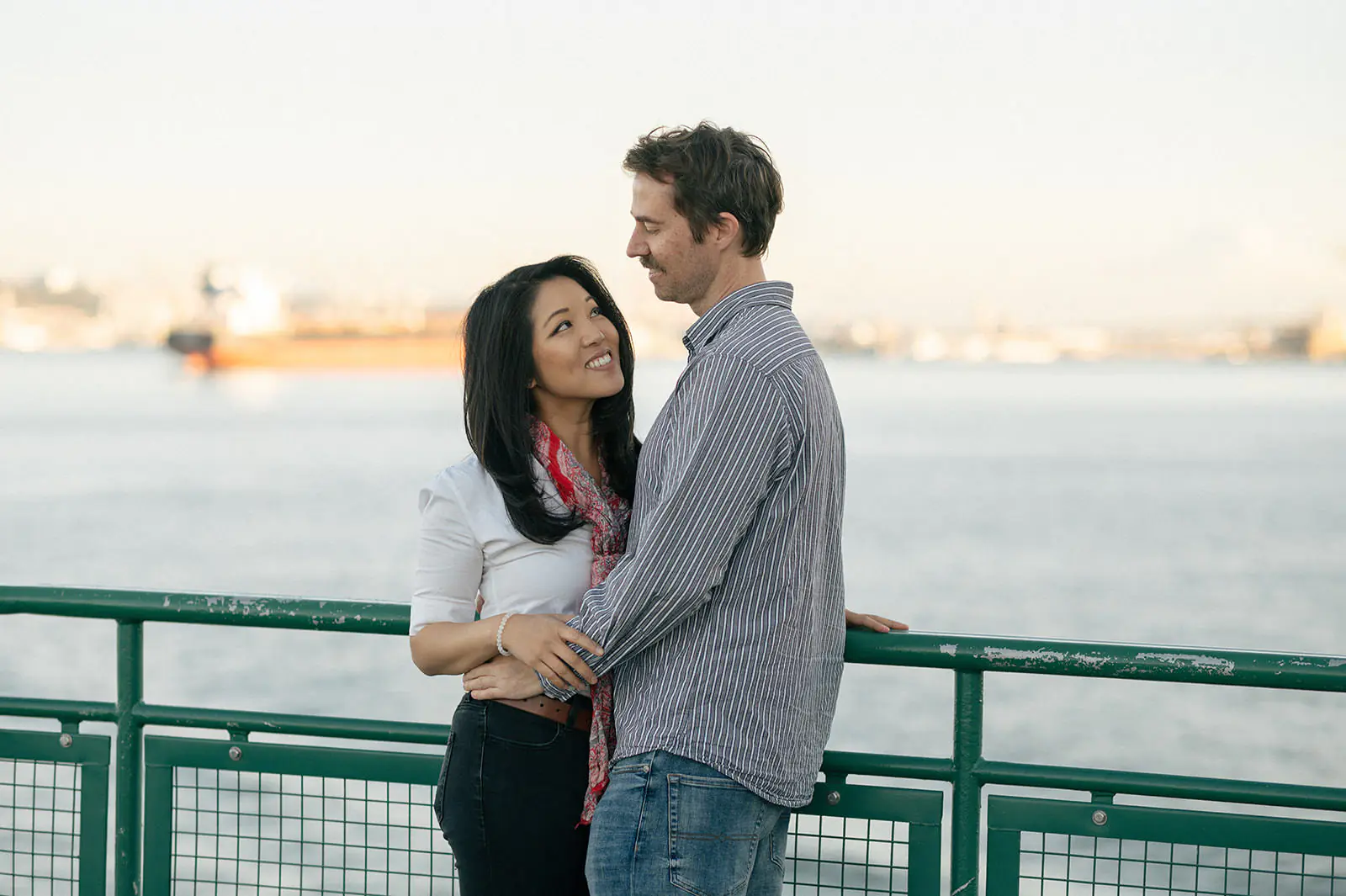
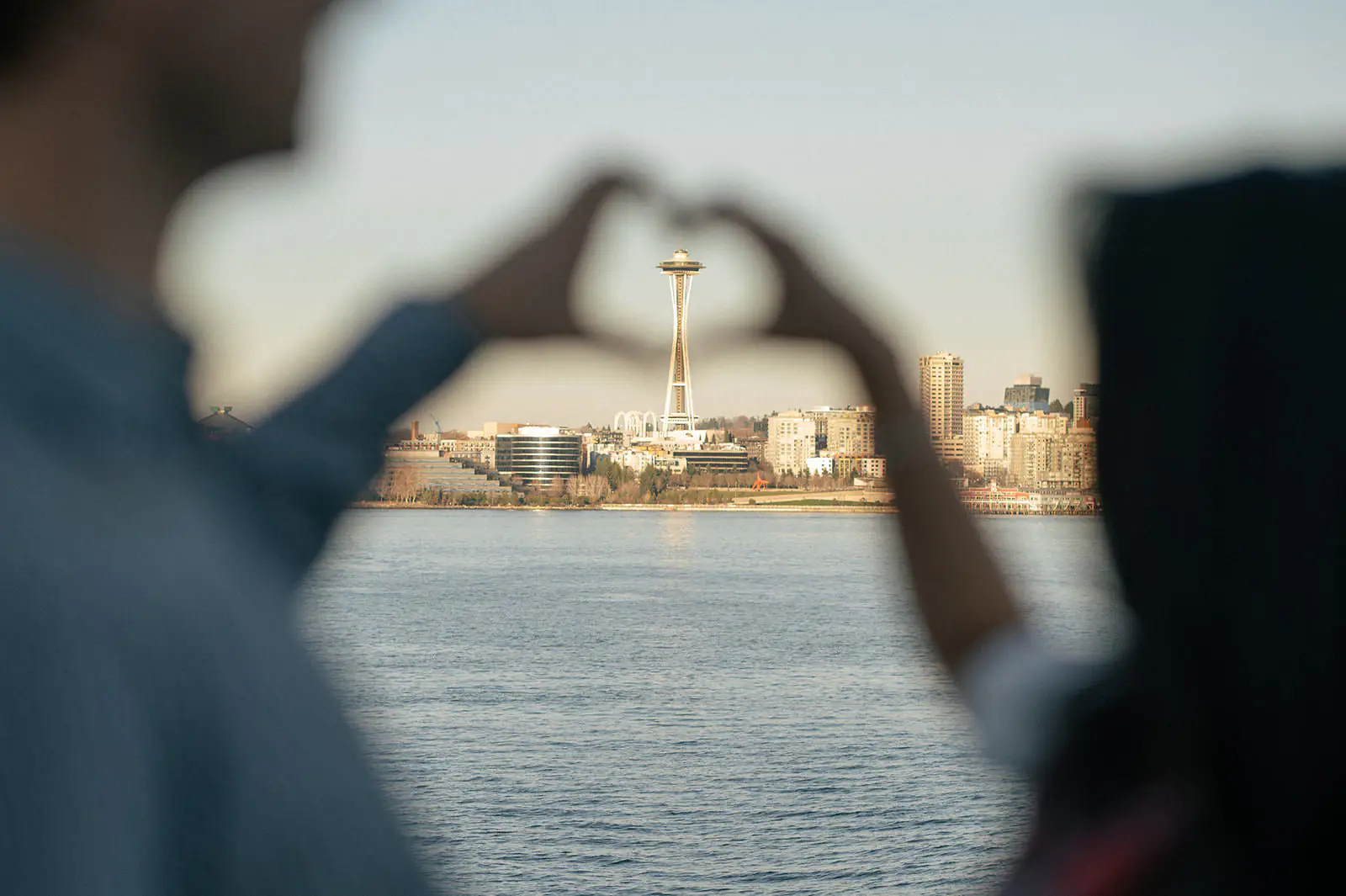
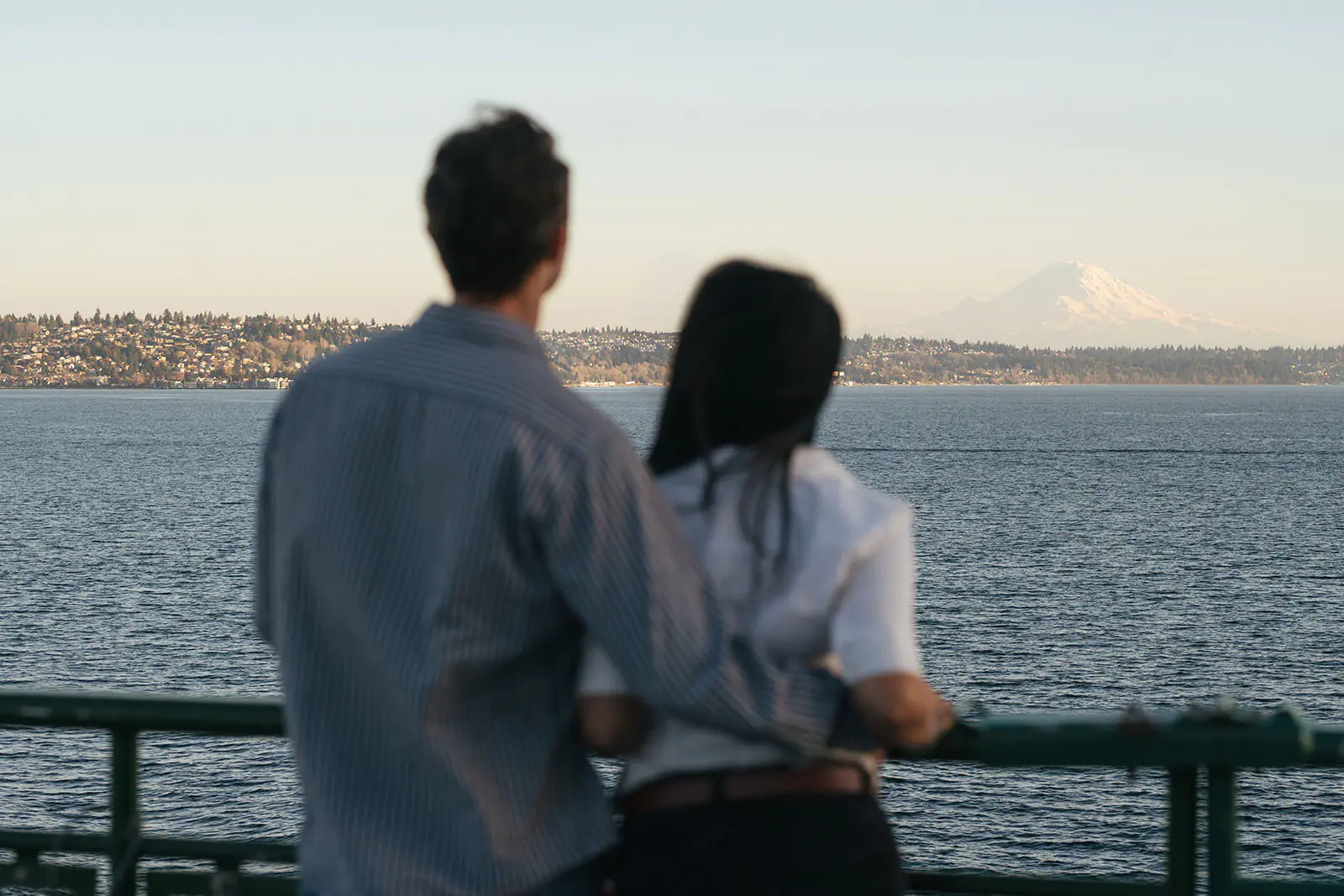
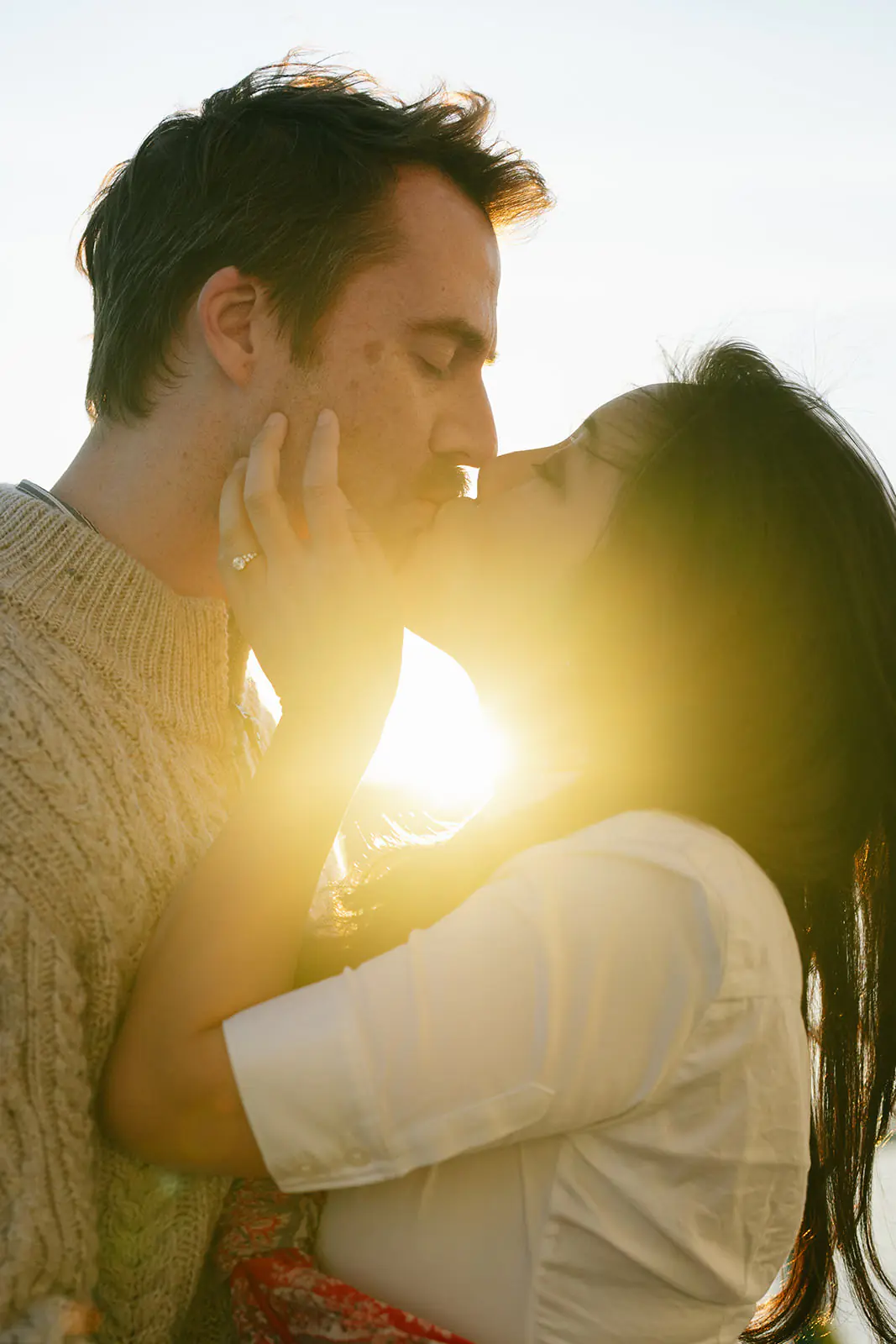
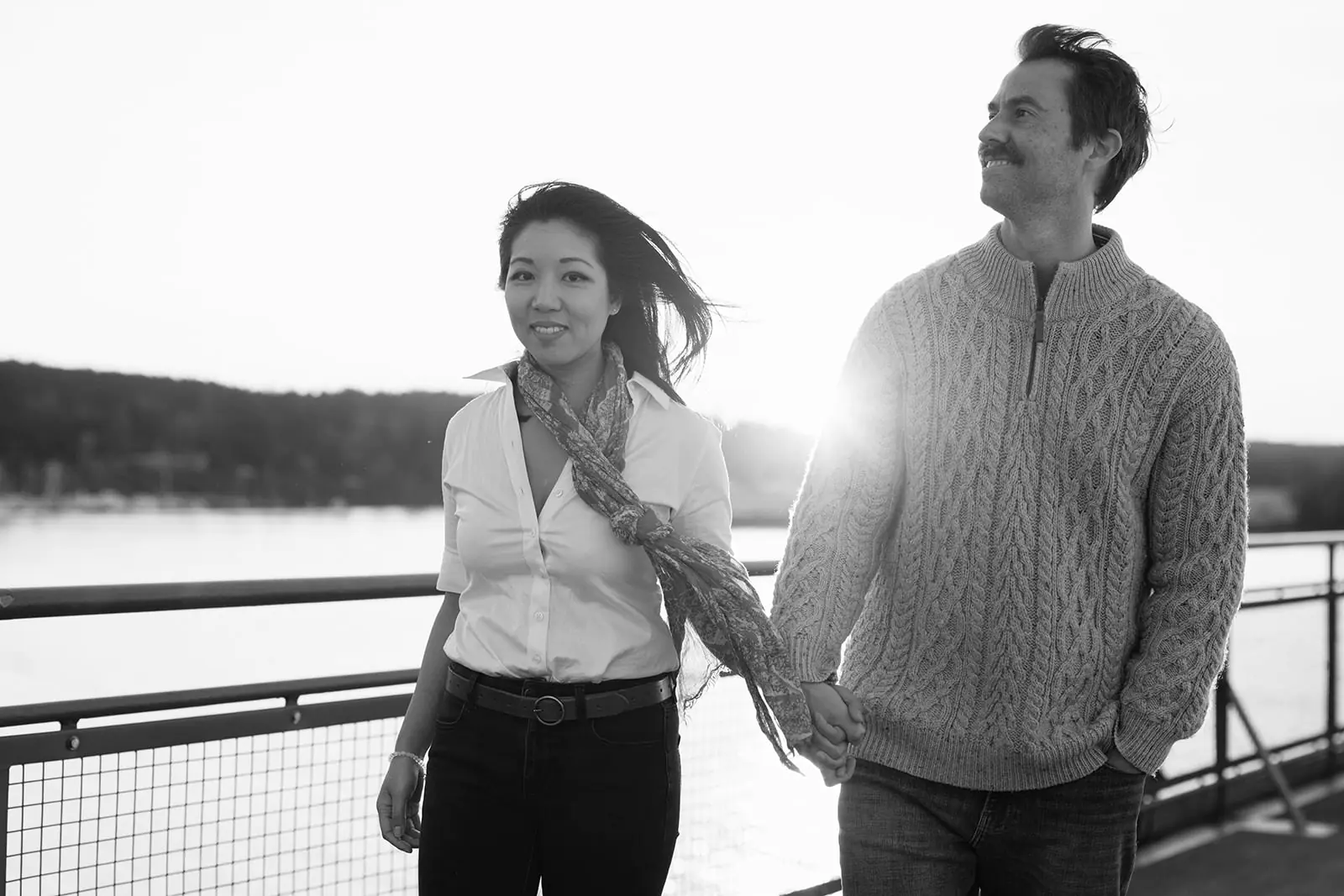
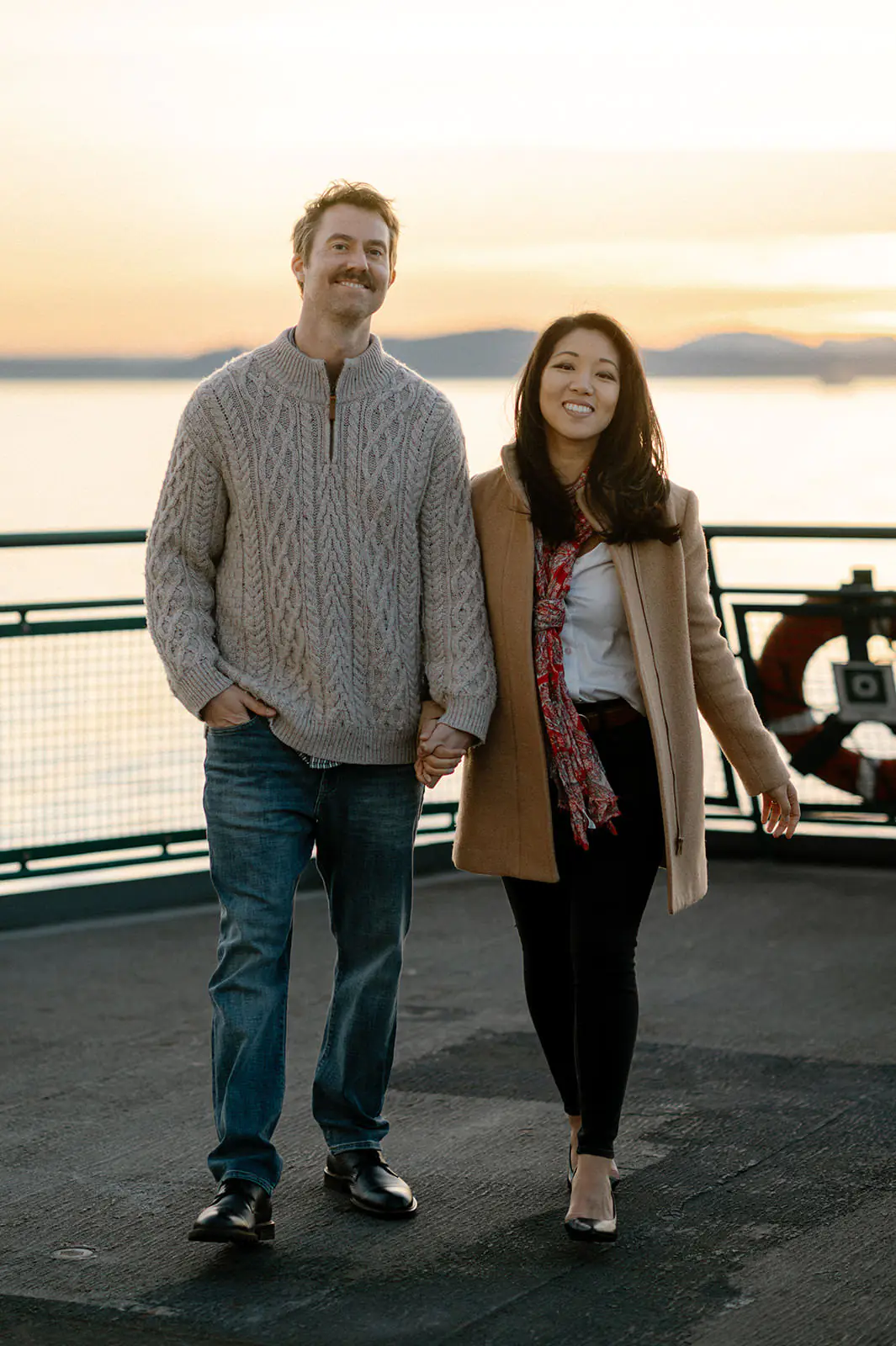
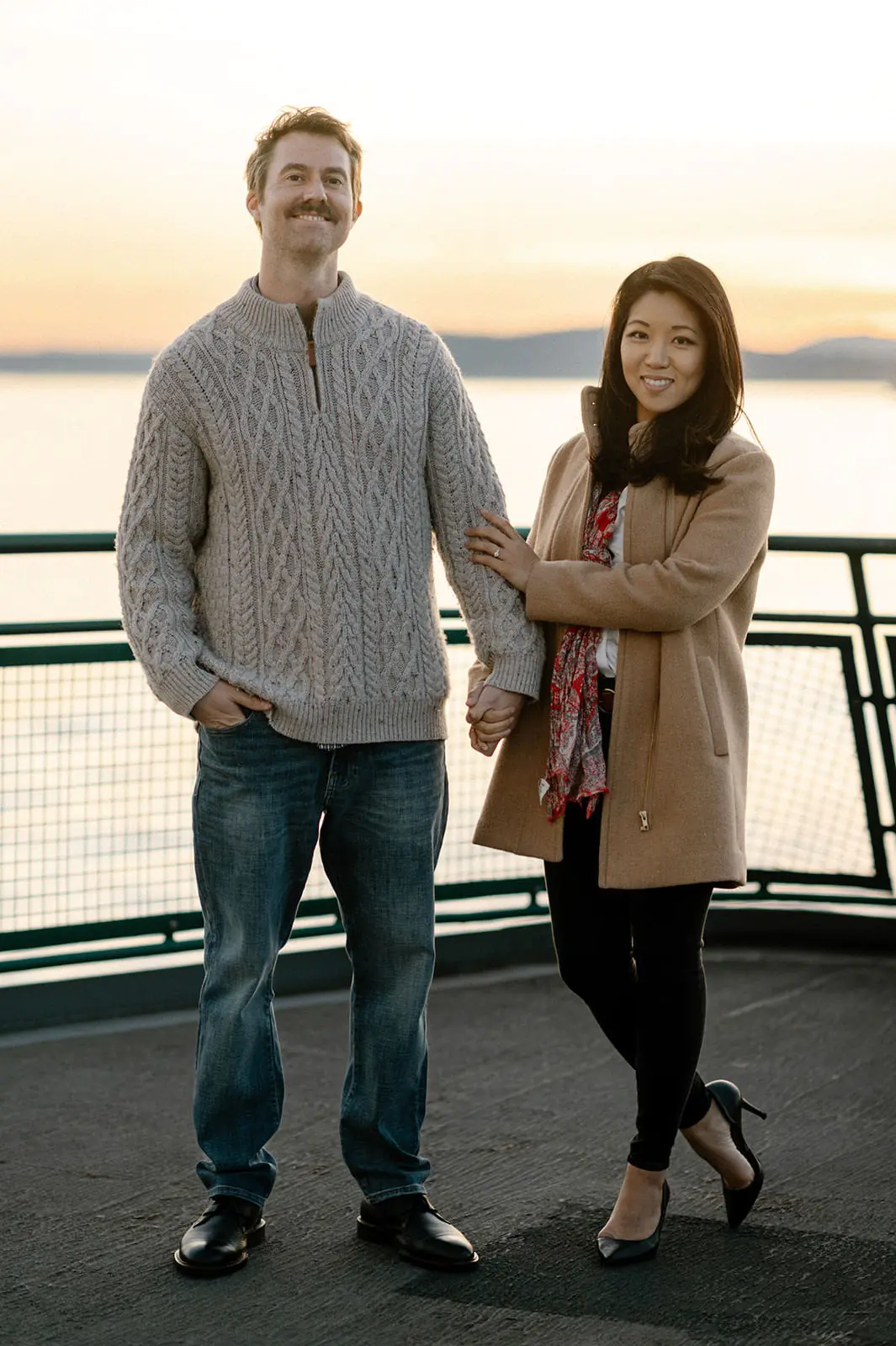
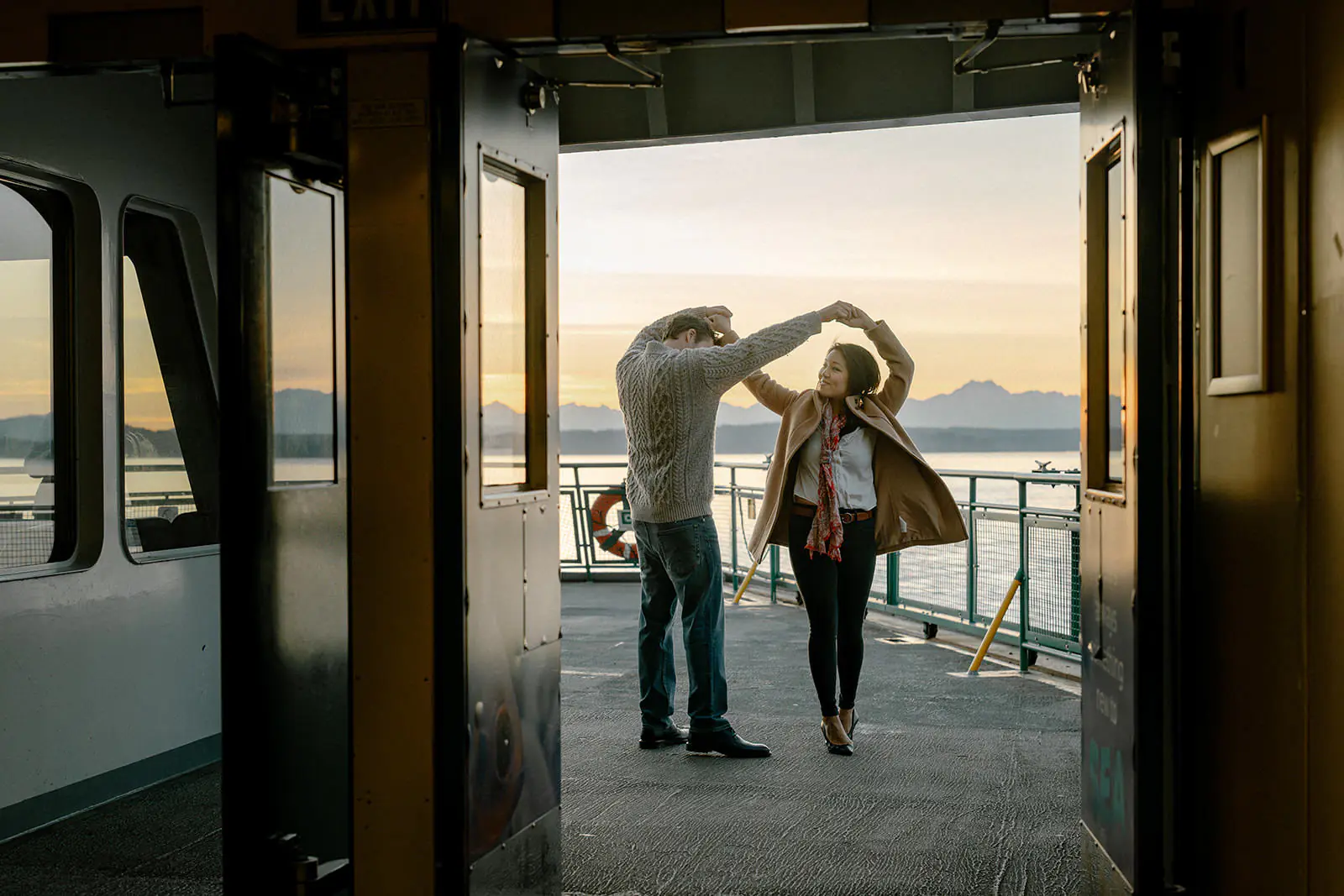
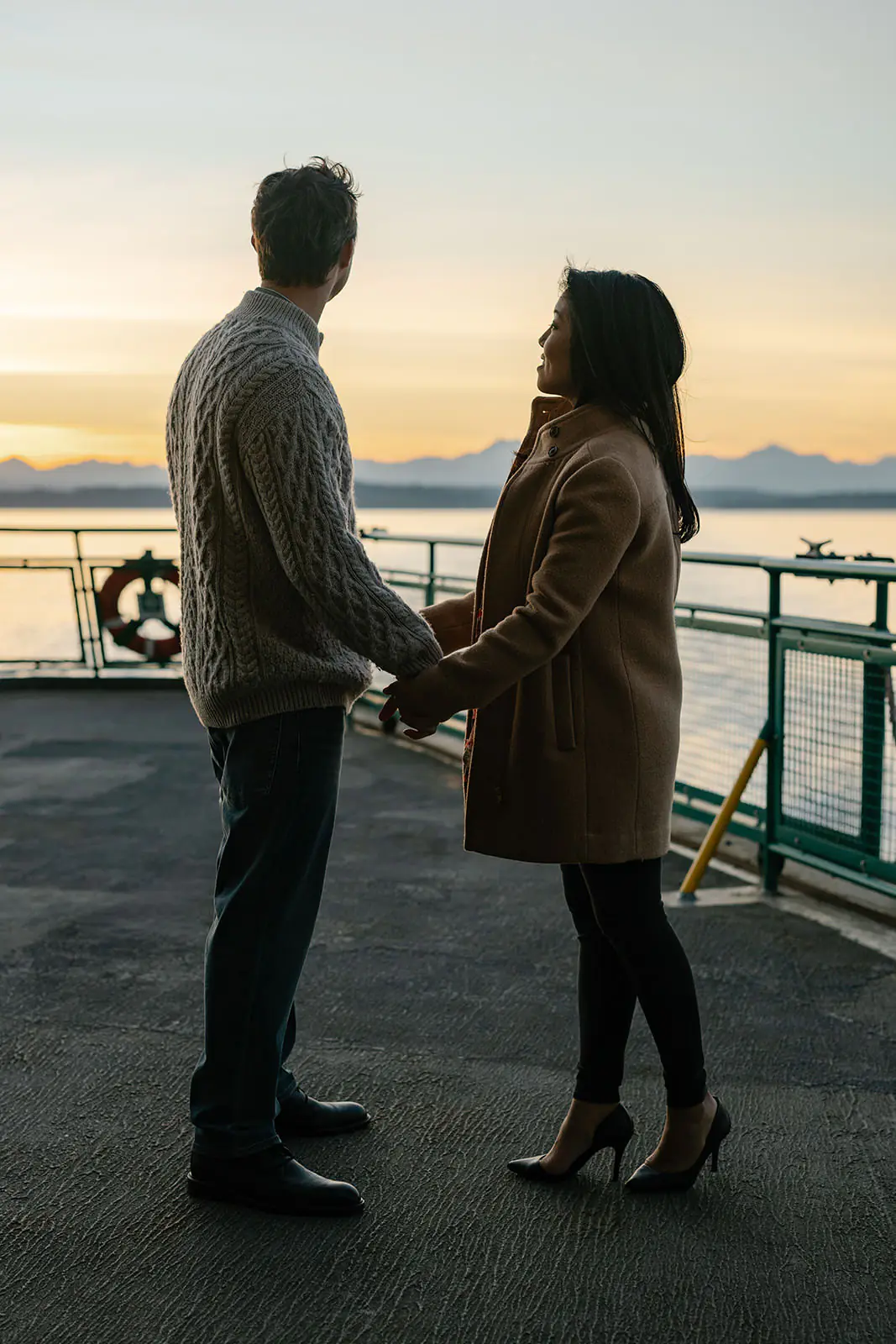
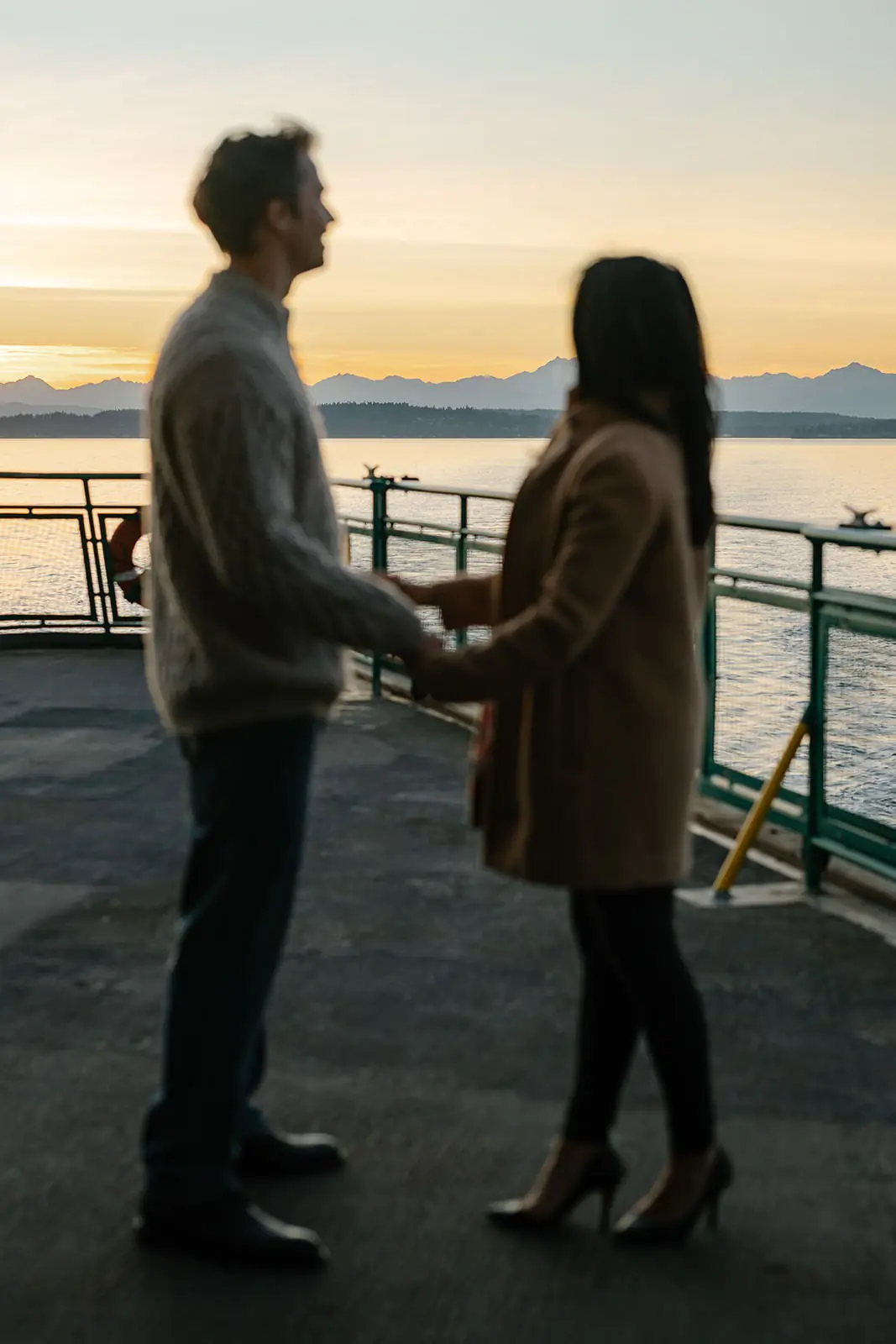
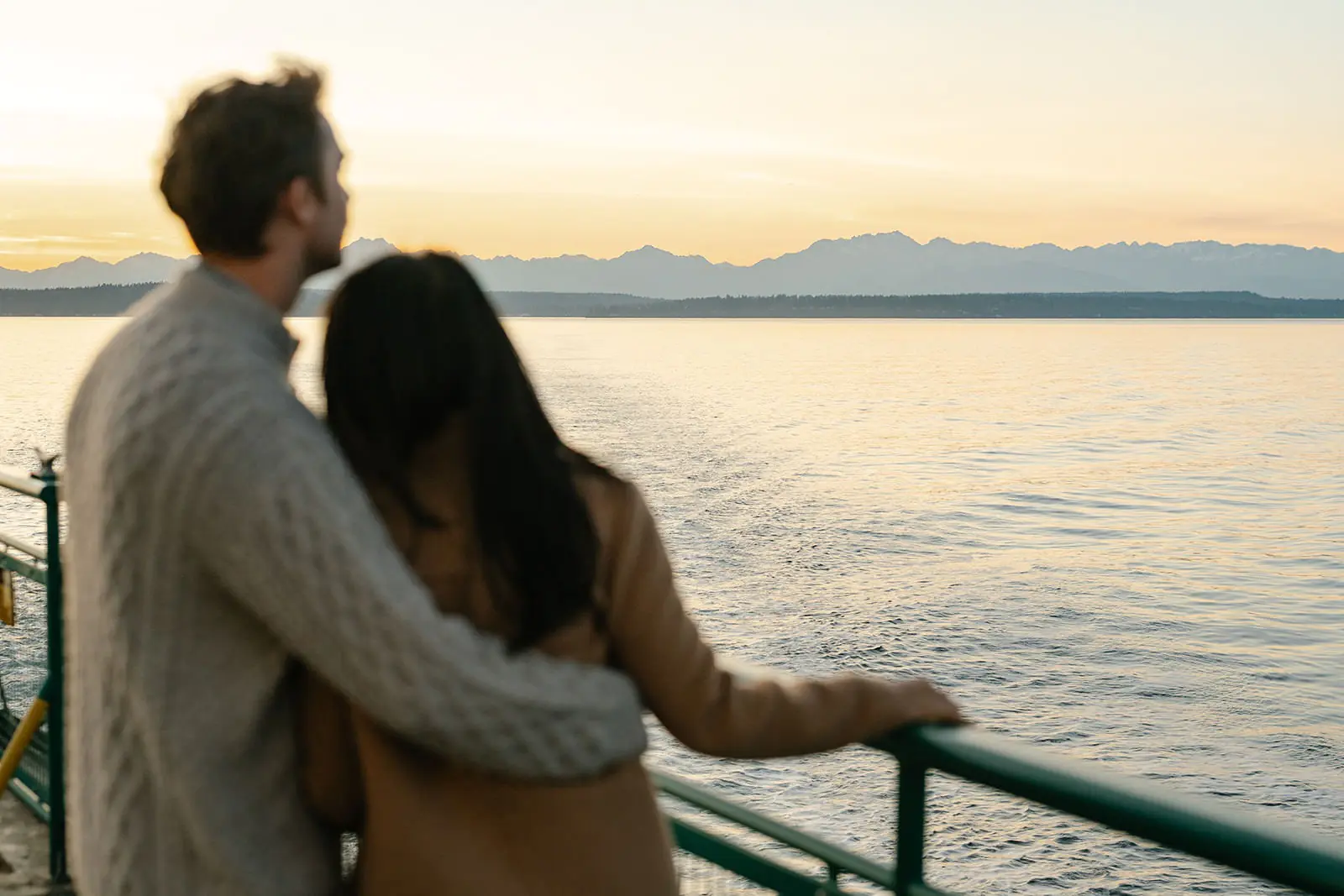
Picture this: you and your partner standing hand-in-hand as the Seattle skyline glimmers in the distance, Mount Rainier majestically rising behind you, while the gentle rocking of the ferry creates an intimate moment just for two. This isn’t just a dream – it’s exactly what happened during one of my most memorable Washington State Ferry engagement sessions.
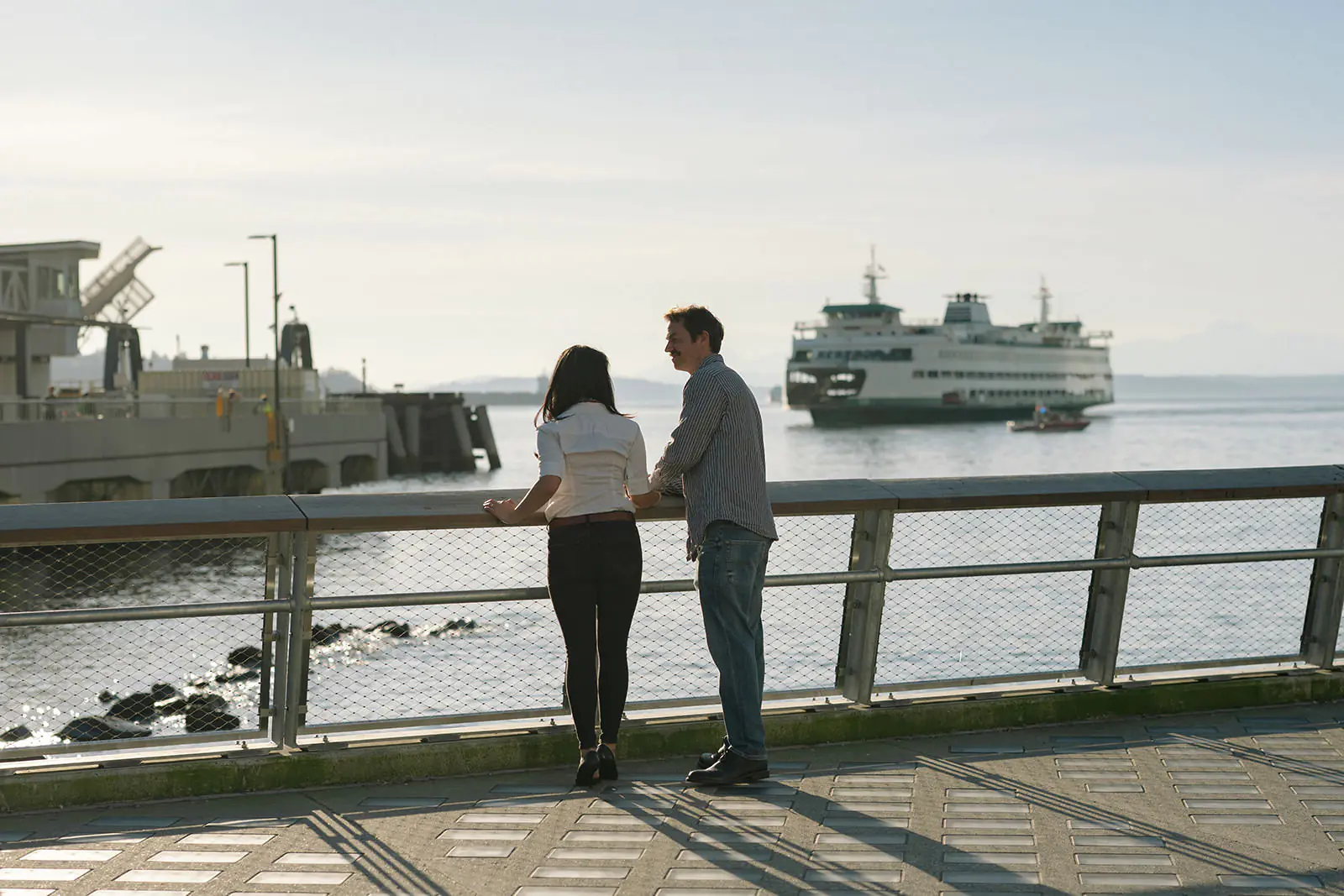
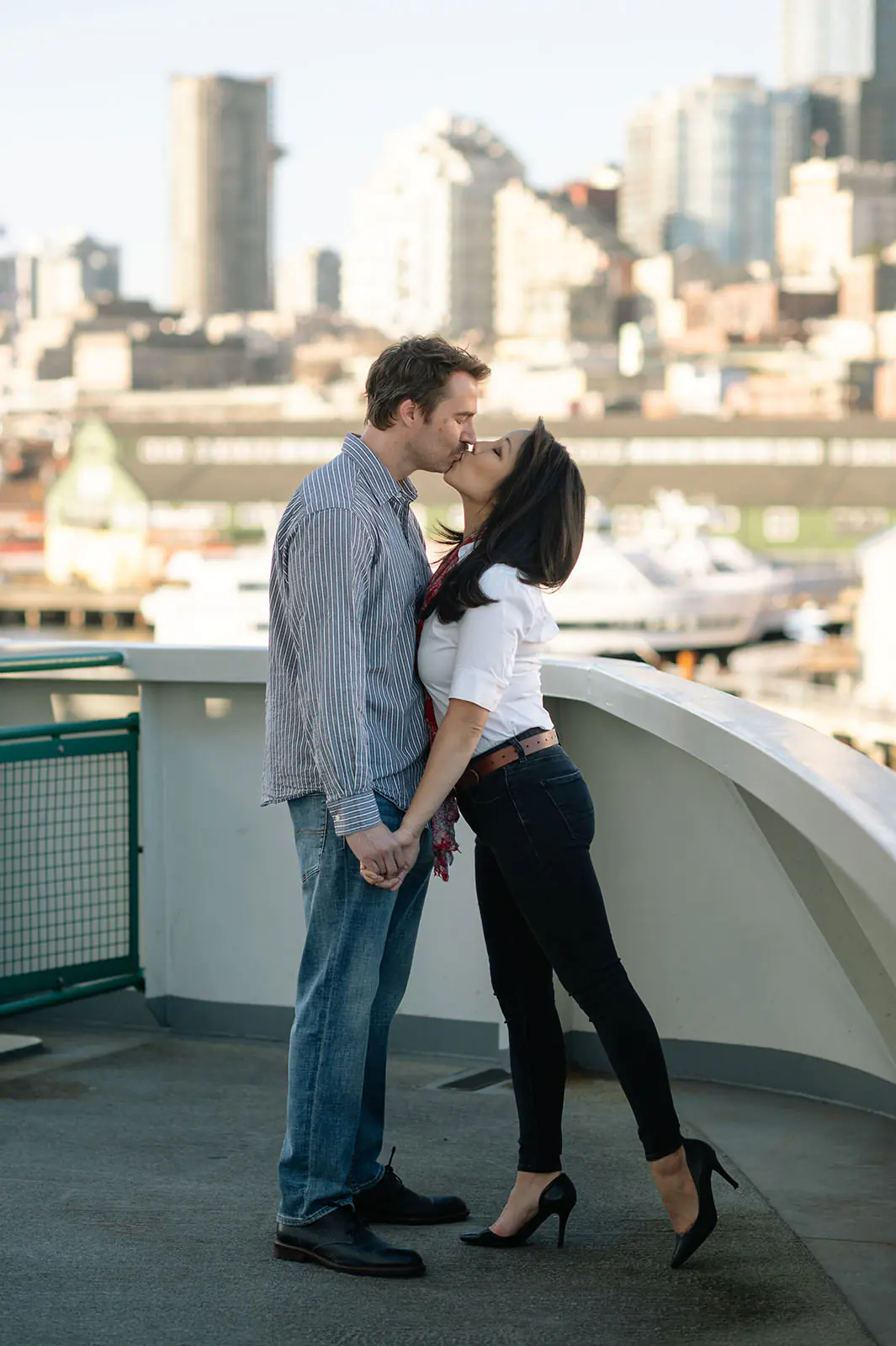
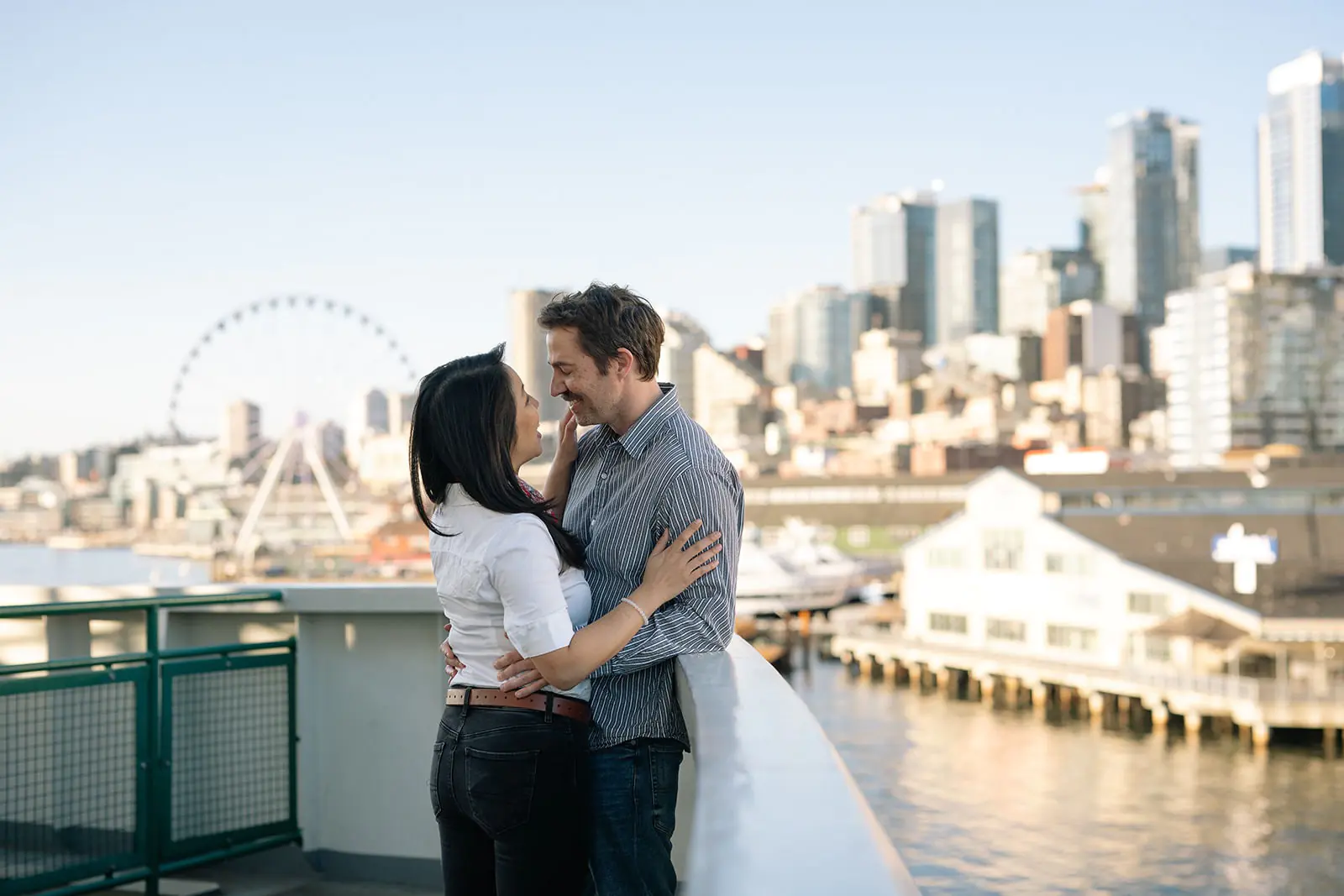
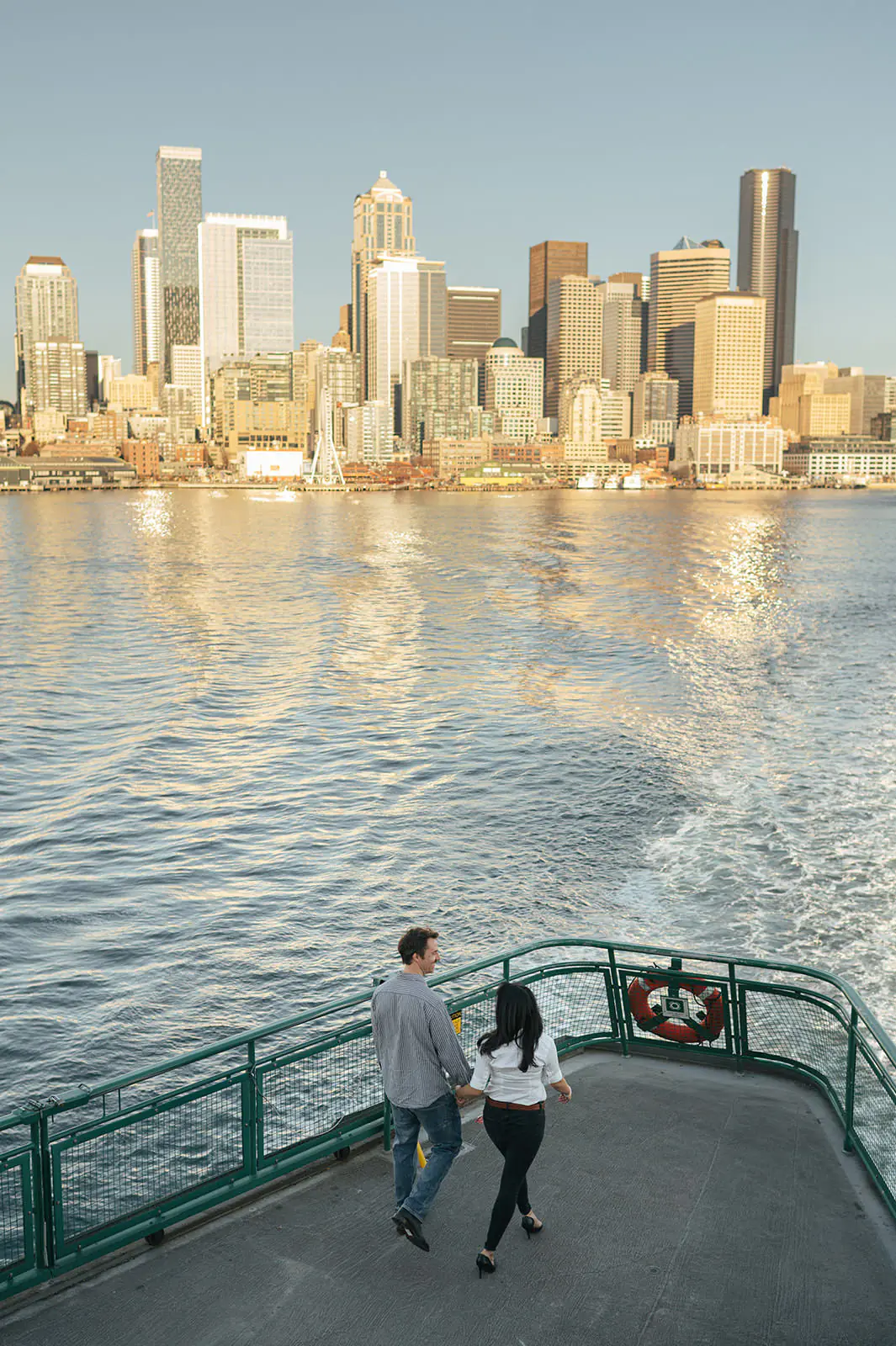
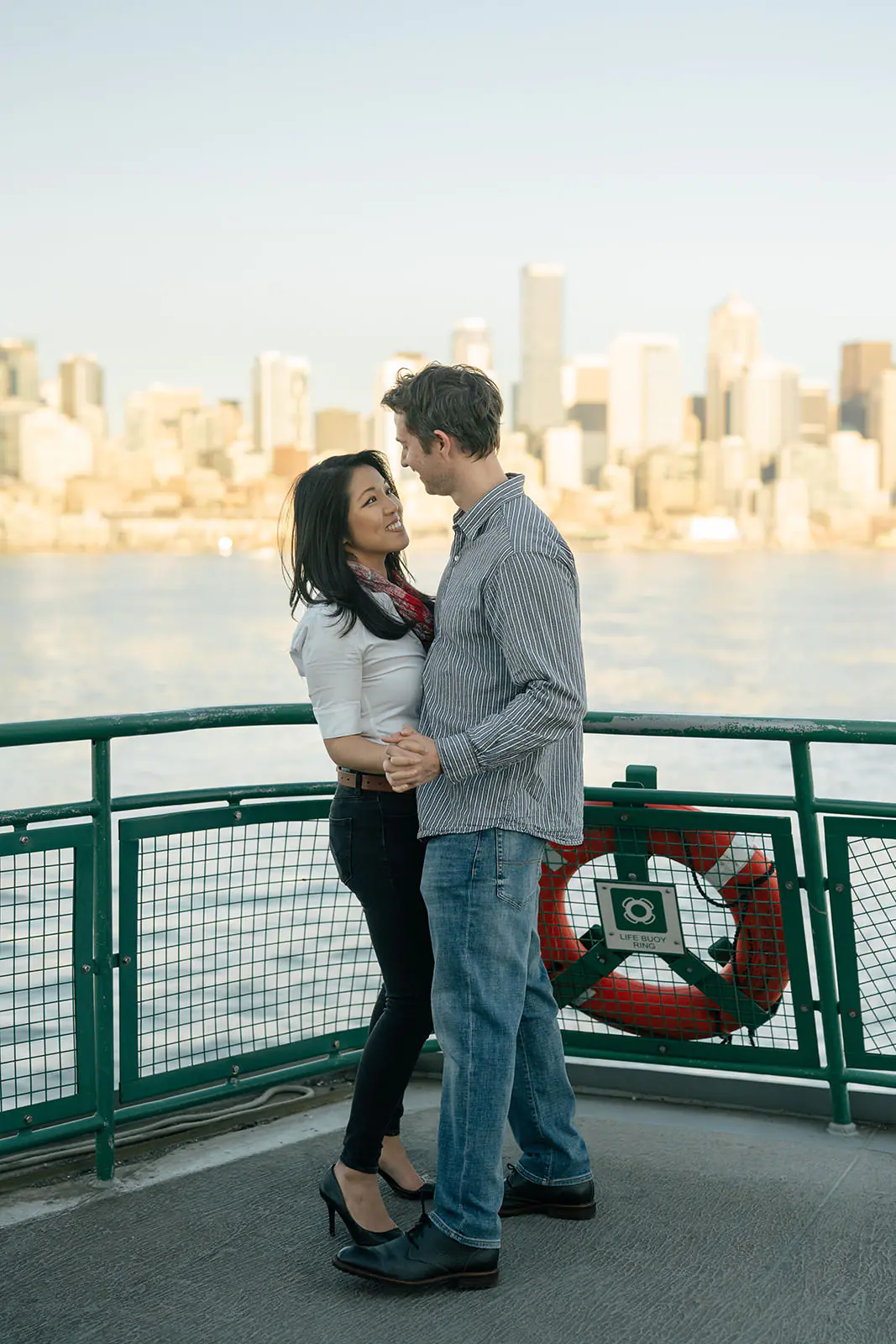
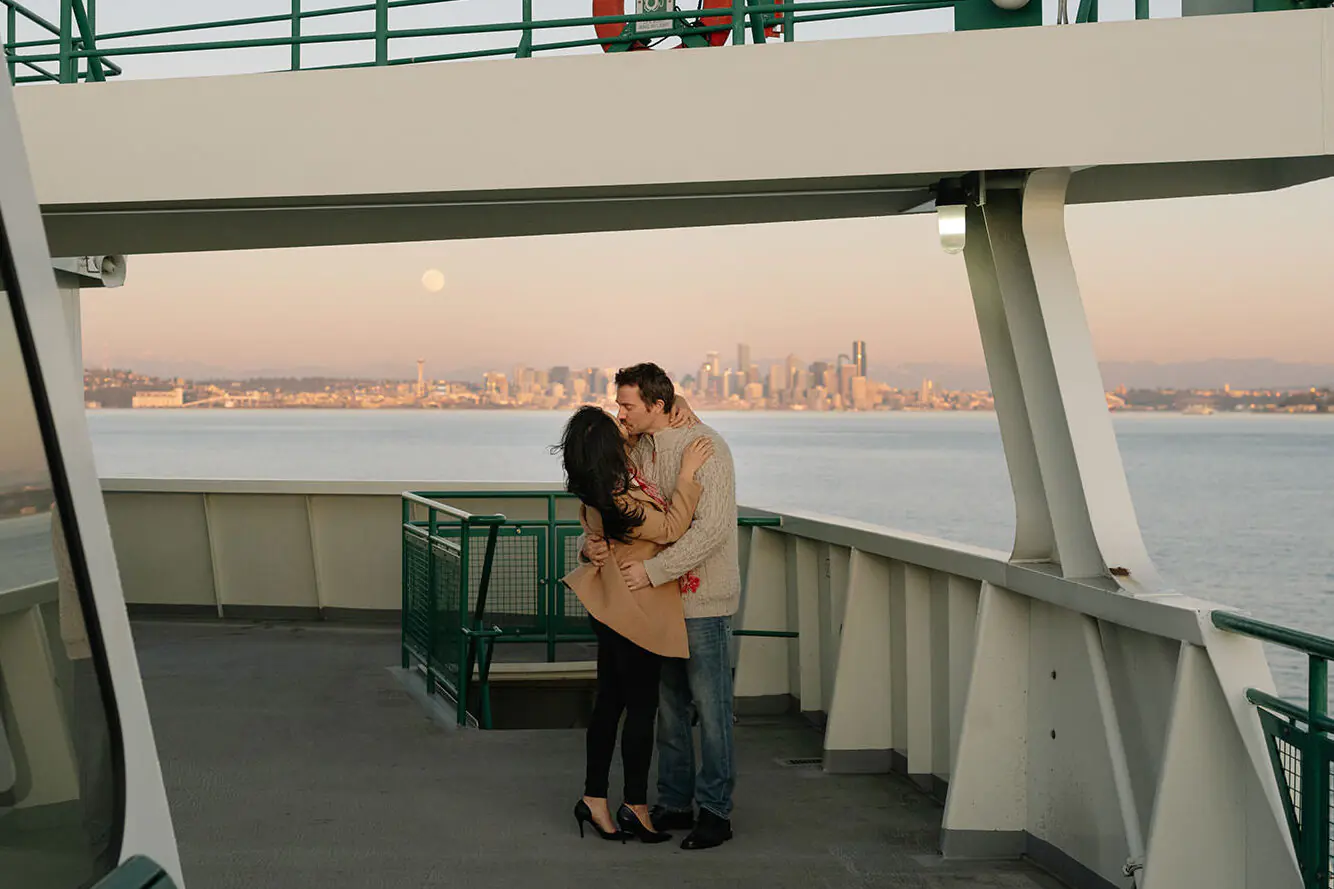
Recently, I had the incredible opportunity to photograph an engagement session that perfectly captured the magic of Pacific Northwest romance. My couple and I met at the bustling downtown Seattle terminal, where we prepared for our unique adventure. We boarded the ferry bound for Bainbridge Island, but here’s the twist – we immediately got right back on for the return journey, timing everything perfectly for the golden hour.
Why a Ferry Works So Well for Engagement Photos
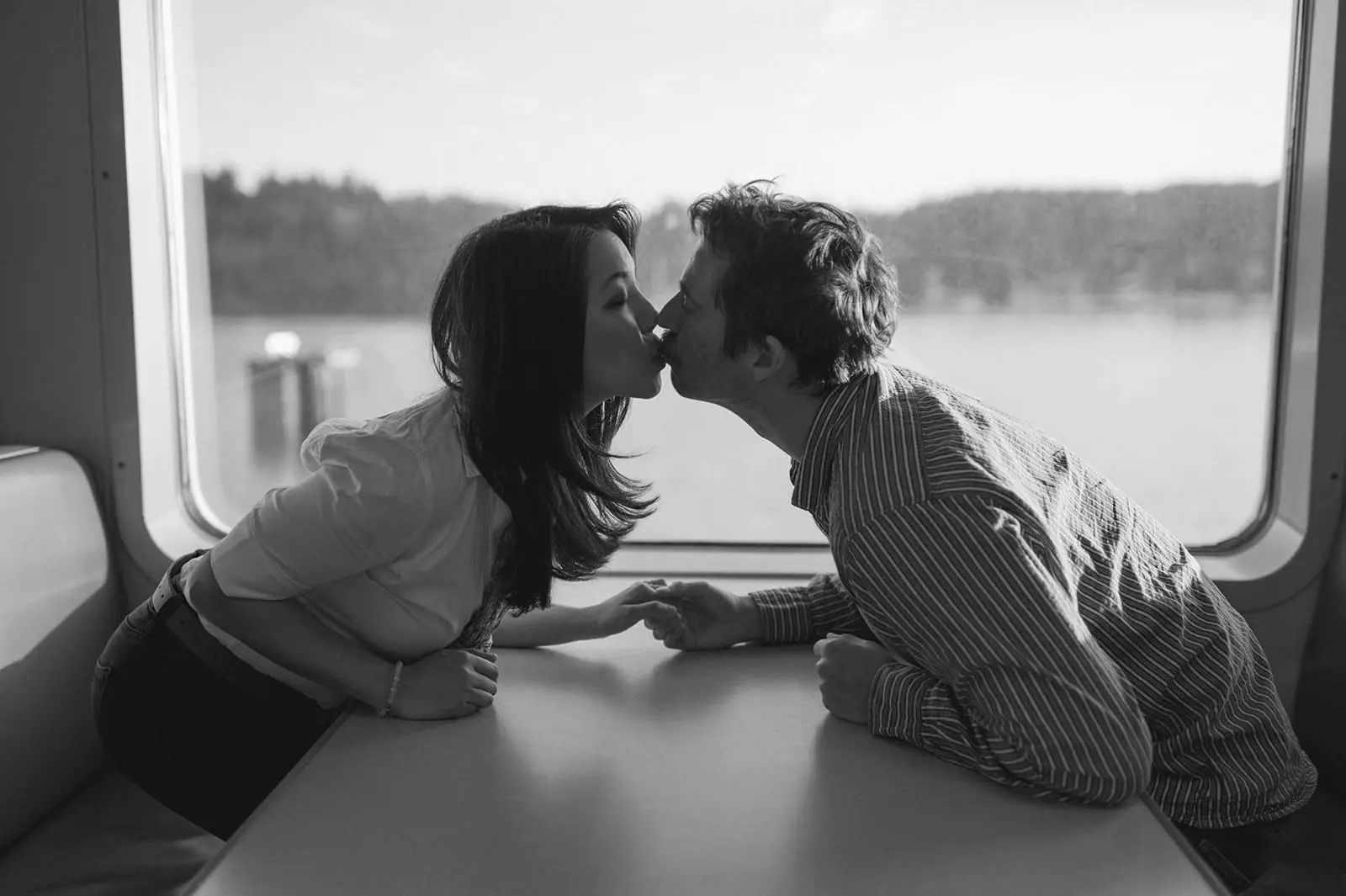
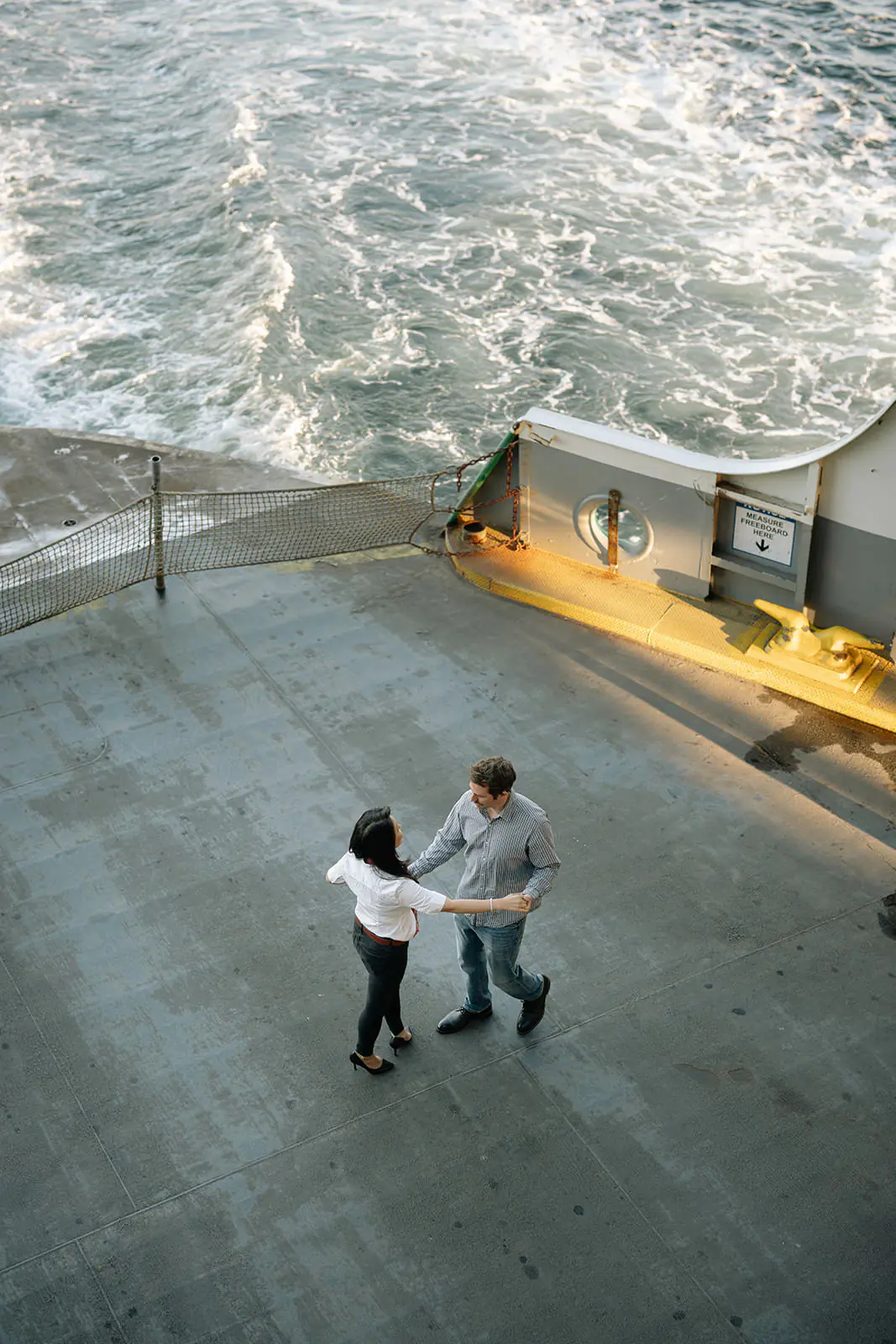
Most engagement locations are static. You arrive, you find your spot, and you stay there. The ferry is the opposite — it’s constantly moving, the light is always shifting, and there’s genuinely nowhere to be except present with each other.
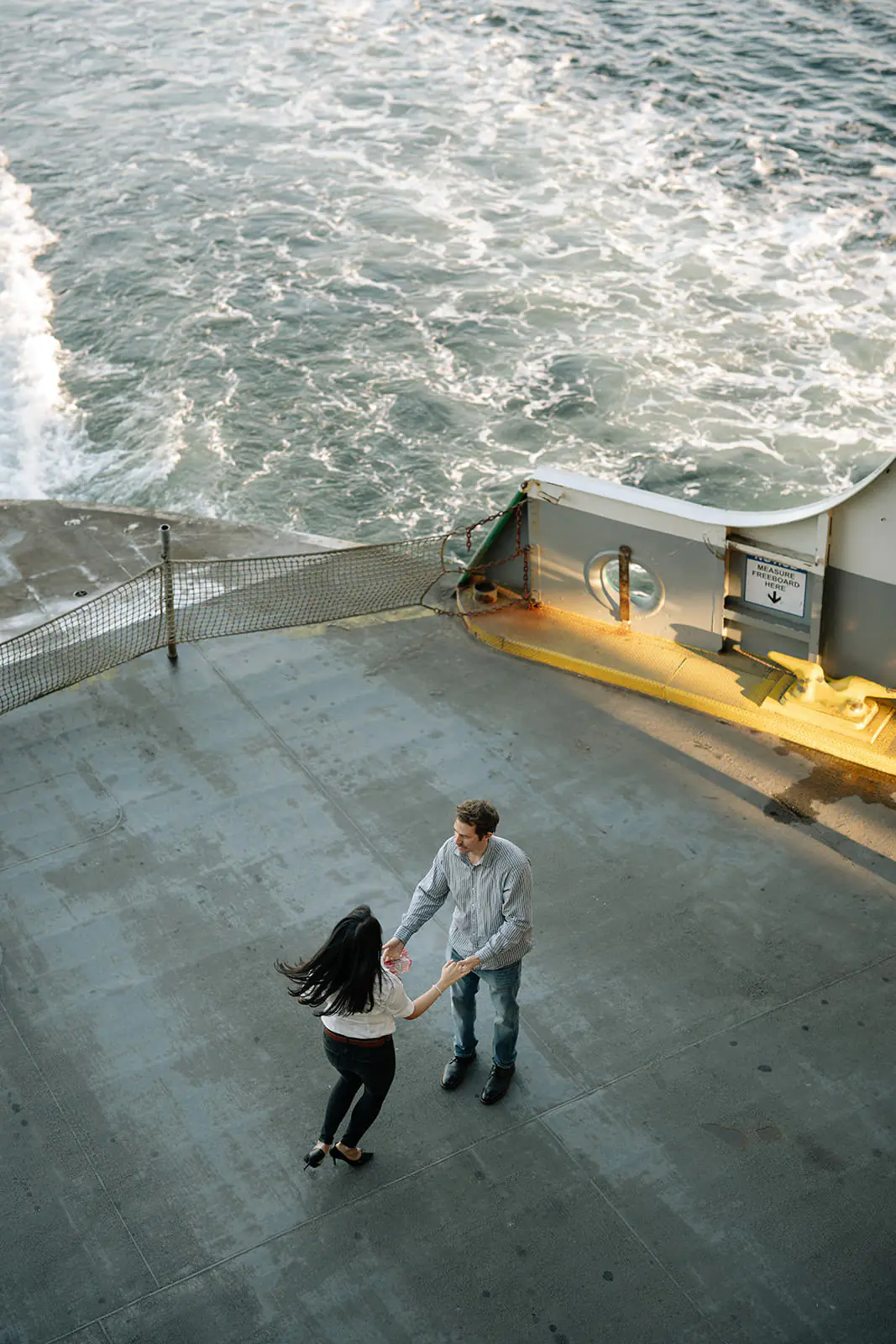
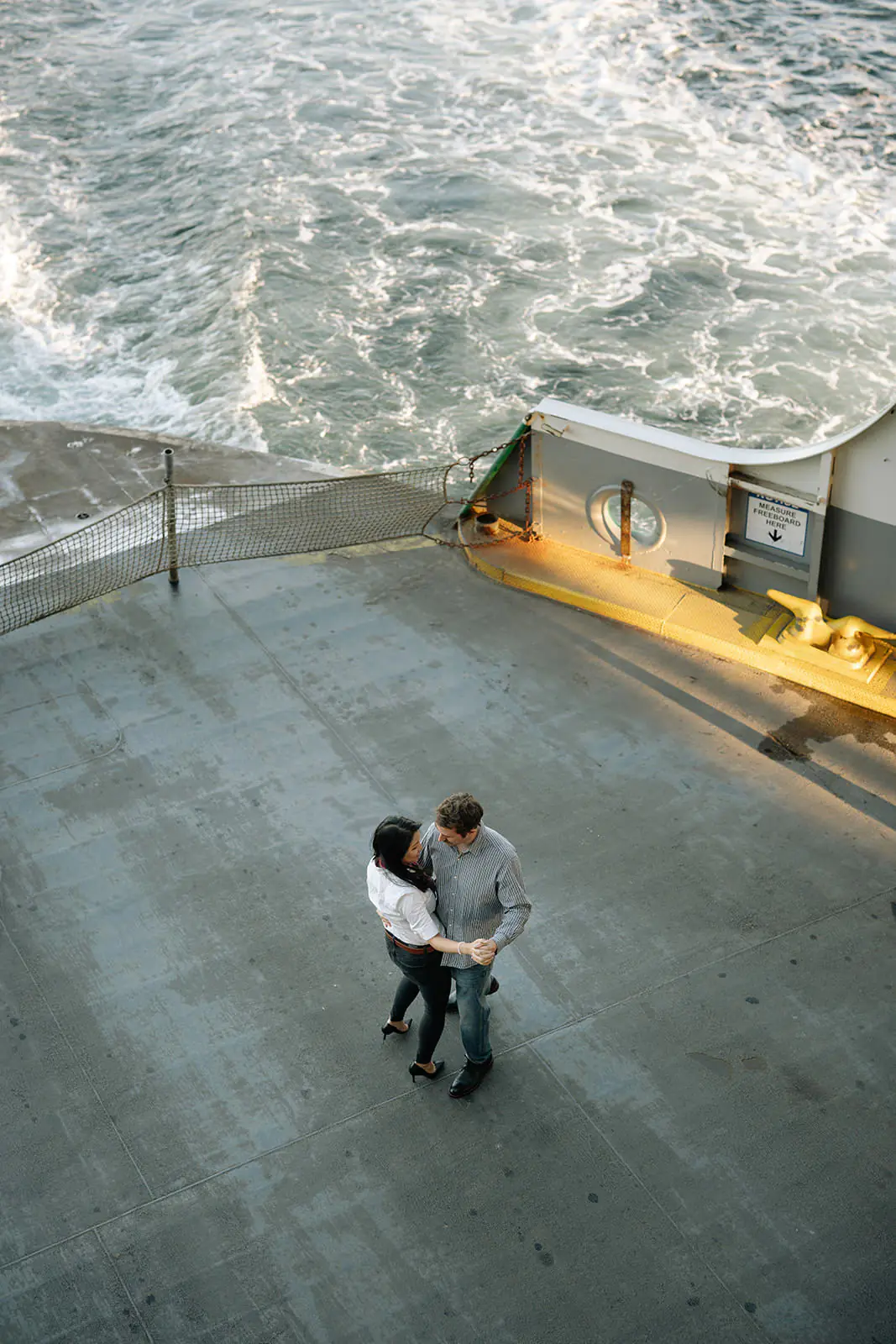
The background changes every few minutes. You’re framed by railings and bold industrial lines one moment, then wrapped in open sky and water the next. Seagulls trace lazy arcs above. The saltwater smell hits, the city softens in the distance, and something about the gentle rocking of the boat makes people relax in a way that’s hard to manufacture on land.
For camera-shy couples especially, this kind of environment is a gift. There’s built-in motion and distraction — you’re not just standing somewhere trying to look natural. You’re doing something together, which is when the best photos actually happen.
And practically speaking? It’s cheap. You’re buying ferry tickets, not renting a venue or paying for a permit.
Choosing Your Route
Not all ferry routes are created equal for photography purposes, and the right one depends on how much time you have, where you’re starting from, and how much variety you want. Here’s an honest breakdown of each option.
Seattle to Bainbridge Island — The Classic
This is where I’d send most couples, and it’s the route I keep coming back to myself. The crossing is about 35 minutes each way, which sounds short, but it’s genuinely enough time — you’re not rushing, you’re editing.
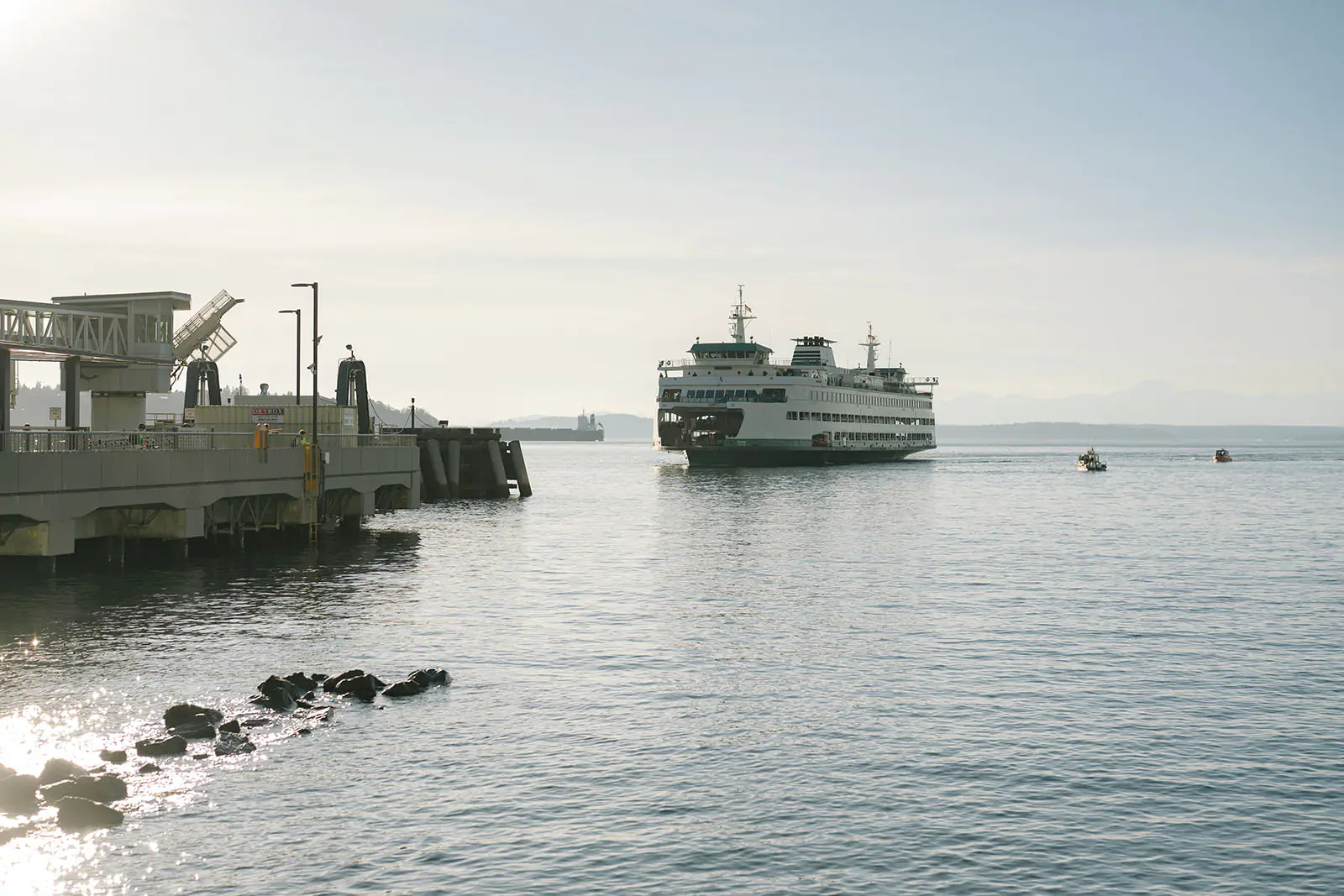
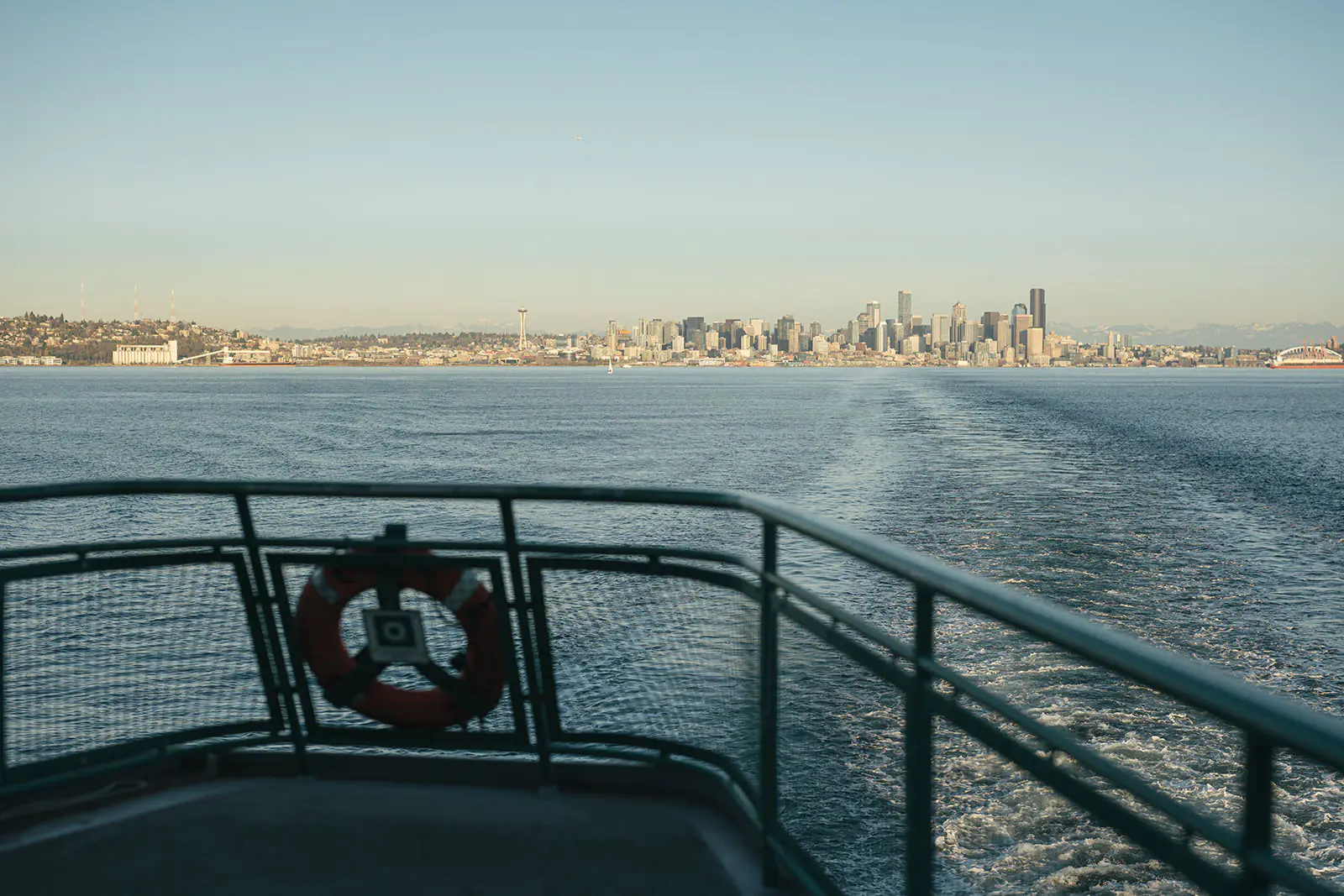
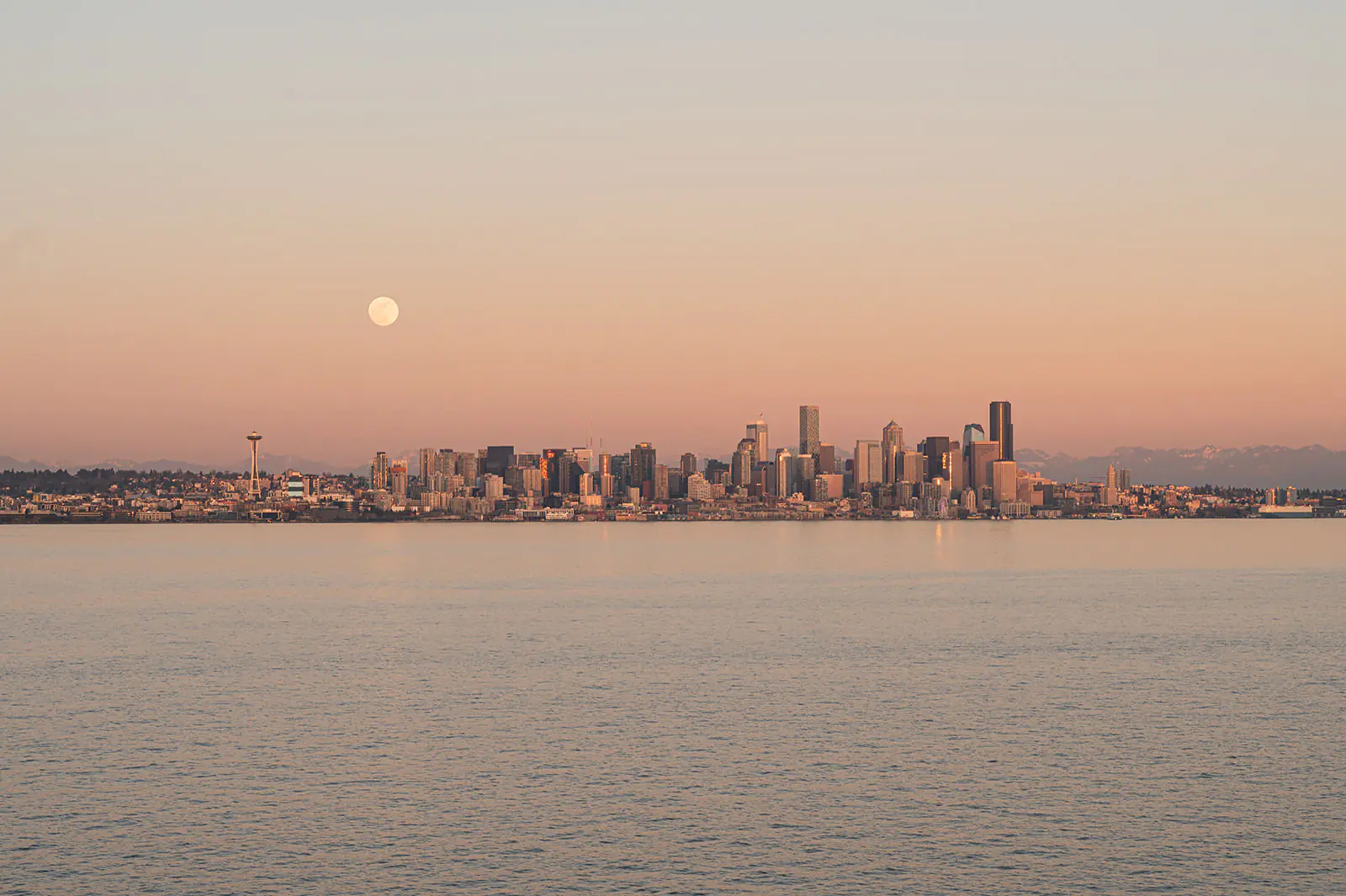
Departing from Colman Dock in downtown Seattle, you head west across Elliott Bay toward Bainbridge Island. The views of the city skyline behind you on the way out are beautiful, but the return is where the magic really happens: you’re headed back toward Seattle with the entire skyline spread out ahead of you, and if we’ve timed it right, the sun is going down behind you and painting everything in front warm. Mount Rainier sits off to the southeast on clear days, massive and improbable-looking. It’s one of those backdrops that makes you feel like you’re inside a postcard.
You don’t need to get off at Bainbridge at all. We board, ride over, and ride straight back on the next departure. The round-trip works out to about 70–90 minutes on the water, which, combined with meeting at the terminal and a quick stretch on the Seattle waterfront afterward, gives you a full, satisfying session.
A few things to know: this is the busiest ferry route in the state. On summer weekends, it fills up with tourists, cyclists, and day-trippers, and the exterior decks get crowded enough that we’re working around strangers more than I’d like. Weekday sessions are dramatically quieter — I’d call it a near non-negotiable if you want the deck mostly to yourselves. Spring and fall weekdays are the sweet spot: smaller crowds, better light angles, and that moody PNW atmosphere you can’t manufacture in Lightroom.
Parking at Colman Dock is tough. Light rail to Westlake or Pioneer Square, then walking to the terminal, is genuinely the easier move.
Best for: Couples who want iconic Seattle skyline shots, a manageable timeframe, and the classic ferry experience. First-timers. Couples who are excited about the city backdrop.
Ideal timing: Board 60–90 minutes before sunset for golden hour on the return.
Seattle to Bremerton — The Full Adventure
If Bainbridge is the curated experience, Bremerton is the real trip. The crossing is about an hour each way, running south through Puget Sound with dramatically changing scenery along the way. You get the Seattle skyline receding behind you, open water in the middle stretch, and then the Kitsap Peninsula coming into view — and Mount Rainier is visible from multiple angles throughout, which Bainbridge doesn’t always give you.
The longer crossing gives us time to explore the whole boat. Different spots on deck read completely differently: the stern frames the wake and open water, the bow frames what’s coming, and the sides give you those long open-horizon shots. We can change our entire background four or five times in one trip without leaving. On a Bainbridge crossing, I have to be a little more intentional about working quickly as the light changes. In Bremerton, I can breathe.
Practically, there’s a smart logistics trick for this route: drive to Bremerton, park there (easy, cheap), and ride back to Seattle as foot passengers. You avoid the back-to-back round trip, get to start the session as you’re pulling away from the Kitsap side with the open water ahead, and arrive in downtown Seattle right as the waterfront is glowing. I love this flow. It also means you’re not driving back stressed after a golden-hour session — you’re just taking the ferry home.
The tradeoff is travel time. Getting to Bremerton from Seattle involves either taking the ferry or driving for about an hour around the Sound. It’s worth planning around, not just showing up for.
Best for: Couples who want maximum variety and a more adventurous feel. Anyone who specifically wants Mount Rainier in their photos. Couples with flexible schedules who want the “real” ferry experience.
Ideal timing: If doing the Bremerton-to-Seattle flow, time your Bremerton departure for 90 minutes before sunset. You’ll arrive in Seattle right as the waterfront light is perfect.
Fauntleroy to Vashon Island (or Southworth) — The Hidden Gem
This one doesn’t come up in most Seattle engagement photography guides, and that’s exactly why I love recommending it to the right couple.
The Fauntleroy terminal is tucked into West Seattle, a 20-minute drive from downtown. The ferry over to Vashon Island takes about 15 minutes — short enough that it feels spontaneous, long enough to get real photos on the water. The crossing itself is quieter and more intimate than either of the routes above: fewer passengers, a smaller vessel, and an entirely different pace. It feels less like a commuter route and more like something out of a slower, quieter Pacific Northwest life.
Where this route really earns its place is what comes after you board. If you disembark on Vashon, Point Robinson Lighthouse on the island’s eastern shore is one of the most genuinely romantic outdoor locations in this entire region — a white lighthouse on a rocky beach, driftwood, big views of the water and Rainier, and almost no one else around. The lighthouse paired with ferry photos creates a session that feels like a full story, not just a location check-in. You can also loop back on the ferry and ride over to Southworth on the Kitsap side for another short crossing and different water views before heading home.
The honest catch: this route requires more planning and is harder to time precisely for golden hour because the crossings are shorter and the scheduling is less frequent than Bainbridge. It rewards couples who are willing to lean into the adventure rather than optimize for the single perfect shot.
Best for: Couples who want something off the beaten path. Anyone who loves the idea of a lighthouse. Couples open to a longer, more wandering session that uses the ferry as a launching point rather than the main event.
Ideal timing: Afternoon sessions work better here than strict golden-hour chases — build in time to explore Vashon before the light gets good, then catch the ferry back at golden hour.
Timing Your Session
Golden hour is the goal, and it’s worth planning around carefully.
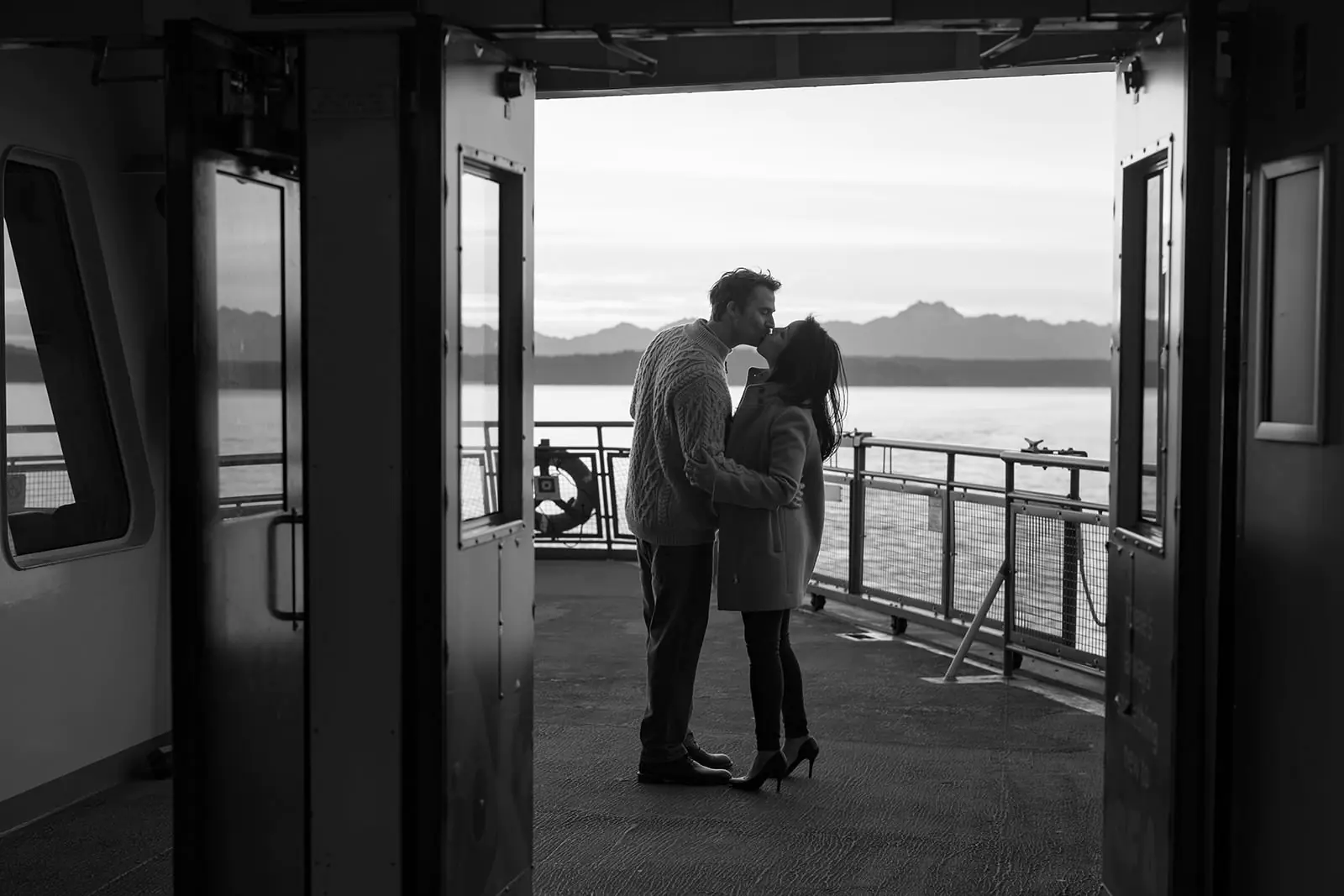
The light on the water in the last hour before sunset is unlike anything else. It turns Elliott Bay into copper and glass. The city glows. Mount Rainier goes pink. Everything looks better than it has any right to.
For the Bainbridge route, aim to board the ferry about 60–90 minutes before the official sunset time. You’ll have some good pre-golden light on the way over, and you’ll be on the return crossing — with the skyline ahead of you — right as the light peaks. After docking back in downtown Seattle, the waterfront offers a perfect bonus location while the sky fades through pastels.
Sunrise is a genuinely underrated option, especially for couples who want fewer people around. The morning light is softer and cooler, the ferries are emptier, and there’s a quiet, intimate energy to the whole thing that’s completely different from sunset.
Avoid midday. Harsh overhead light, full crowds, and none of the atmosphere that makes ferry photos special.
What to Wear
The ferry is a practical environment, which means outfit choices matter more here than in some other locations.
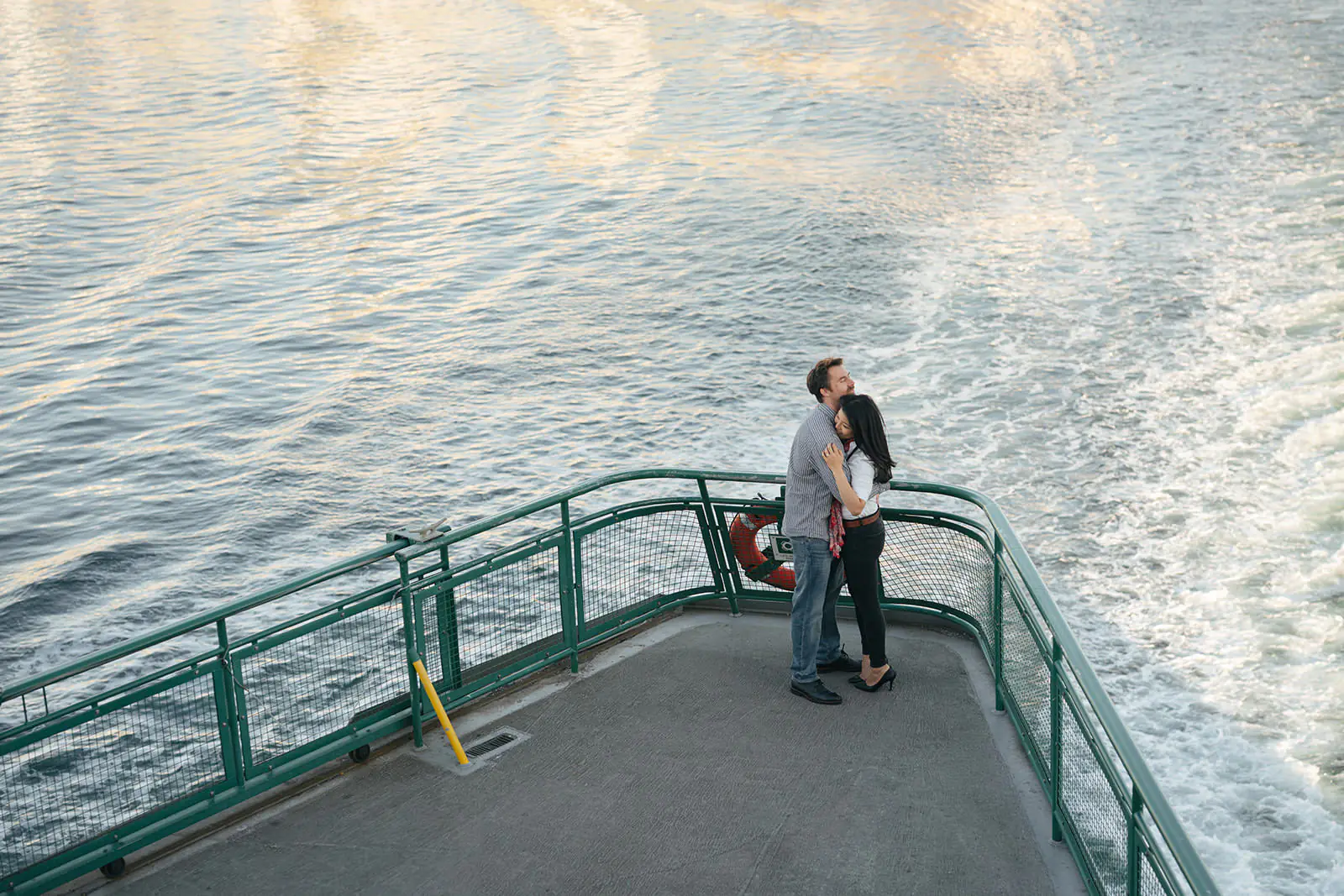
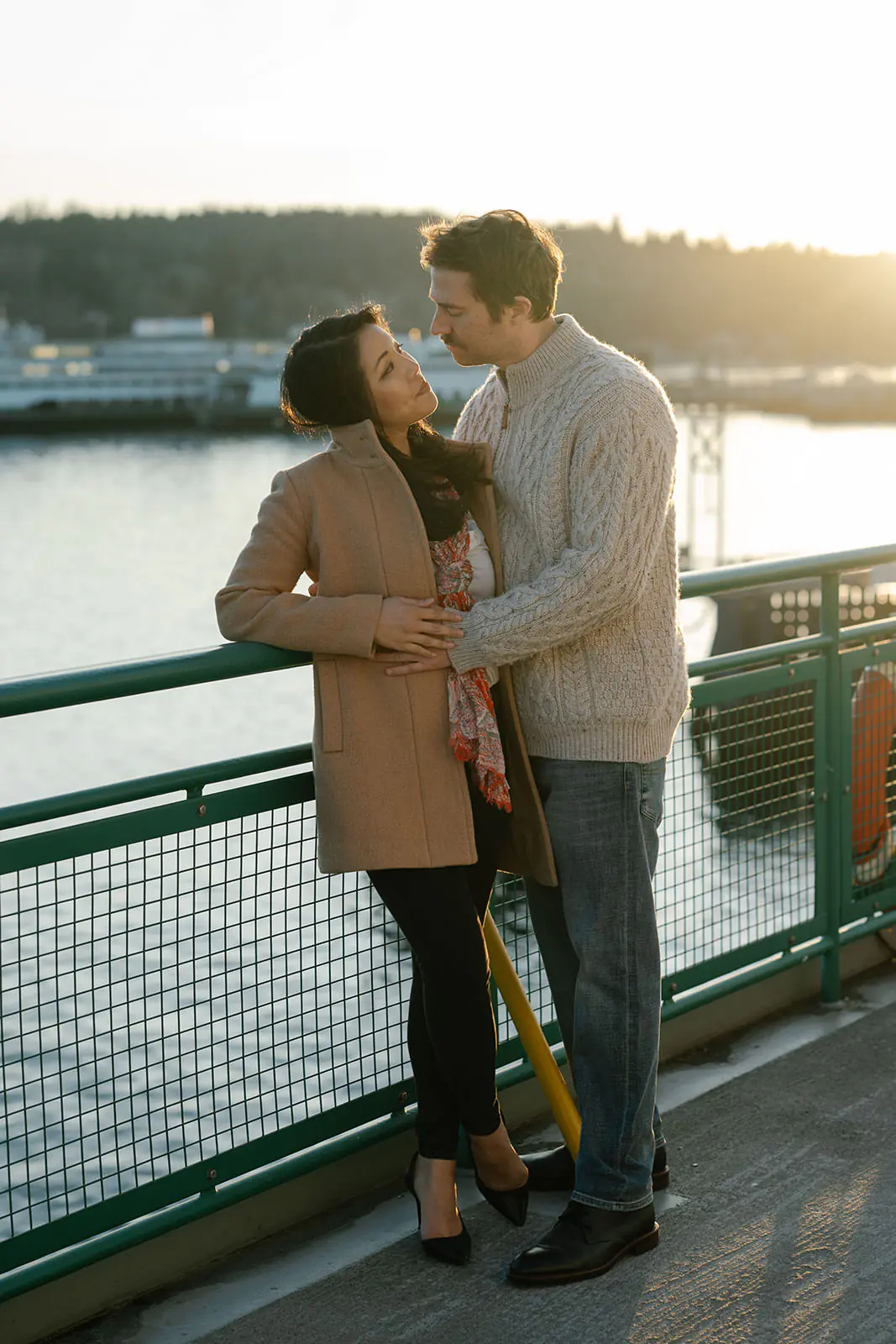
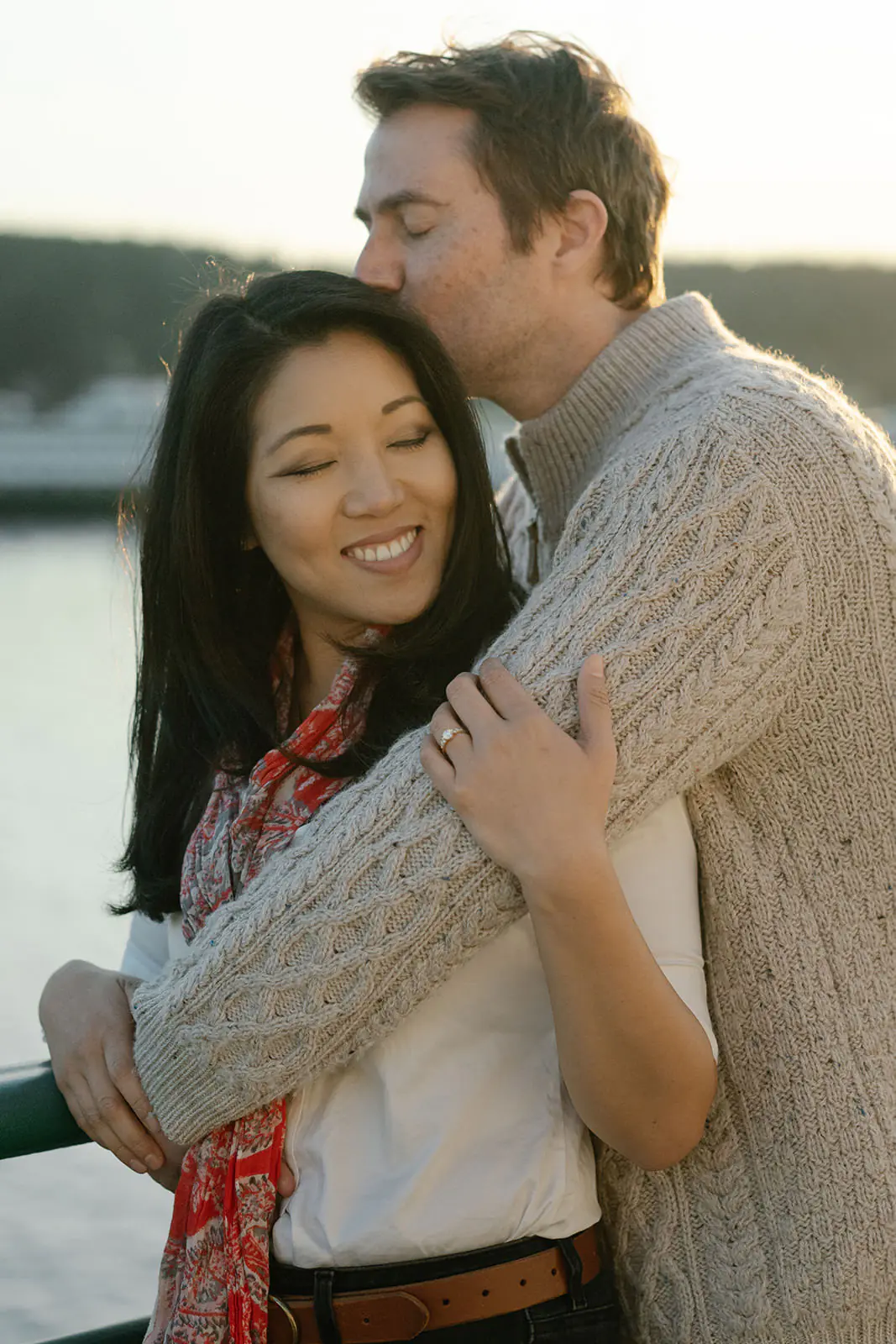
The wind is real. Long, flowing dresses and loose fabrics do beautiful things in the breeze, but anything with a very full skirt can become a handful. Layer up — especially in the shoulder seasons. Spring and fall on the water can feel 10–15 degrees colder than it does on land, and cold, stiff couples don’t give great photos. A nice jacket or coat you can slip on and off is a great idea; sometimes those layered, slightly-bundled shots end up being everyone’s favorites anyway.
Wear shoes you can actually walk in. The decks are metal and can get slippery, and we’ll be moving around the whole time.
Color-wise, consider the palette: navy, warm neutrals, rust, forest green, and burgundy all photograph beautifully against the water and sky. Avoid anything too close to white unless you love the bright contrast look — it can wash out against the light bouncing off the water.
Seasonal Notes
The ferry runs year-round, and honestly? Every season has something going for it.
Spring (April–June) is one of the best times. Mild temperatures, beautiful clouds, occasional dramatic light. Crowds are manageable, especially early in the season.
Summer (July–September) means long golden hours and the best weather odds, but also peak tourist season. If you shoot in summer, a weekday session is almost non-negotiable for having the deck to yourselves.
Fall (October–November) is genuinely spectacular. The light is lower and warmer, the air has that crisp PNW quality, and the moody overcast skies that show up some days add atmosphere that no amount of editing can fake. This is personally one of my favorite times of year to shoot on the water.
Winter (December–March) is for the adventurous. Expect cold, smaller crowds, dramatic skies, and occasionally stunning stormy-water conditions. The images have a completely different, more editorial feel. If you’re not the type who’s bothered by a little gray and chill, winter ferry sessions can be extraordinary.
A Few Practical Things
Ferry tickets are purchased at the terminal or through the WSF app. Check the Washington State Ferries schedule in advance, as timing varies by route and season.
Parking near Colman Dock can be tricky on weekdays. Plan to use the light rail or arrive early. In Bremerton, parking is much easier.
And one last thing: embrace what you can’t control. The wind, the seagulls, and the occasional other passenger photobombing. The best ferry session images aren’t the ones where everything was perfectly staged — they’re the ones where you were genuinely somewhere together, and it shows.
If you’re searching for a photographer who will document your elopement with intention, artistry, and an observant eye for the moments that matter most, I would love to connect with you. I photograph weddings throughout Seattle and the Pacific Northwest, approaching each celebration with a thoughtful, highly personalized experience from our first conversation through the final delivery of your images. You can explore more of my work, learn about the experience I provide, or inquire about your date.