
What to Wear for Engagement Photos: Complete Guide
What to Wear for Your Engagement Photos (Without Feeling Overdressed or Stiff!)
Your engagement session should feel fun, natural, and completely you. But when it comes to figuring out what to wear for your engagement photos, it’s easy to overthink it. You want to look amazing, but you also don’t want to feel stiff, uncomfortable, or like you’re wearing someone else’s clothes.
I’ve shot hundreds of engagement sessions across Seattle and the Pacific Northwest, and the couples who feel most confident in their photos almost always follow a few simple rules. Here’s everything I’d tell you if we were on a planning call right now — the long version, with all my real photographer-tested advice.
1. Choose Something You Feel Confident In
If you feel good in what you’re wearing, it will show. Choose outfits that make you feel like the best version of yourself. If you’re constantly adjusting or second-guessing your look, it’s not the right outfit — and that discomfort always reads in the photos.
The opposite is also true: a couple in something simple they actually love will always photograph better than a couple in something fancy that doesn’t feel like them. Confidence is the most photogenic thing you can wear.
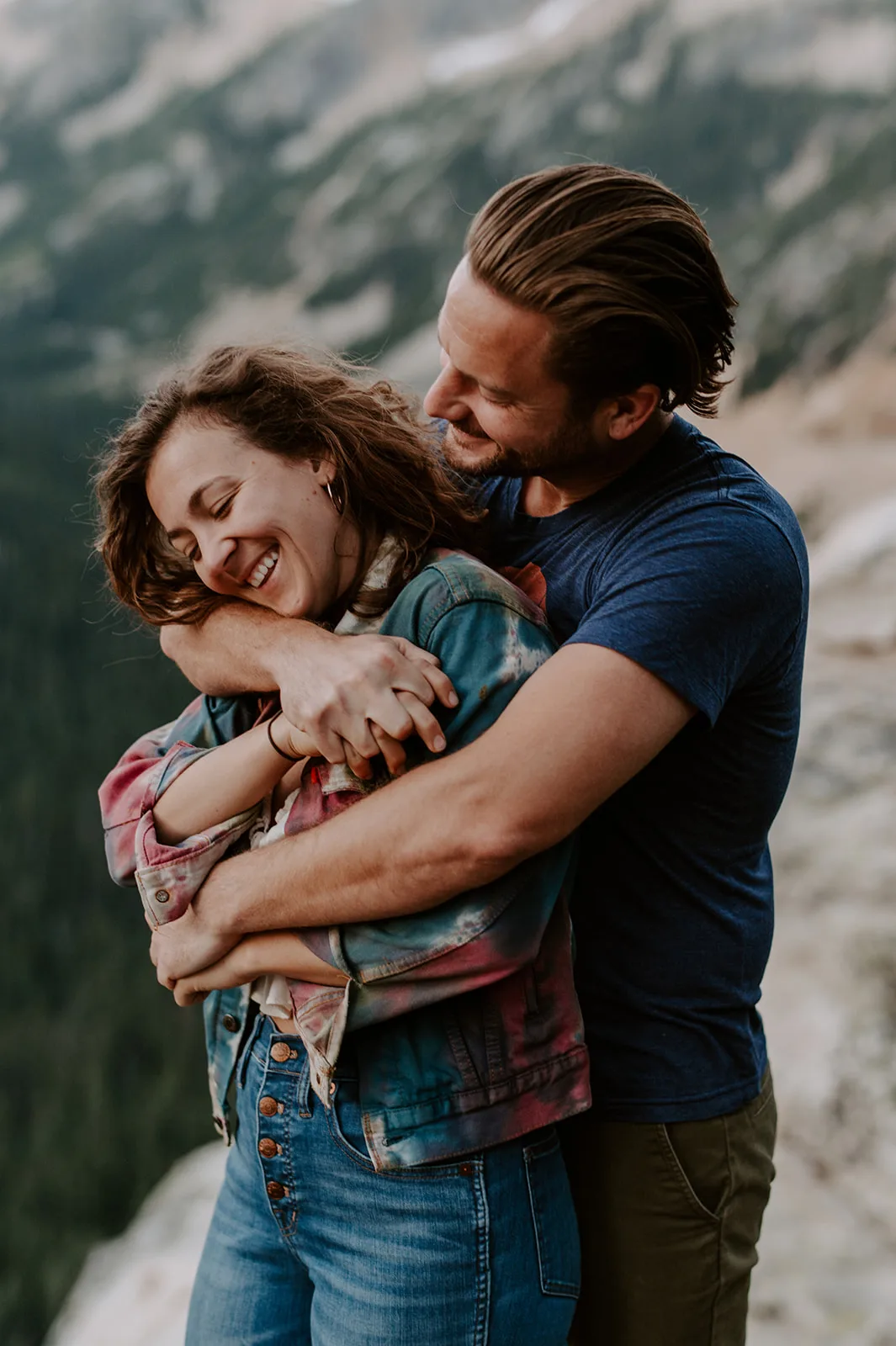
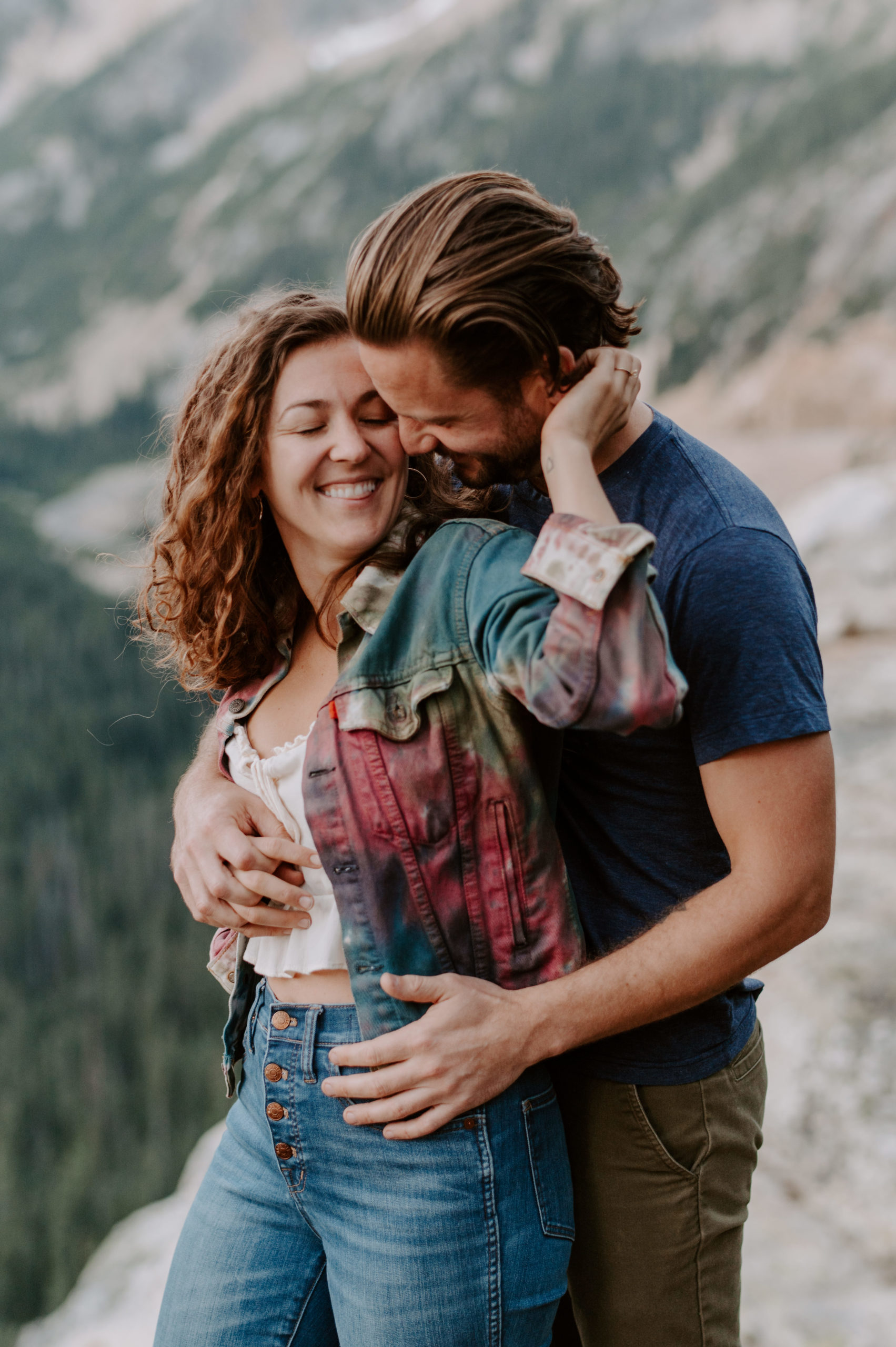


2. Dress for the Location and Season
Your outfit should complement your surroundings rather than clash with them. The same dress can look stunning in one setting and out of place in another. Here’s how to think about it by setting:
Outdoor and Natural Settings
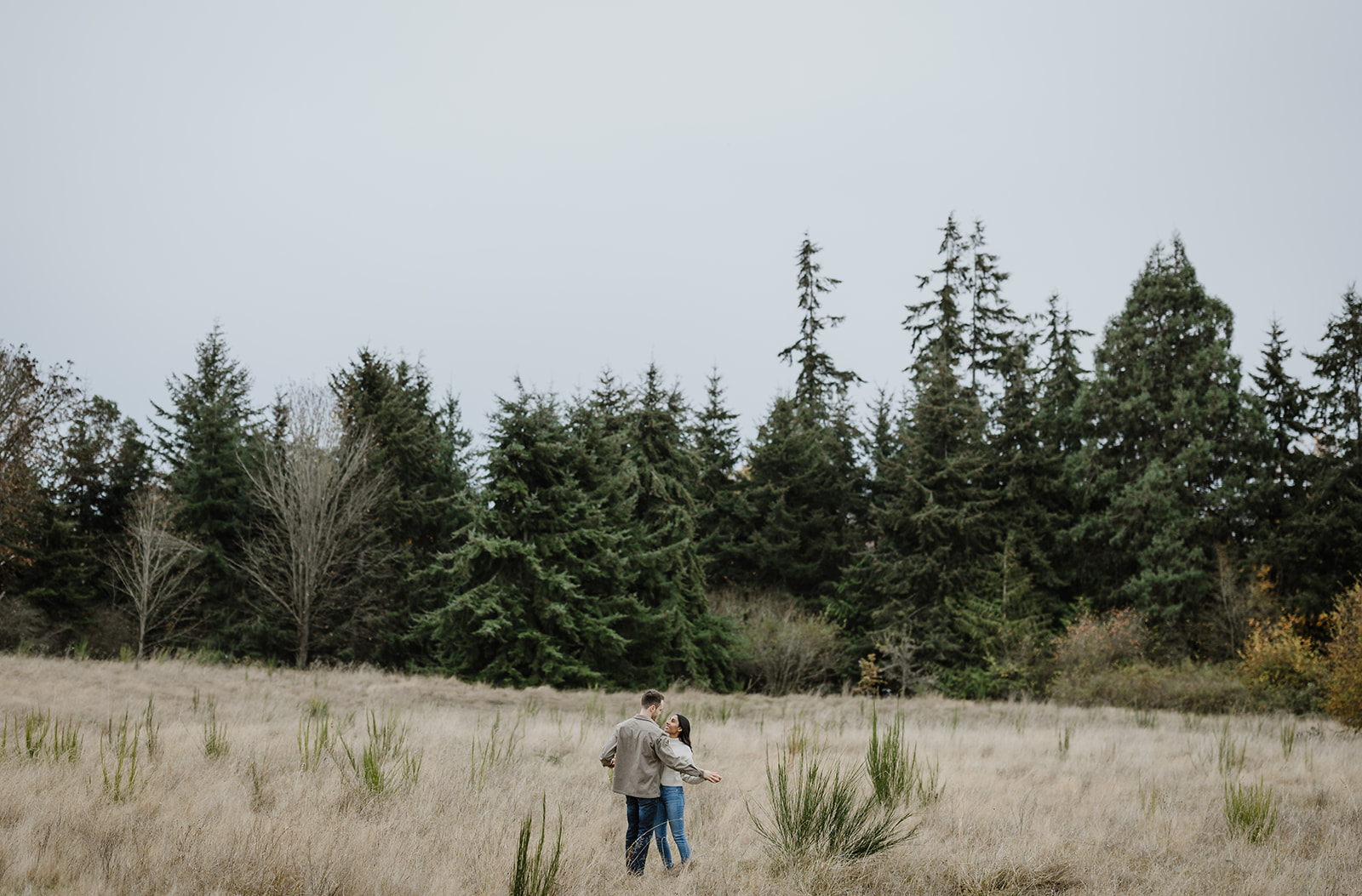
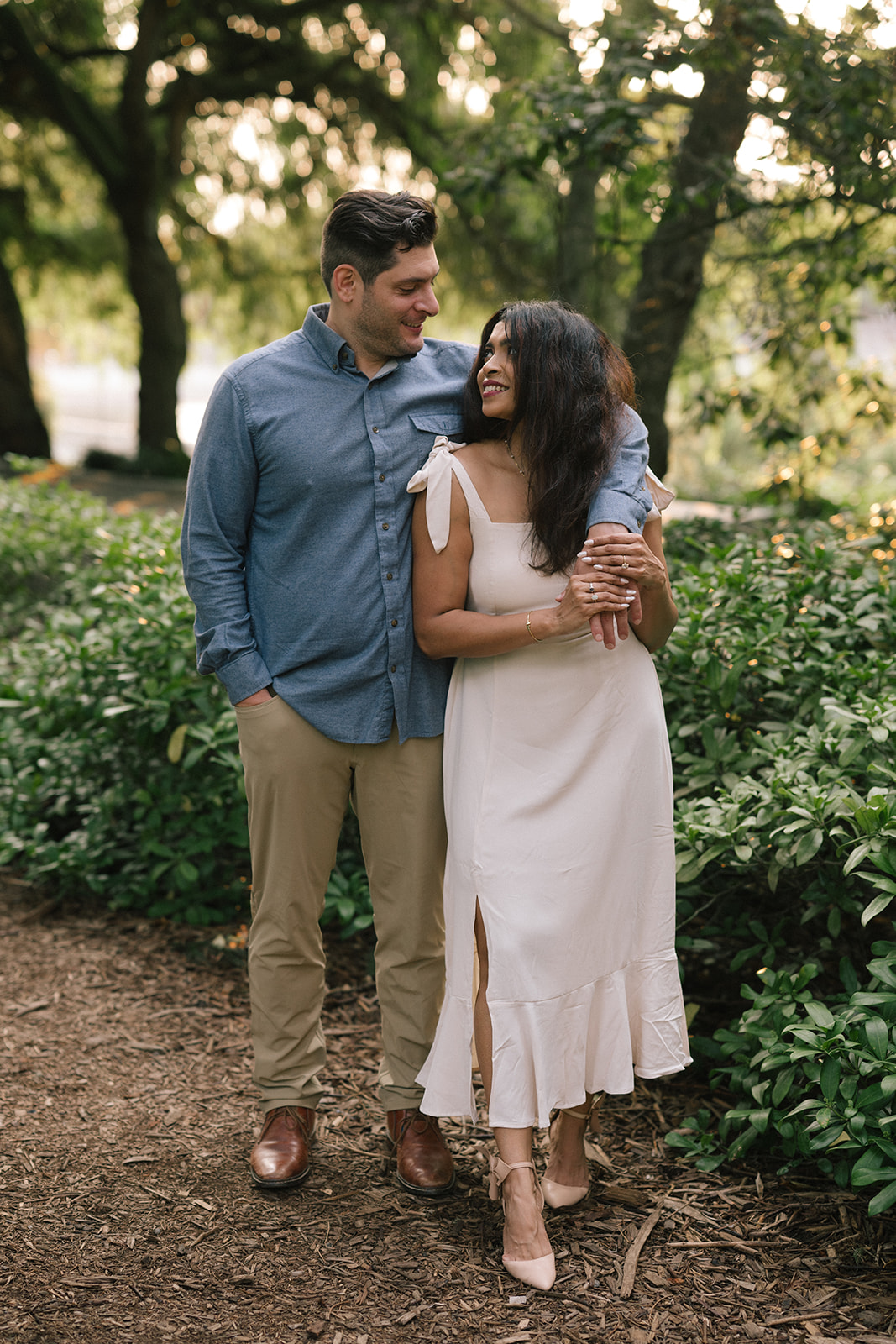
If we’re shooting in a park, garden, forest, or anywhere with a lot of greenery, lean into earthy tones — soft greens, muted blues, warm cream, dusty rose, terracotta, camel. These colors photograph beautifully against natural backdrops and don’t compete with the environment.
A flowy midi dress in a soft neutral, wide-leg linen pants with a fitted top, or jeans (a darker wash, not distressed), and a pretty blouse all work great. For your partner: a button-down in a soft tone with chinos or dark jeans is a safe and beautiful default.
I’ve shot some of my favorite natural-setting sessions at Discovery Park and Carkeek Park — both pull beautifully on this palette.
Urban Settings
City sessions allow for more polish. You can lean into structure, deeper colors, and elevated pieces. A long coat, a tailored blazer, a sleek dress with heels, leather jackets — all of these work well against architecture, brick, and street scenes.
Beach and Waterfront Settings
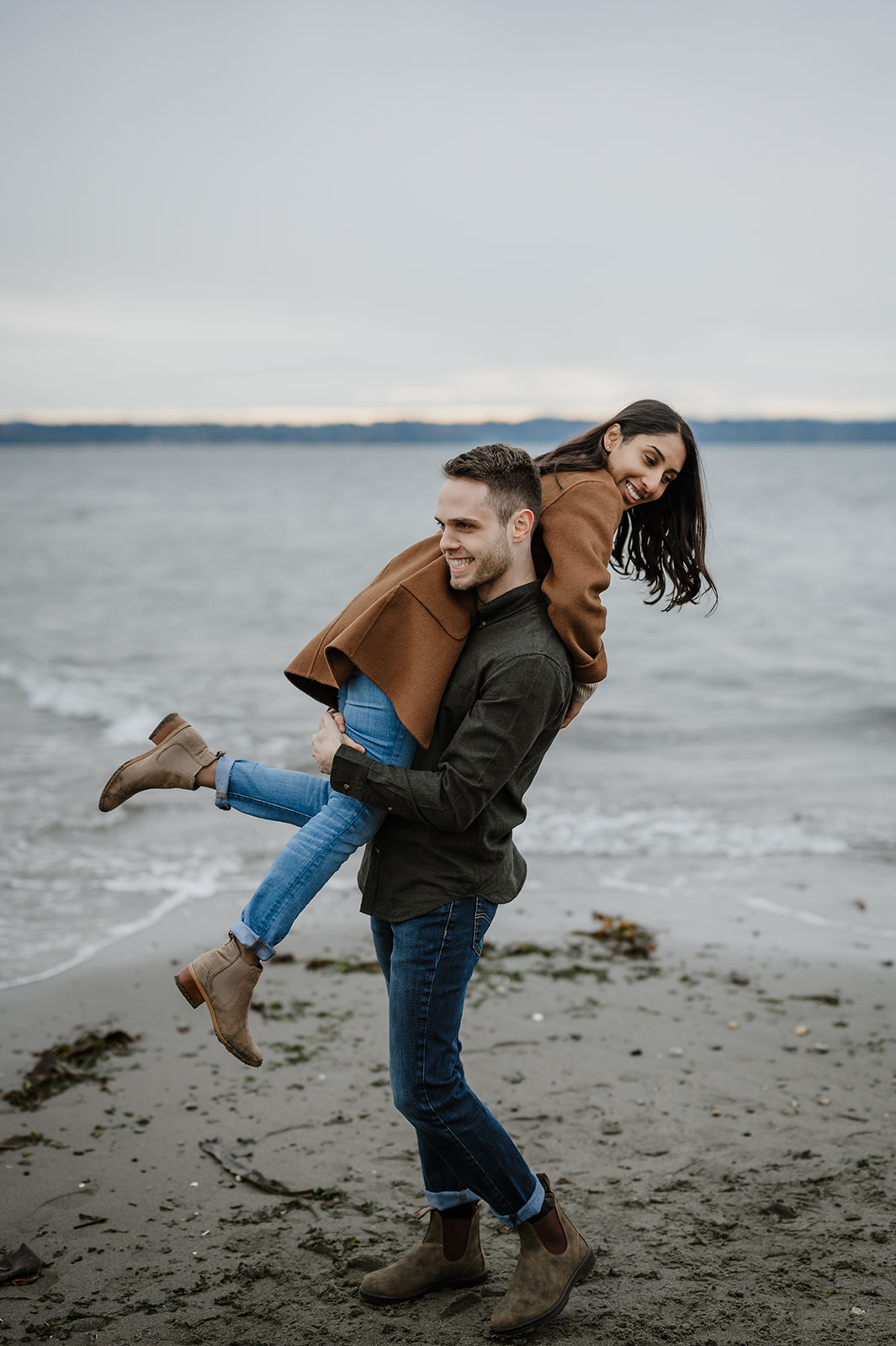
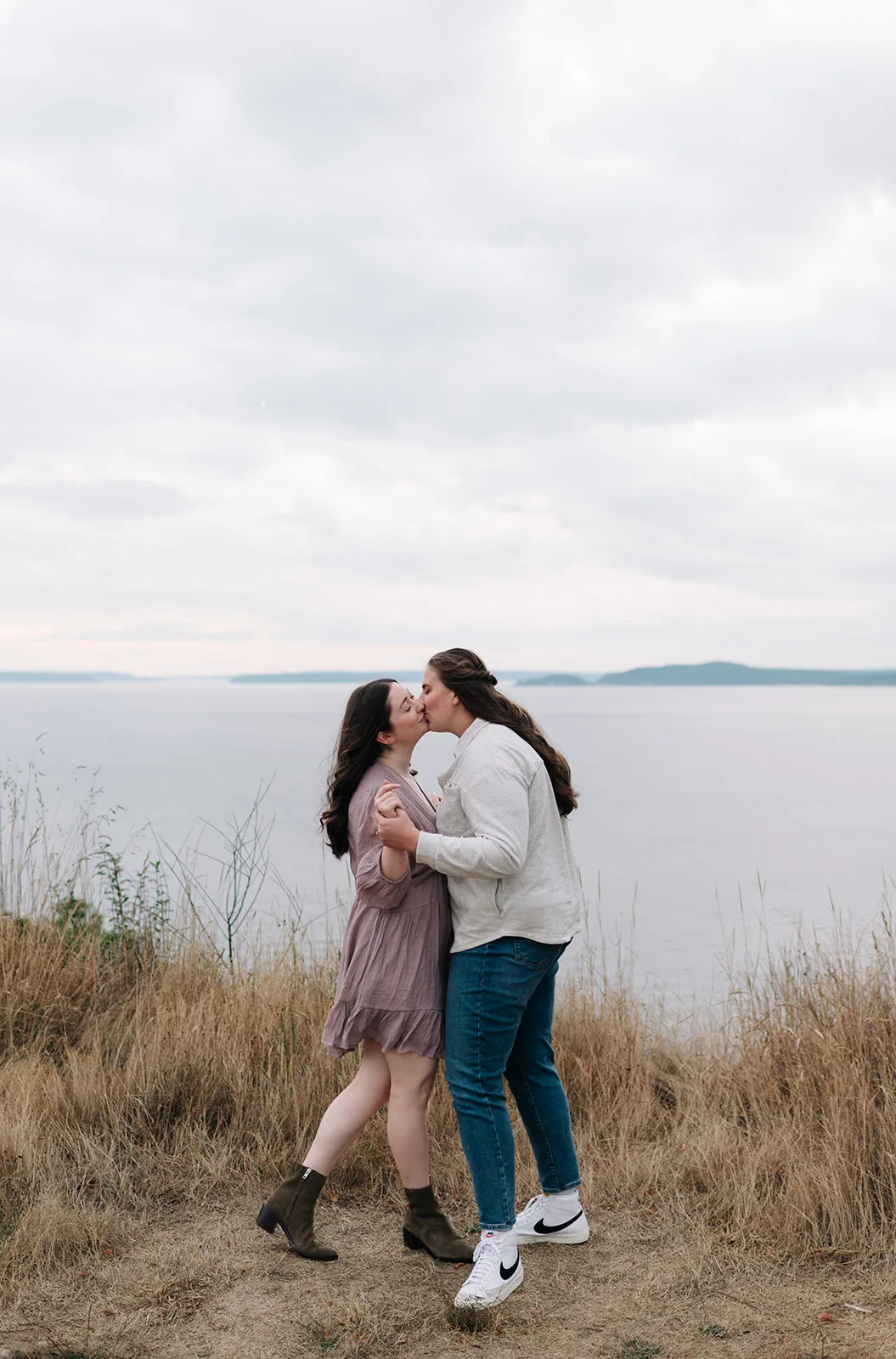
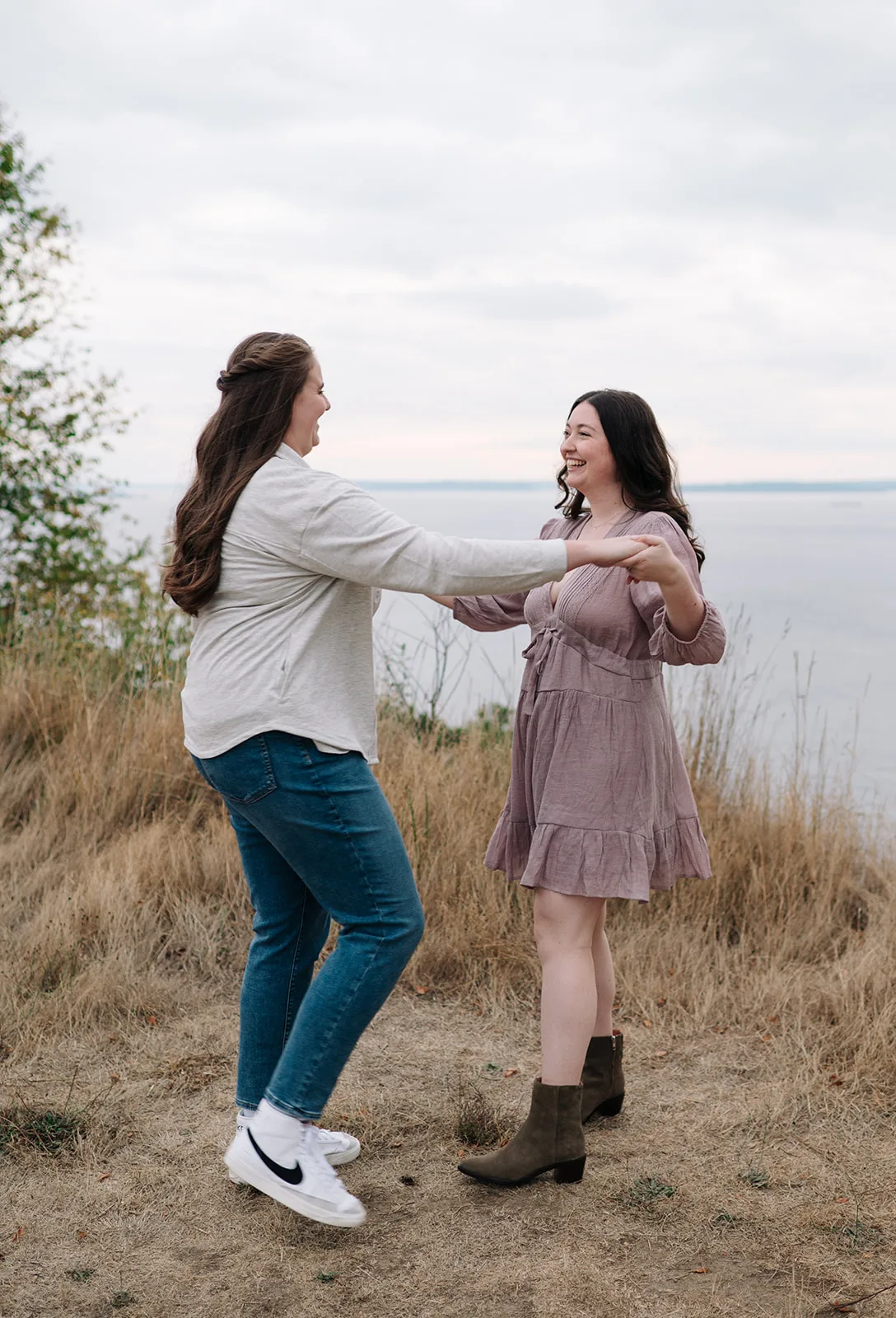
Soft, flowing fabrics. Anything that moves in the wind photographs gorgeously by water. Think long dresses with a slight train, linen separates, fabrics that catch a breeze. Skip white if it’s a bright sunny day at the water (it’ll blow out in photos). Soft blush, sage, sand, or pale yellow all photograph beautifully on a waterfront.
Mountain or Adventure Settings
If we’re hiking to your engagement spot, please prioritize comfort and practicality. A flowy dress can absolutely work — but bring sturdy shoes for the hike in and change at the location. A wool sweater or long coat layered over a slip dress is a classic combination that looks great in cooler mountain settings.
At-Home or Lifestyle Sessions
These call for elevated everyday wear. Think: cozy sweaters, fitted jeans, a silky slip dress with bare feet, a button-down with sleeves rolled. The vibe is “we look like we always look, just slightly better.”
Always Consider the Weather
No one wants to freeze in a sleeveless dress in the middle of winter, and no one wants to sweat through a wool sweater in August. Dress for the actual forecast, not the season you wish it were. If you’re shooting in the PNW in fall or spring, layer. If it’s winter, embrace the long coats and scarves — they’re some of the most photogenic engagement attire out there.
Need help picking a location to dress for? Check out my guide to the best engagement locations in Seattle and my list of the best parks for an engagement session.
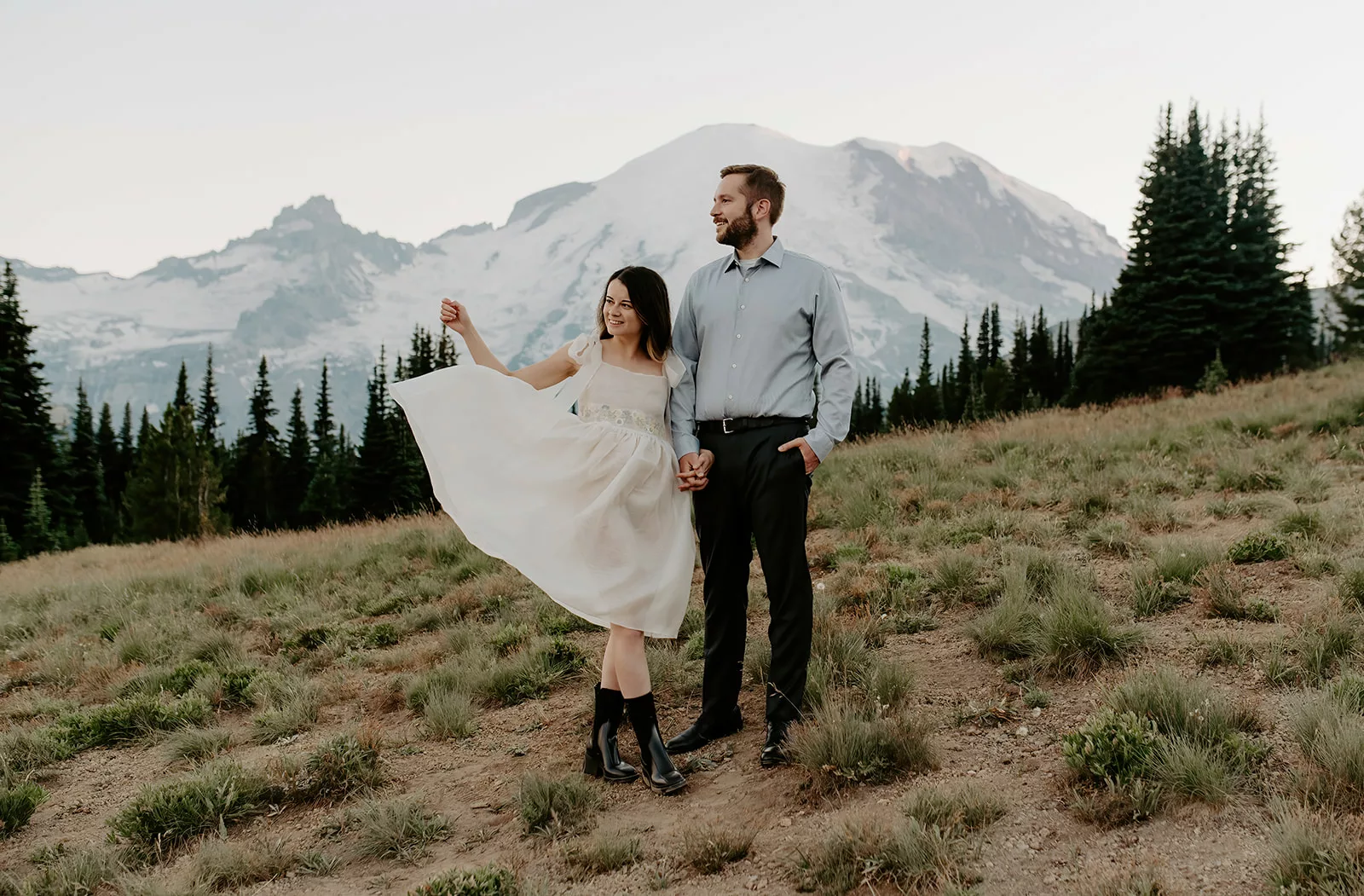

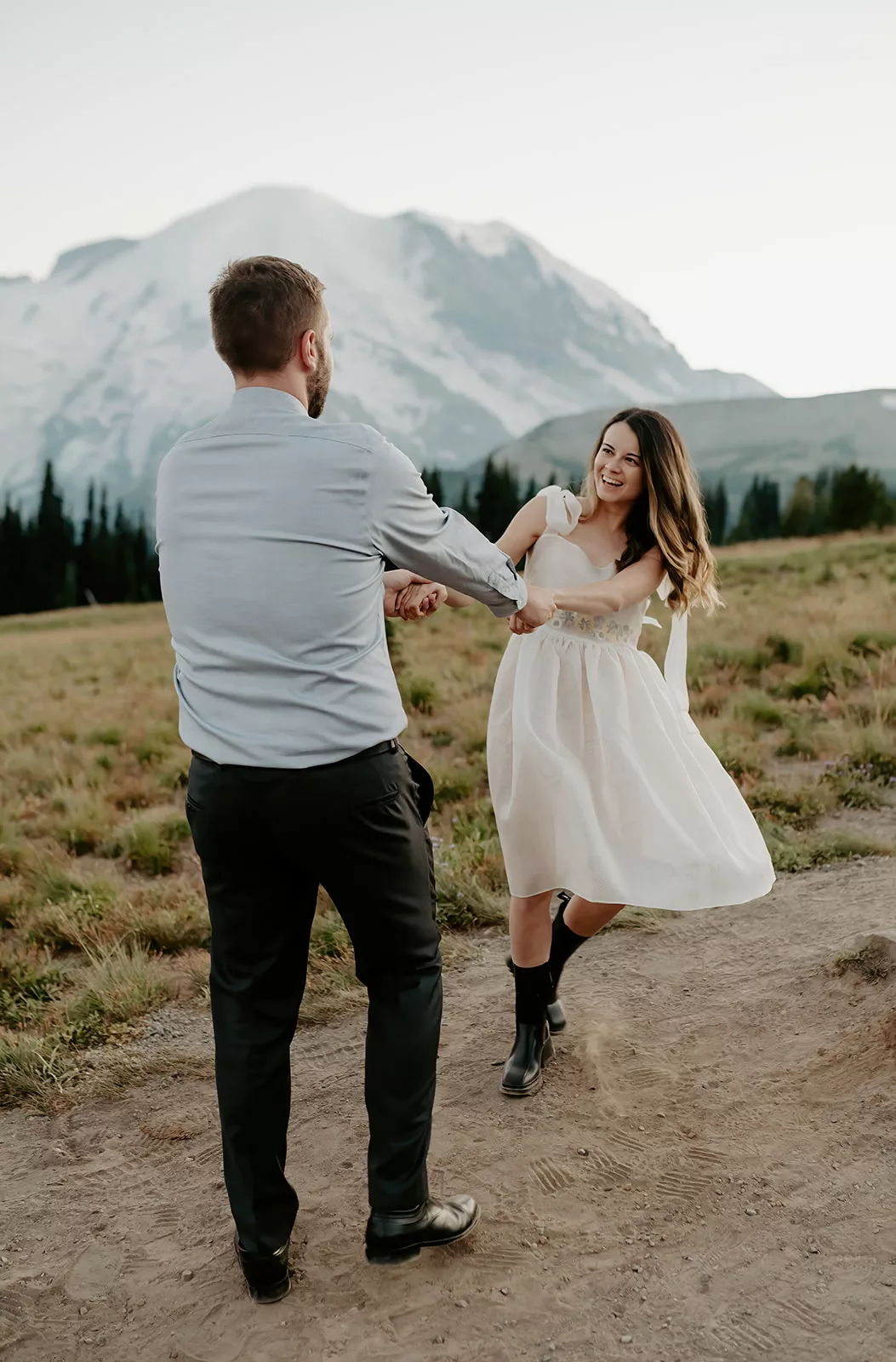
3. Stick to Neutral and Earthy Tones
Bright neons and super bold patterns are distracting in photos. Soft neutrals, earth tones, and muted jewel tones are more flattering on all skin tones and let your connection take center stage rather than your outfit.
Colors that almost always photograph well:
- Cream, oatmeal, ivory
- Soft blush, dusty rose, mauve
- Sage, olive, muted green
- Camel, tan, warm brown
- Dusty blue, slate blue, navy
- Rust, terracotta (especially in fall)
- Burgundy, wine (especially in fall and winter)
Colors and prints to be cautious with:
- Pure bright white in full sun — blows out and loses detail. Cream or off-white photographs better.
- Pure black in low light — can lose shape and feel like a void. Charcoal or deep navy often works better.
- Neon or highly saturated brights — pull focus away from your faces and reflect color onto your skin (red shirts especially can give you a sunburned glow).
- Tiny busy patterns — small repeating patterns can create a moiré effect and look like static in digital photos.
If you want help finding stylish, photogenic colors, Pantone’s color trends are a great starting point. For the Pacific Northwest specifically, the moody-PNW palette (deep greens, soft grays, dusty blues, rust, cream) is incredibly photogenic and beautifully matches the natural environment.
4. Coordinate, Don’t Match
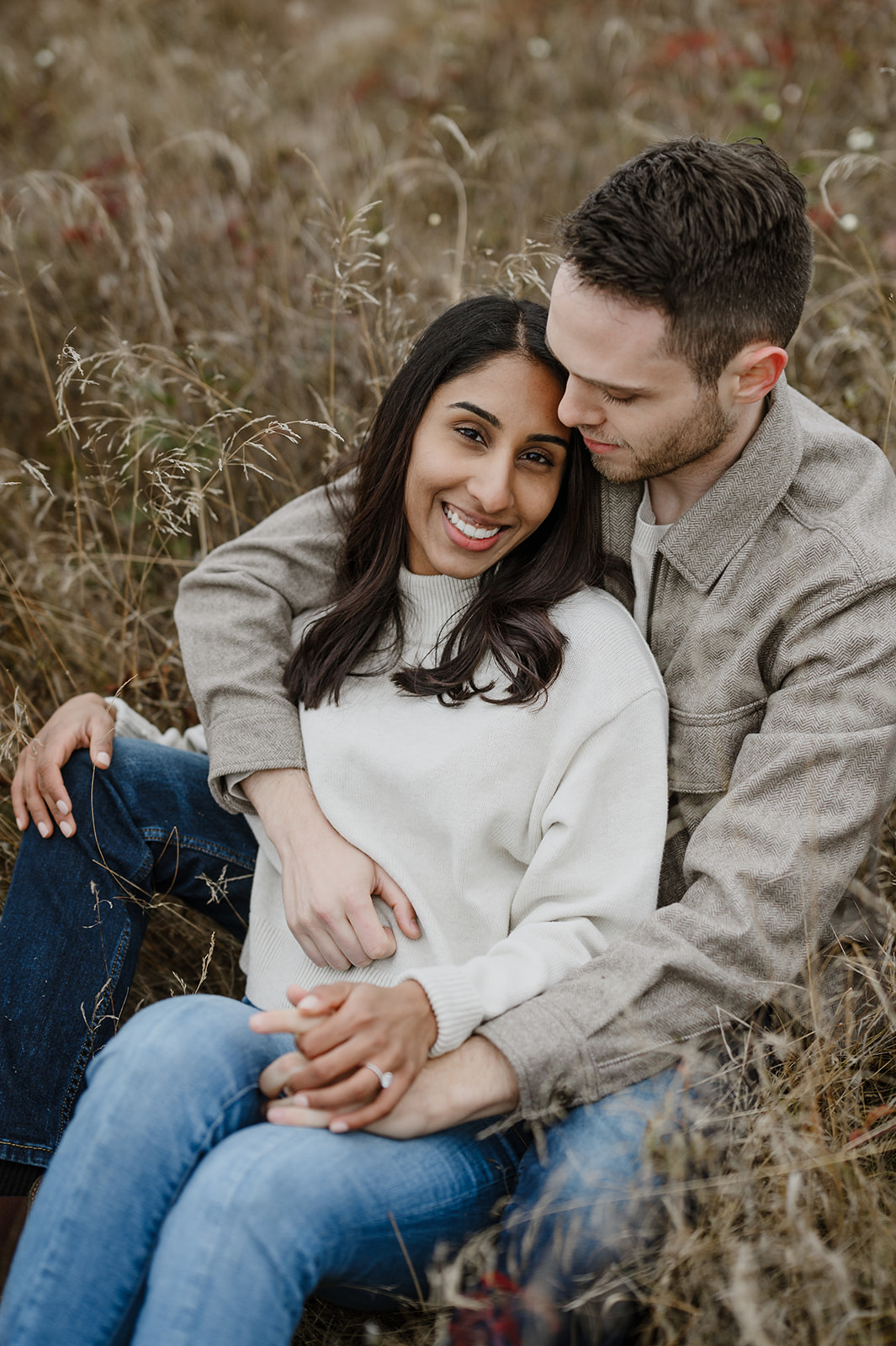
This is the part most couples get tripped up on. Gone are the days of matching white shirts and jeans. Instead, think “same family, different notes.”
Pick a 3-4 Color Palette and Pull From It
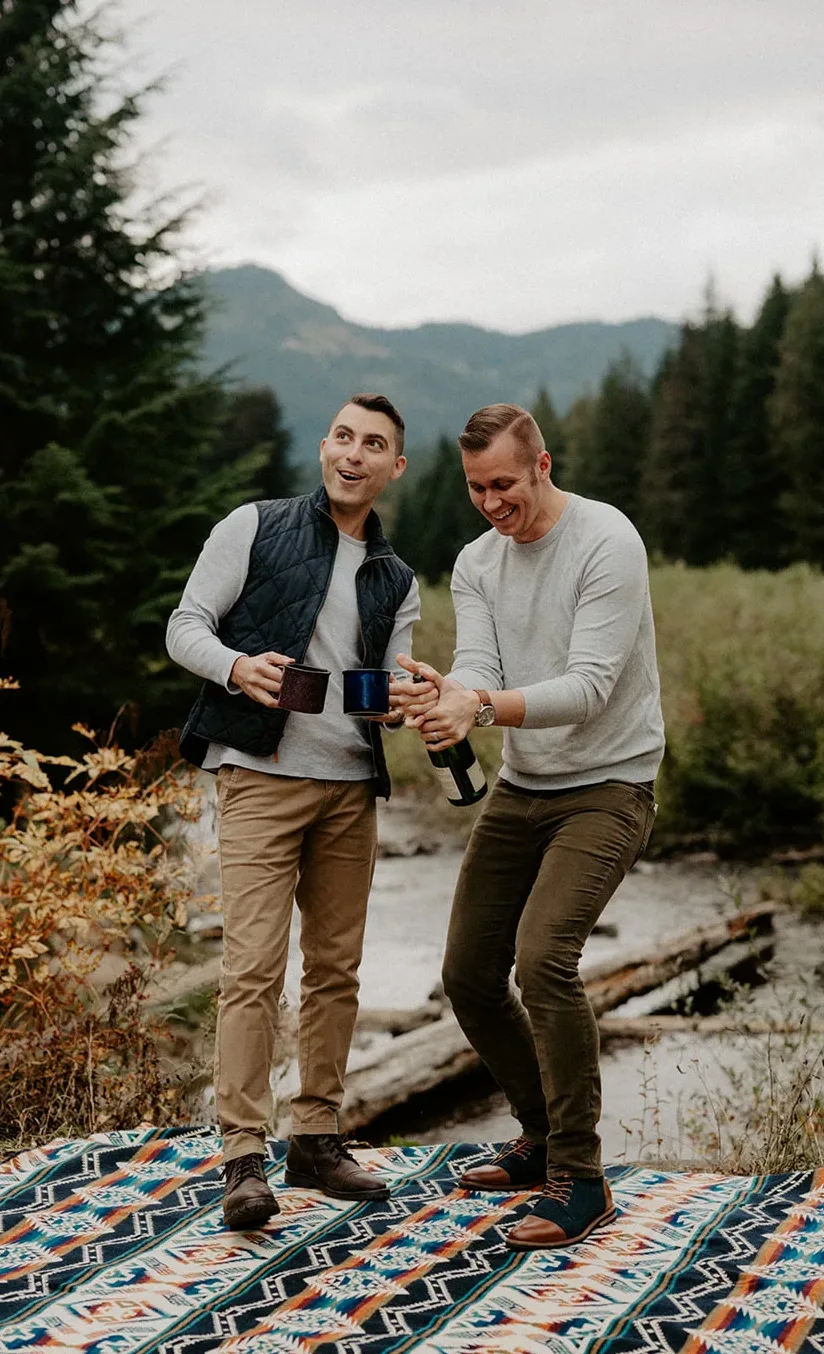
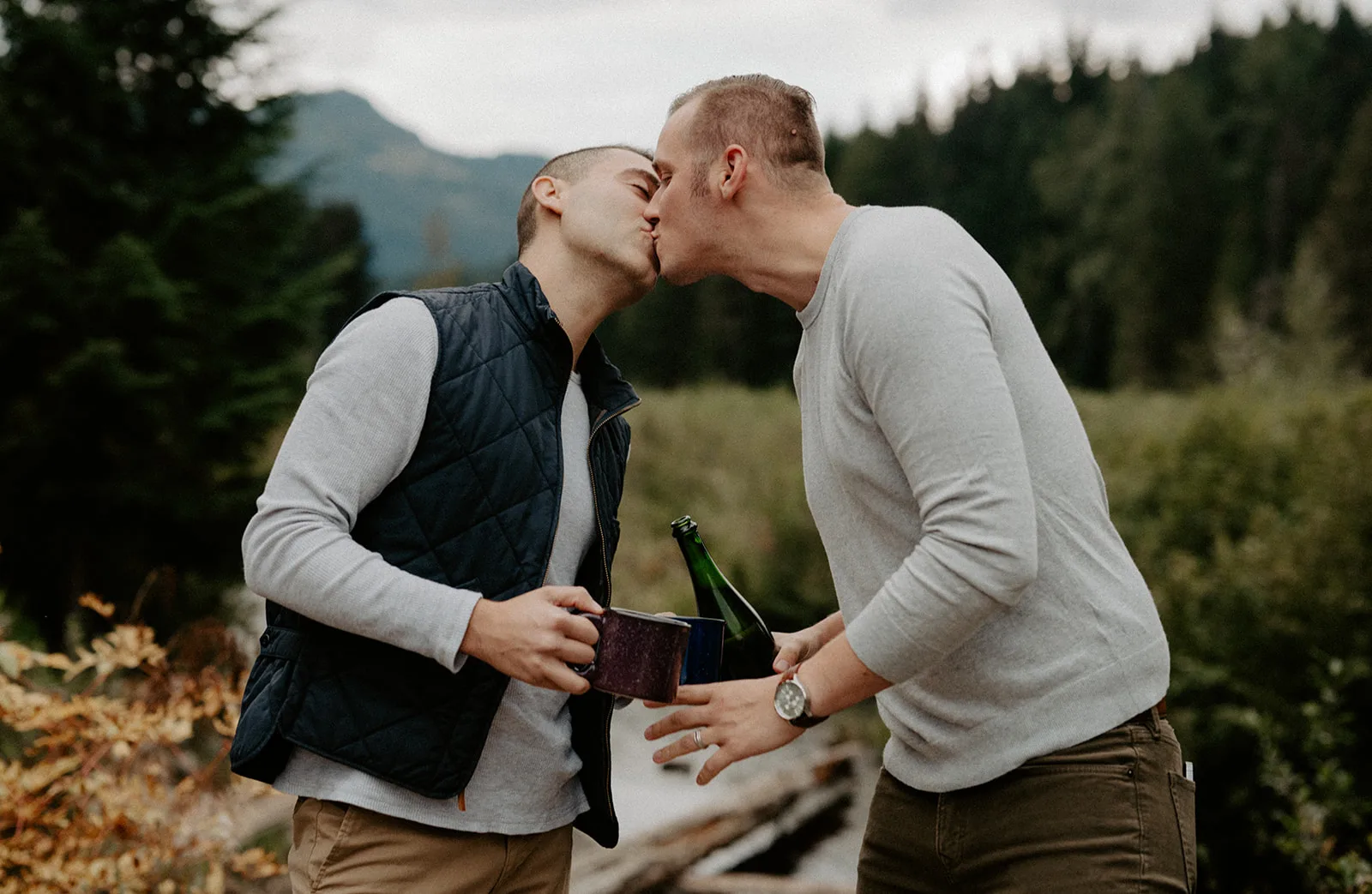
You want your outfits to feel like they belong together — like you got dressed for the same event — without being identical. Pick a color palette of 3-4 tones, and have each of you wear a different piece from it. You might wear a cream dress while your partner wears a soft blue button-down with camel pants. The colors are in conversation; they’re not competing.
Avoid Matchy-Matchy
Wearing identical colors (both white, both navy, both black) almost always looks dated in photos. The same goes for matching prints. Coordinate, don’t duplicate.
Mix Patterns and Solids Thoughtfully
If one of you is wearing a pattern, the other should be in a solid that pulls a color from that pattern. So if you’re wearing a floral dress in sage, cream, and rust, your partner could wear solid sage or solid rust. The pattern becomes the statement; the solid grounds it.
Match Your Formality
If one of you is in jeans and the other is in a cocktail dress, the photos will feel off. Decide together whether you’re going dressy, semi-casual, or casual, and commit to the same level. If your partner is wearing a navy suit, a dress in a warm neutral or soft floral creates balance without looking overly planned.
5. Add Layers and Textures for Depth
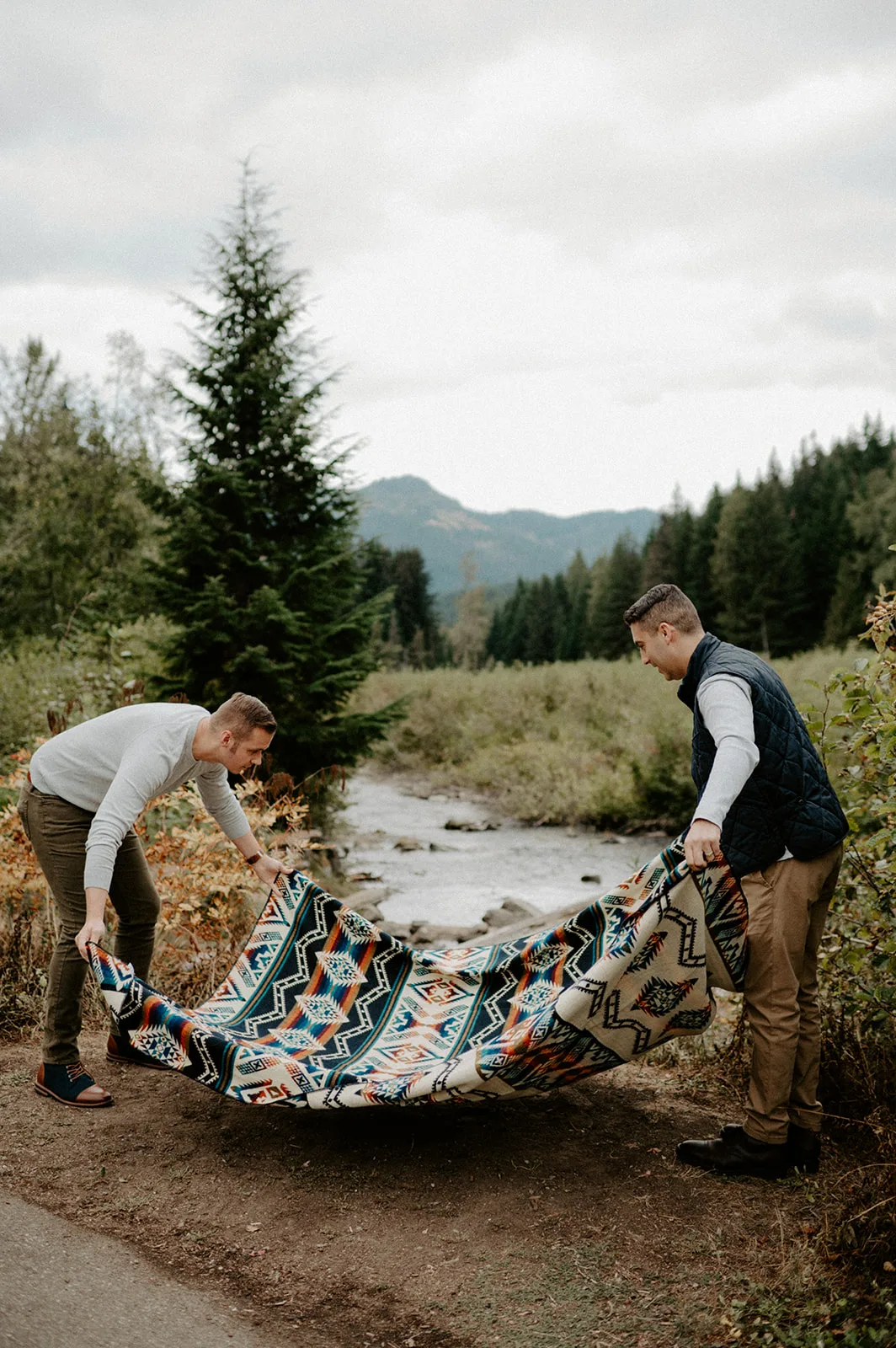
Layering adds visual interest in a way that flat outfits can’t. A structured blazer, cozy sweater, lightweight jacket, or long coat draped over the shoulders makes any outfit feel more dynamic and gives me more to work with as a photographer (more poses, more variation between shots).
Mixing textures is just as important as mixing colors. Combinations that photograph beautifully:
- Knit + denim
- Linen + leather
- Lace + corduroy
- Silk + wool
- Velvet + suede
The texture adds depth even in close-up shots, making your engagement photos feel richer without being busy.
6. Avoid Big Logos and Distracting Prints
Logos and large branded text take attention away from you and pull the eye toward the brand. They also age the photos quickly — a logo from a 2026 collection will look very dated in the photos you hang on your wall in 2036.
The same goes for super busy or trendy prints. Opt for solid colors or subtle, classic prints (small floral, simple stripes, soft plaid) that enhance the overall look rather than dominating it.
7. Comfort Is Key — But Don’t Be Too Casual
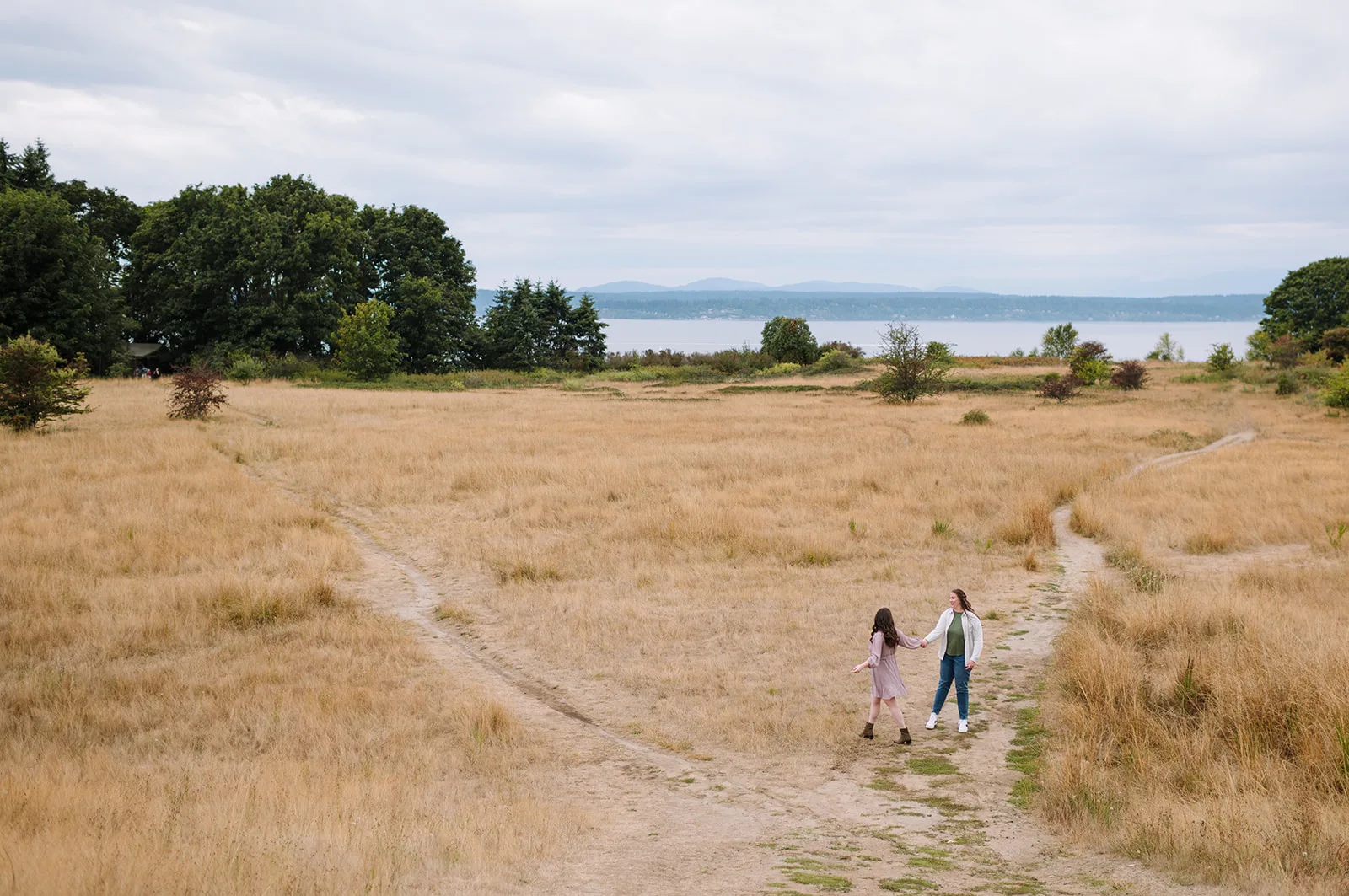
You don’t want to feel overdressed, but showing up in your everyday leggings and a hoodie won’t give you the elevated look you actually want for these photos.
Aim for an outfit that feels slightly more polished than your everyday wear — think date-night attire rather than work-from-home loungewear. If you can wear it to a nice restaurant, it’ll work for engagement photos. If you’d wear it to lounge on the couch, it probably won’t.
If you need help thinking about what flatters your specific shape, Stitch Fix’s guide to dressing for your body shape is a useful starting point.
8. Bring an Outfit Change for Variety
If you’re torn between two looks, bring both. Most couples bring one dressier outfit and one more casual look — which adds variety to your gallery and works especially well if we’re shooting in multiple locations.
A few things to know about outfit changes:
Don’t bring more than two outfits unless we’ve planned for it — three or more eats so much session time you barely shoot in any of them
Plan for the change to take 5-10 minutes (more if hair adjustments are needed)
If we’re shooting outside, scout where you’ll change ahead of time (a car works in a pinch)

9. Pay Attention to Shoes and Accessories
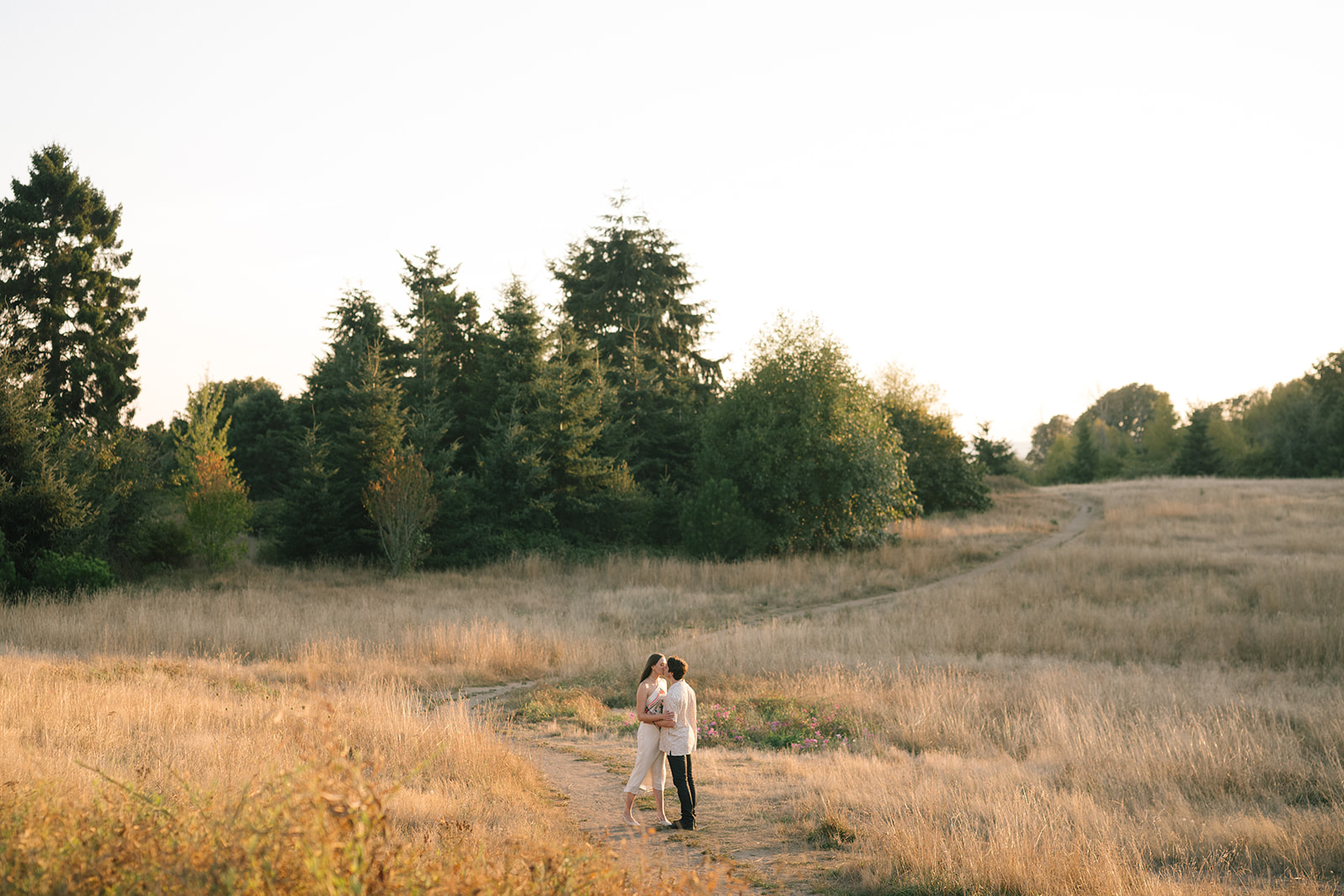
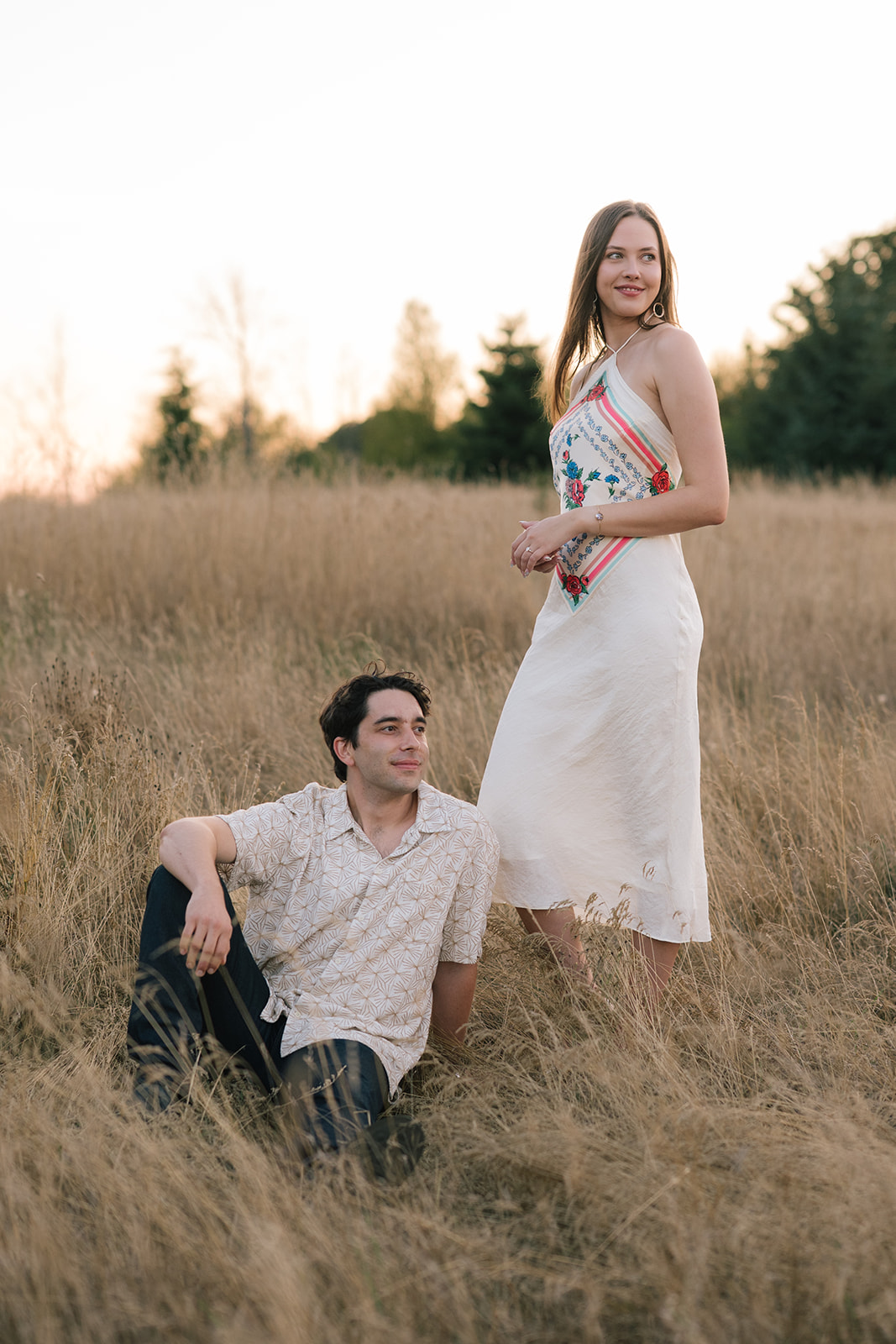
Your shoes will be in the engagement photos, so make sure they work with your outfit and the location. If we’re walking through sand, grass, a forest trail, or any uneven terrain, choose shoes you can actually move in. Rothy’s and Madewell both make stylish, comfortable options that photograph beautifully.
A note on accessories: less is usually more.
Things that often add to engagement photos:
- A simple pair of earrings (small hoops, studs, or delicate drops)
- A delicate necklace
- A hat (a wide-brim felt hat in fall, a straw hat in summer — both photograph beautifully)
- A long coat or jacket draped over your shoulders for variety
- A bouquet of flowers or a single bloom (especially fun for spring sessions)
Things to be careful with:
- Big statement sunglasses (they hide your eyes — fine for a few shots, not for the whole session)
- Reflective jewelry that catches light awkwardly
- Anything noisy or distracting (jangling bracelets you’ll fidget with)
For minimal, photogenic jewelry, Mejuri and Kendra Scott both have great, delicate options.
10. Most Importantly — Be Yourself
The best engagement photos are the ones where you feel like you. Whether that means a chic dress and heels or jeans and a cozy sweater, the key is wearing something that makes you feel confident, comfortable, and in your element.
If you don’t normally wear bold colors, your engagement session isn’t the day to start. If you live in jeans, lean into a slightly elevated jeans look instead of forcing yourself into a dress you’ll spend the whole session adjusting. The photos that stand the test of time are always the ones where the couple looks like themselves — not like they’re playing dress-up.
Final tip: Lay your outfit choices out together and snap a quick mirror photo. This helps you see how the colors and styles work together before the day of the session — and you can send it to me for a second opinion.
What to Bring on the Day of Your Engagement Session
A small “outfit emergency kit” can save your photos:
- A lint roller (especially for dark fabrics)
- Safety pins
- A small mirror
- Touch-up powder, lipstick, hairpins
- Water and a snack (sessions are longer than couples expect)
- Comfortable shoes for walking between locations (you can change into the photo shoes at each spot)
- A backup outfit if you have time and want variety
- Hand cream (cold hands look red and tense in photos)
If we’re shooting in a remote location, bring extra layers. Even if it looks warm at the trailhead, mountain weather changes fast, and being cold reads as miserable in every photo.
Hair, Makeup, and Grooming Tips
A few things I wish more couples knew:
- Get a hair and makeup trial if you’re planning to have it professionally done for your engagement session — especially if you’re using the same artist for your wedding day. The session becomes a real test run.
- Lip color matters more than you think. A soft, defined lip photographs much better than no lip color at all. You don’t need full glam — a tinted balm in a flattering shade goes a long way.
- Skip new false lashes unless you’ve worn them before and know they look like you.
- For your partner: a fresh haircut about a week before the session photographs better than a same-day cut (which often reads as “just got a haircut”).
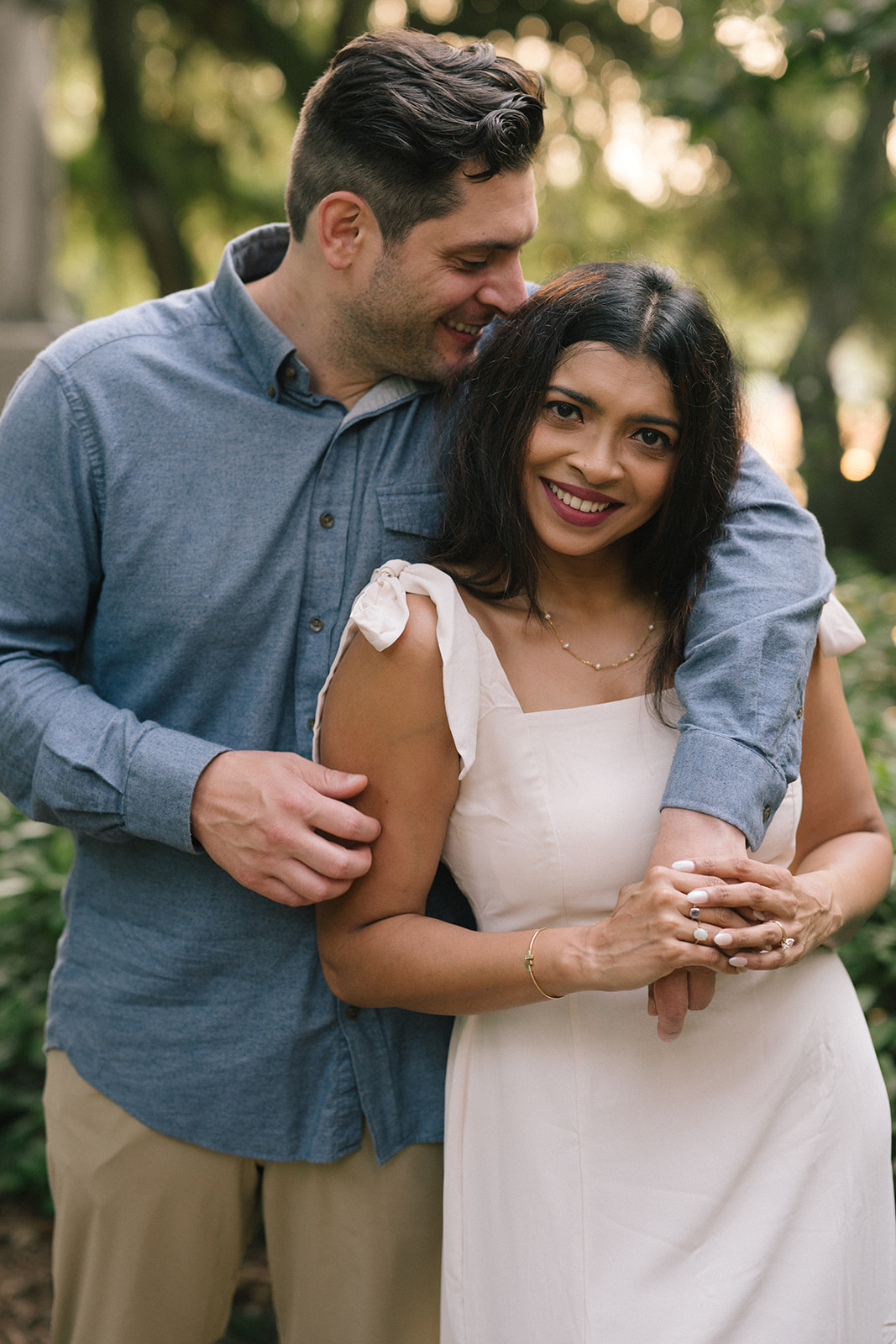
- Fingernails will be in the photos. A simple manicure, even just clean and shaped, makes a real difference in ring shots and hand-holding photos.
Common Engagement Outfit Mistakes to Avoid
A quick list of the things I see most often that I wish couples knew sooner:
- Brand-new shoes that you’ll get a blister in by photo three
- Shoes that don’t work for the terrain (stilettos in grass, sandals on a forest trail)
- Wearing white in full sun without testing how it photographs
- Coordinating to a fault — matching colors head-to-toe, both in identical denim, etc.
- Underdressing because you don’t want to “look too done up” — engagement photos are one of the few times you’ll get professionally photographed before your wedding day, and you’ll wish you’d dressed up more when you look back
- Wearing something you don’t actually like because you think it’ll photograph well — you can tell in the photos when someone doesn’t feel like themselves

Engagement Photo Outfit FAQs
How many outfits should I bring to my engagement session?
One to two is the sweet spot. One outfit lets you settle in and feel relaxed; two adds variety to your gallery. More than two, and you spend more time changing than actually being photographed.
Should we match our outfits?
No, but you should coordinate. Pick a color palette of 3-4 tones and draw from it in different ways. Same family, different notes.
Can I wear my wedding dress for an engagement session?
You can — and some couples love doing a sneak-peek session with an early look at the dress. But more often, engagement sessions are about capturing your relationship in your everyday-elevated style, with the wedding day saved for the dress moment.
What should I wear for a Pacific Northwest engagement session?
PNW engagement outfits tend to lean into earthy, moody tones — soft greens, dusty blues, cream, rust, camel — that complement the natural landscape. Layers are essential because the weather shifts. A flowy dress with a long coat, or a fitted top with wide-leg pants and a knit cardigan, is a classic PNW engagement look.
Should I get a professional hair-and-makeup trial for my engagement session?
If you’re using the same artist for your wedding day, absolutely. The session becomes a perfect test run for both how you look and how you feel in your wedding hair and makeup.
What if it rains during my outdoor engagement session?
Some of the most beautiful engagement photos I’ve shot have happened in the rain. Bring a clear umbrella (so it doesn’t block the light), wear waterproof or weather-appropriate shoes, and embrace it. Rainy PNW sessions have a moody romance you can’t recreate on a sunny day.
Can my photographer help me choose an outfit?
Yes — and most photographers love being asked. I share a Pinterest board with all my couples and give direct feedback on outfit options before the session. Don’t be shy about asking.
Need Engagement Session Inspiration?
If you’re booked with me and want help putting together your engagement session outfits, send me photos, and I’ll give you my honest take. I have a client wardrobe Pinterest board I share with every couple, plus location-specific input based on where we’re shooting.
If you’re not booked yet but you’re thinking about an engagement session in Seattle, the Pacific Northwest, or beyond, let’s chat about locations and styling to make your session uniquely yours.
